
Weight Loss Knee Pain Relief Calculator
In a study of older adults with knee osteoarthritis, every pound of weight lost went with about 4 pounds less load on the knee at each step.1 Set the slider to the weight you have lost, or plan to lose, and this knee relief calculator multiplies it out per step and per mile. One thing up front: it estimates load on the joint. It cannot tell you how much pain relief to expect.
How much weight have you lost, or plan to lose?
25 lb
Drag the handle, use the arrow keys, or tap the plus and minus buttons. Page Up and Page Down move by 10.
Nothing you enter here is saved or sent anywhere.
Load off your knees
100 lb less with every step
- Over one mile of walking120,000 lb
- Each step is like setting downa bag of cement
- Each mile, in fully loaded 18-wheelers1.5
This calculator turns one research finding into simple arithmetic. It estimates the load on a knee during walking. It does not measure your knees, predict how they will feel, or diagnose or treat arthritis, and it is not medical advice. See a licensed clinician about knee pain that is new, severe or getting worse.
How does the knee relief calculator work?
A knee does not simply carry a share of your body weight. The study this tool is built on found that the load at the joint moves by about four times as much as the number on the scale: one pound off the body, about 4 pounds off the knee at each step.1 A common explanation is that the leg muscles pull hard across the joint each time a foot lands, so the knee handles their force on top of your weight.
You give the calculator one number, the weight lost. The slider runs from 0 to 200 lb, in whole pounds, and starts at 25. You can drag the handle, tap the plus and minus buttons to move 1 at a time, or use the keyboard: arrow keys move by 1, Page Up and Page Down by 10. Reset takes you back to 25 lb (11 kg if you are working in kilograms). The results change as you move, and nothing you enter is saved or sent anywhere.
From that one number the tool works out three things:
| Result | How it is worked out |
|---|---|
| Load off the knee with every step | Weight lost × 4 |
| Load over one mile of walking | Weight lost × 4,800 (4 lb × an assumed 1,200 steps on each knee per mile) |
| The same mile, in fully loaded 18-wheelers | Pounds per mile ÷ 80,000 |
A worked example: 25 lb
- Per step: 25 × 4 = 100 lb
- Per mile: 25 × 4,800 = 120,000 lb
- In trucks: 120,000 ÷ 80,000 = 1.5 fully loaded 18-wheelers
That is what the calculator shows when the page first loads, along with its everyday comparison for 100 lb per step: a bag of cement. Here are a few more points along the slider:
| Weight lost | Per step | Per mile | 18-wheelers per mile | Per-step comparison shown |
|---|---|---|---|---|
| 5 lb | 20 lb | 24,000 lb | 0.3 | A car tire |
| 10 lb | 40 lb | 48,000 lb | 0.6 | A big bag of dog food |
| 15 lb | 60 lb | 72,000 lb | 0.9 | A golden retriever |
| 25 lb | 100 lb | 120,000 lb | 1.5 | A bag of cement |
| 50 lb | 200 lb | 240,000 lb | 3.0 | A refrigerator |
| 75 lb | 300 lb | 360,000 lb | 4.5 | A motorcycle |
| 100 lb | 400 lb | 480,000 lb | 6.0 | A motorcycle |
Estimates from the calculator's own arithmetic: 4 lb per step for each pound lost, 1,200 steps on each knee per mile (an assumption) and 80,000 lb per truck.1
Pounds or kilograms
The toggle next to the number switches between lb and kg. In kilograms the slider runs from 0 to 100, and the per-step and per-mile results are shown in kilograms too. The tool converts with 1 lb = 0.45359237 kg and rounds your number to the nearest whole unit when you switch, so 25 lb becomes 11 kg. The multipliers do not change: 10 kg lost is 40 kg less per step and 48,000 kg less per mile. The truck stays at 80,000 lb, so 10 kg works out to 1.3 trucks per mile.
The everyday comparisons
Under the headline number, the calculator names a familiar object to stand in for the per-step load. It picks from a fixed ladder of ten, based on which range your per-step figure falls in:
| Load per step | Weight lost (lb) | Comparison shown |
|---|---|---|
| Under 8 lb | 1 | A bag of flour |
| 8 to under 28 lb | 2 to 6 | A car tire |
| 28 to under 48 lb | 7 to 11 | A big bag of dog food |
| 48 to under 80 lb | 12 to 19 | A golden retriever |
| 80 to under 120 lb | 20 to 29 | A bag of cement |
| 120 to under 200 lb | 30 to 49 | A reindeer |
| 200 to under 300 lb | 50 to 74 | A refrigerator |
| 300 to under 500 lb | 75 to 124 | A motorcycle |
| 500 to under 800 lb | 125 to 199 | A grand piano |
| 800 lb or more | 200 | A grizzly bear |
The ranges are the calculator's own brackets. They are loose, friendly comparisons, not claims about what any of these things weighs. With the slider at 0, the tool shows "nothing yet."
Sharing your result
Two buttons sit under the result. "Share on X" opens a draft post with your numbers and a link to this page, and you decide whether to post it. "Copy result" puts the same sentence and link on your clipboard so you can paste it into a text or an email. Nothing is shared unless you do it yourself.
Where does the 4-to-1 figure come from?
The source is a 2005 paper by Messier and colleagues in the journal Arthritis & Rheumatism. The researchers studied older adults with overweight or obesity who had knee osteoarthritis, and looked at what weight loss did to the loads on the knee joint. Their finding: each pound of weight lost was associated with a 4-fold reduction in the load on the knee per step, which is about 4 pounds.1
Two words in that sentence deserve attention.
- "Associated." The figure describes a relationship seen across a study group. It is not a promise about any one person's knee.
- "Per step." The study finding stops there. Everything after it on this page is multiplication.
The per-mile number rests on an assumption
To get from one step to one mile, the calculator assumes you take about 1,200 steps on each knee per mile. Then 4 lb × 1,200 = 4,800 lb per mile for each pound lost. That step count is an assumption, not a measurement of you. Your own count depends on the length of your stride.
If you know your number, you can redo the sum. Take the per-step result and multiply it by your steps per knee per mile. Someone who has lost 25 lb and takes 1,000 steps per knee in a mile would get 100 × 1,000 = 100,000 lb instead of 120,000.
The truck is a way to picture a big number
The calculator counts a fully loaded 18-wheeler as 80,000 lb and divides your per-mile figure by that. It is there to give a six-figure number some shape.
Read it carefully, though. The per-mile figure is a running total: the per-step reduction, counted 1,200 times. Your knee never has a truck parked on it, and no truck is lifted off. What changes is a modest amount at every step, and steps add up.
What can a knee pain relief calculator tell you, and what can it not?
A weight loss knee pain relief calculator like this one can tell you one thing: roughly how much less load, by this study's ratio, a lighter body puts through the knee while walking. That is a statement about force. Plenty sits outside it.
- It is load, not pain. The tool does not predict pain relief. Pain depends on more than the force going through a joint, and the calculator knows nothing about your knees, your history or how you feel.
- It is not a measurement. Nothing here was measured on you. The same multiplier is applied to everyone who moves the slider.
- It borrows from one group of people. The ratio comes from older adults with overweight or obesity and knee osteoarthritis.1 The calculator applies it to anyone, at any amount from 1 to 200 lb, which stretches the finding past the people it came from.
- Walking is the only activity in the math. The finding is per step, and the tool multiplies it over a walked mile. Climbing stairs, jogging and lifting are outside what it models.
- The mile is assumed. A different step count gives a different per-mile total, as the example above shows.
- It does not treat anything. A big number on this page is not a treatment for arthritis, and it is not a reason to change or stop care your clinician has recommended.
When to get your knee looked at. If a knee hurts in a way that is new, strong, getting worse or stopping you from everyday activities, have a clinician examine it. A calculator cannot stand in for that.
So why use it at all? Because the effect is easy to underestimate. A pound sounds like nothing. Four pounds at every step, over every mile you walk in a year, is easier to care about. Treat the result as motivation and as a way to picture a real finding, not as a forecast.
Weight loss and knee pain: what does the research say?
The calculator stops at load. Whether people with knee osteoarthritis feel better when they lose weight is a separate question, and it has to be answered by trials that ask about pain directly.
One of those is STEP 9, published in the New England Journal of Medicine in 2024. It enrolled 407 adults with obesity and knee osteoarthritis and followed them for 68 weeks, comparing once-weekly semaglutide with a comparison group.2
| Average change over 68 weeks | Semaglutide | Comparison group |
|---|---|---|
| Body weight | −13.7% | −3.2% |
| WOMAC pain score | −41.7 points | −27.5 points |
STEP 9 trial results. These are group averages, and individual results vary.2
Two things stand out. Pain scores fell in both groups, and they fell further, on average, in the semaglutide group, which also lost more weight. And these are averages across several hundred people with obesity and knee osteoarthritis. They do not say what would happen to your knee, and they do not turn this calculator into a pain predictor.
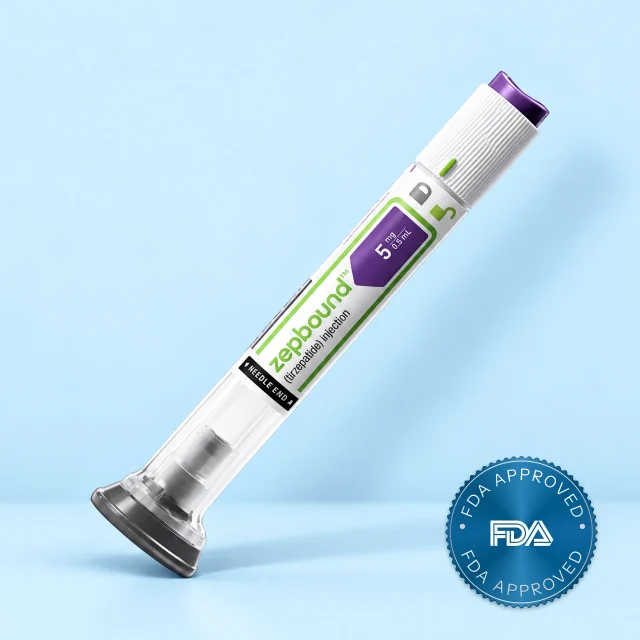
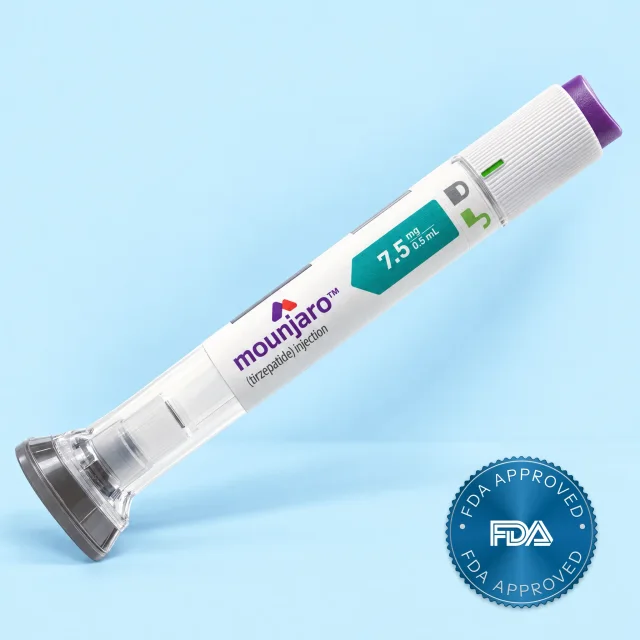
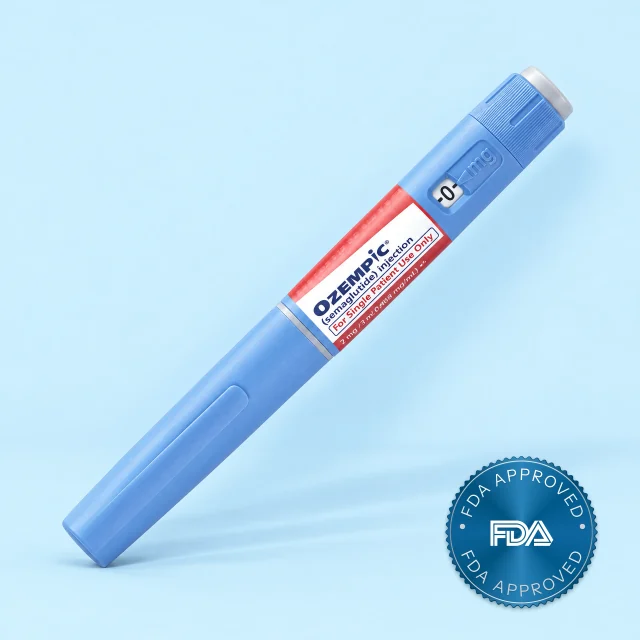
No GLP-1 medication is FDA-approved to treat knee pain or osteoarthritis. Wegovy and Zepbound are approved for weight management.3,4 Ozempic and Mounjaro are approved for type 2 diabetes and are not approved for weight loss.5,6 Knee pain and osteoarthritis do not appear among the approved uses on any of the four labels. A trial result is not the same as an approved use.
Turning the number into a plan
If the result has you thinking about a goal, a few sibling tools help with the next step:
- The BMI calculator shows where your height and weight fall in the CDC's adult categories.
- The calorie deficit calculator turns a goal weight into a daily calorie target and a rough timeline.
- The TDEE calculator estimates how many calories you burn in a day.
A goal does not have to be dramatic to matter. A clinical guideline on managing overweight and obesity notes that losing 5% to 10% of body weight brings health benefits.7 For someone who weighs 220 lb, that is 11 to 22 lb, which this calculator translates into 44 to 88 lb less load per step.
If you are wondering whether medication belongs in the plan, that is a conversation for a licensed provider who has reviewed your health history. The label standard for Wegovy and Zepbound is a BMI of 30 or higher, or 27 or higher with a weight-related condition, in adults 18 and older, and the provider makes the final call. STEP 9 studied semaglutide, the ingredient in Wegovy and Ozempic. These are prescription drugs, and stomach side effects such as nausea, diarrhea, vomiting and constipation are common.3,4 The GLP-1 side effects guide goes through them.
Frequently asked questions
How much pressure does losing 10 pounds take off your knees?
By the calculator's math, about 40 pounds less load on the knee with every step, and about 48,000 pounds over a mile of walking. The per-step figure comes from a study of older adults with knee osteoarthritis, in which each pound of weight lost was associated with about 4 pounds less load on the knee per step. The per-mile figure assumes about 1,200 steps on each knee per mile.
Will losing weight make my knee pain go away?
This calculator cannot tell you. It estimates load on the knee, not pain, and it does not predict pain relief. In one 68-week trial of 407 adults with obesity and knee osteoarthritis, average pain scores fell in both groups and fell further in the group taking semaglutide, which also lost more weight. Those are averages and individual results vary. Talk with a clinician about your own knee.
Is the 4-to-1 ratio true for everyone?
It was found in a specific group: older adults with overweight or obesity who had knee osteoarthritis. The calculator applies the same ratio to anyone who moves the slider, which goes beyond the people who were studied. Treat your result as a rough estimate of load during walking, not as a measurement of your own knees.
Where does the 1,200 steps per mile come from?
It is an assumption built into the calculator: about 1,200 steps on each knee per mile. Multiplying 4 pounds per step by 1,200 steps gives 4,800 pounds per mile for each pound lost. Your own step count depends on your stride. If you know it, multiply the per-step result by your own steps per knee per mile.
Does the calculator work in kilograms?
Yes. Tap kg next to the number and the slider runs from 0 to 100 kg, with the per-step and per-mile results shown in kilograms. The same multipliers apply, so 10 kg lost is about 40 kg less load per step and 48,000 kg per mile. The truck comparison still uses 80,000 pounds per truck.
Are GLP-1 medications approved for knee pain or arthritis?
No. No GLP-1 medication is FDA-approved to treat knee pain or osteoarthritis. Wegovy and Zepbound are approved for weight management. Ozempic and Mounjaro are approved for type 2 diabetes and are not approved for weight loss. A licensed provider decides whether any medication is appropriate for you.
References (7)
- Messier SP, Gutekunst DJ, Davis C, et al. Weight loss reduces knee-joint loads in overweight and obese older adults with knee osteoarthritis. Arthritis Rheum. 2005;52(7):2026-2032. https://pubmed.ncbi.nlm.nih.gov/15986358/
- Bliddal H, Bays H, Czernichow S, et al. Once-weekly semaglutide in persons with obesity and knee osteoarthritis (STEP 9). N Engl J Med. 2024;391(17):1573-1583. https://pubmed.ncbi.nlm.nih.gov/39476339/
- Wegovy (semaglutide) injection and tablets. Prescribing information. Novo Nordisk; revised June 2026. https://www.novo-pi.com/wegovy.pdf
- Zepbound (tirzepatide) injection. Prescribing information. Eli Lilly and Company; revised August 2026. https://pi.lilly.com/us/zepbound-uspi.pdf
- Ozempic (semaglutide) injection. Prescribing information. Novo Nordisk; revised May 2026. https://www.novo-pi.com/ozempic.pdf
- Mounjaro (tirzepatide) injection. Prescribing information. Eli Lilly and Company; revised August 2026. https://pi.lilly.com/us/mounjaro-uspi.pdf
- Jensen MD, Ryan DH, Apovian CM, et al. 2013 AHA/ACC/TOS guideline for the management of overweight and obesity in adults. Circulation. 2014;129(25 Suppl 2):S102-S138. https://pubmed.ncbi.nlm.nih.gov/24222017/
Sources were opened and checked on November 18, 2026. Prices, savings programs and labels change; confirm current terms with the manufacturer, your pharmacy or your provider.
Thinking about taking some load off? Start with a provider.
FitRx connects you with a licensed provider who reviews your health history, talks through your goals and decides whether GLP-1 medication is appropriate for you.
Get startedFitRx membership costs $39 in month one and $135 a month from then on. Medication is a separate charge. Not everyone qualifies.

The FitRx care team
A calculator shows the load. A care team helps with the weight.
Knowing what a pound is worth to your knees is a good reason to start. Keeping going is the hard part. FitRx members work with a licensed provider, a care coordinator and a coach, all online, so questions about appetite, plateaus, side effects and next steps go to people who know your history.
- U.S.-licensed providers review every intake and make every prescribing decision
- Unlimited secure messaging, plus monthly video or phone visits
- A care coordinator and a coach alongside your provider
- An insurance coordination team for brand-name GLP-1 prior authorizations
This page was written and reviewed by the FitRx care team and last updated November 18, 2026. It is general information, not personal medical advice.
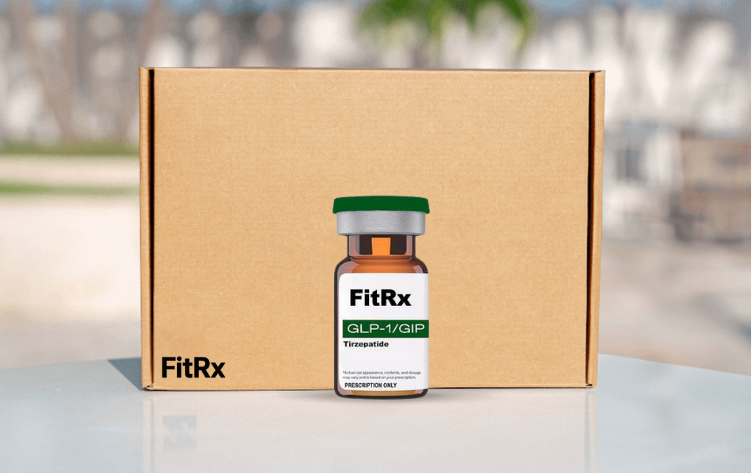
GLP-1 medications our providers can prescribe
A provider decides which medication, if any, fits your health history. Compounded semaglutide and compounded tirzepatide are not FDA-approved and are not the same as the brand-name products.

More free weight loss tools
- Calorie Deficit CalculatorDaily calories to lose 1 or 2 pounds a week, and how long your goal may take.
- TDEE CalculatorHow many calories you burn in a day, activity included.
- BMR CalculatorThe calories your body uses at complete rest.
- BMI CalculatorYour body mass index and the CDC category it falls in.
- Protein CalculatorA daily protein range for losing fat, maintaining or building muscle.
- Food Noise ScoreA seven-question score for how loud thoughts about food are right now.
- GLP-1 Supply TrackerFDA shortage status for GLP-1 medications, by brand and dose.
- GLP-1 Pipeline TrackerWeight loss drugs in development, by class, developer and trial phase.
- GLP-1 Insurance CheckerHow a GLP-1 coverage check works and what happens after it.