
Protein Calculator
Your protein needs change with your body weight, your activity and your goal. Pick a goal, enter your weight and choose an activity level, and this protein calculator returns a daily range in grams and the amount that works out to per meal.
Your daily protein range
94–102 grams a day
Sample numbers. Enter your details to see yours.
- Per meal, over three meals31–34 g
- Grams per kilogram used1.3–1.4
Appetite drops on GLP-1 medication, which makes protein harder to hit. FitRx members get a coach to help plan around that.
See if you qualifyThe result is a general estimate for adults, worked out from body weight, goal and activity level alone. The calculator does not know your age, your medical history or how well your kidneys work, and it is not medical advice. If you have kidney disease, are pregnant or breastfeeding, or have been advised to restrict protein, talk with a licensed clinician before changing how much you eat.
How does this protein calculator work?
The form has three fields: your goal, your current weight in pounds and how active you are in a normal week. From those, the calculator does three things:
- Your weight is changed from pounds to kilograms (1 lb = 0.45359237 kg).
- That figure is multiplied by two numbers, a lower one and an upper one. Each product is rounded to a whole gram, and together they are your daily range.
- The same two products, before rounding, are divided by three and then rounded. That is the range for each of three meals.
The two numbers are amounts of protein per kilogram of body weight per day, and they depend on your goal and your activity level. These are the ones built into the calculator:
| Activity level | Lose weight | Maintain weight | Build muscle |
|---|---|---|---|
| Sedentary: little or no exercise | 1.2 to 1.3 | 0.8 to 0.9 | 1.7 to 1.8 |
| Light: 1 to 3 days a week | 1.3 to 1.4 | 0.9 to 0.95 | 1.8 to 1.9 |
| Moderate: 3 to 5 days a week | 1.4 to 1.5 | 0.95 to 1.0 | 1.9 to 2.0 |
| Heavy: 6 to 7 days a week | 1.5 to 1.6 | 1.0 to 1.1 | 2.0 to 2.1 |
| Very heavy: twice a day or a physical job | 1.6 to 1.7 | 1.1 to 1.2 | 2.1 to 2.2 |
Values are in grams per kilogram per day, lower to upper.
A worked example
Take someone who weighs 200 pounds, wants to lose weight and exercises three to five days a week (moderate). The values for that row are 1.4 and 1.5.
- Weight: 200 lb × 0.45359237 = 90.72 kg
- Low end: 90.72 × 1.4 = 127.0, shown as 127 grams
- High end: 90.72 × 1.5 = 136.1, shown as 136 grams
- Per meal: 127.0 ÷ 3 = 42.3 and 136.1 ÷ 3 = 45.4, shown as 42 to 45 grams
The result is 127 to 136 grams of protein a day, or 42 to 45 grams at each of three meals.
What to enter
- Goal. Lose weight if you plan to eat less than you burn. Maintain weight if you want to stay where you are. Build muscle if you are doing resistance training to gain.
- Current weight. Anything from 70 to 700 pounds. The calculator works from the weight you are today, not a goal weight.
- Activity level. If you are between two levels, choose the lower one. You can run it again in seconds.
The calculator does not ask for your age, sex or height.
How does protein help with weight loss?
No amount of protein replaces a calorie deficit. What protein can change is how hard the deficit is to live with and how much muscle you keep along the way.
- Muscle is easier to keep. Weight lost on any plan includes some lean mass along with fat.1 A research review on protein in weight loss and weight maintenance found that 1.2 to 1.6 grams per kilogram a day supports both.2
- Digesting it uses more energy. Processing the food you eat accounts for 5% to 15% of daily energy expenditure on a mixed diet, and that share is higher when the diet has more protein in it.3 This helps at the margins. It is not a shortcut.
- It tends to be filling. Many people find that a meal built around protein keeps them satisfied longer, which makes a lower calorie target easier to stick to.
Protein is half of the plan. Calories are the other half. Use the TDEE calculator to see your daily burn, then the calorie deficit calculator to set an intake for your goal weight.
How much protein do you need to lose weight?
Start with the baseline. For adults, the Recommended Dietary Allowance (RDA) is 0.8 grams of protein a day for each kilogram of body weight.4 That is where the calculator’s Maintain weight setting begins.
The review cited above lands on a higher range for weight loss, 1.2 to 1.6 grams per kilogram a day, and suggests about 25 to 30 grams per meal.2 The Lose weight setting runs from 1.2 to 1.7, rising with activity. In grams, those figures look like this:
| Your weight | RDA, 0.8 g/kg | Review range, 1.2 to 1.6 g/kg | Calculator: lose weight, moderate activity |
|---|---|---|---|
| 140 lb (63.5 kg) | 51 g | 76 to 102 g | 89 to 95 g |
| 160 lb (72.6 kg) | 58 g | 87 to 116 g | 102 to 109 g |
| 180 lb (81.6 kg) | 65 g | 98 to 131 g | 114 to 122 g |
| 200 lb (90.7 kg) | 73 g | 109 to 145 g | 127 to 136 g |
| 220 lb (99.8 kg) | 80 g | 120 to 160 g | 140 to 150 g |
| 250 lb (113.4 kg) | 91 g | 136 to 181 g | 159 to 170 g |
Daily protein, to the nearest whole gram.
Two situations call for a second opinion on the number:
- Your starting weight is high. The calculation is based on what you weigh today, so the range climbs as body weight does. At 300 pounds, the moderate Lose weight result is 191 to 204 grams a day, which is a lot of food. A clinician or dietitian may prefer to work from a goal weight.
- You are over 65. An expert group on protein and aging recommends 1.0 to 1.2 grams per kilogram a day for adults over 65.5 The Sedentary and Light rows of the Maintain weight setting (0.8 to 0.95) fall below that, so ask your clinician which figure fits you.
Is there such a thing as too much protein?
Yes, in the sense that more stops helping. In a pooled analysis of resistance training trials, the extra muscle gained from added protein leveled off at around 1.6 grams per kilogram a day.6
The highest value in this calculator is 2.2, and you only reach it on the Build muscle setting at the Very heavy activity level. The two top rows of that setting go past 2.0. They are there for people who train six or seven days a week or more. If that is not you, a lower row is the better fit.
There is a calorie cost as well. At 4 calories per gram, 30 extra grams of protein a day is 120 calories.7 On a tight calorie budget, protein you do not need leaves less room for everything else on the plate.
Kidney disease changes the answer. Anyone with kidney disease or reduced kidney function, or who has been advised to restrict protein, should check with their clinician before eating more of it. The ranges on this page are general estimates. They know nothing about your medical history.
How much protein does it take to build muscle?
Protein does not build muscle by itself. Resistance training gives your body the reason to add muscle, and protein supplies the material. Without the training, extra protein is just extra food.
With training, the research gives a fairly narrow target:
- Gains from added protein level off at around 1.6 grams per kilogram a day.6
- The International Society of Sports Nutrition puts the range for most people who exercise at 1.4 to 2.0 grams per kilogram a day.8
- On timing, a separate review proposes roughly 0.4 grams per kilogram per meal, eaten over four or more meals. Four such meals come to 1.6 for the day.9
The Build muscle setting spans 1.7 to 2.2, so it sits above the point where the trials stopped showing extra benefit. Treat it as an upper range, not a minimum:
| Body weight | 1.6 g/kg | Calculator: build muscle, moderate activity |
|---|---|---|
| 140 lb | 102 g | 121 to 127 g |
| 160 lb | 116 g | 138 to 145 g |
| 180 lb | 131 g | 155 to 163 g |
| 200 lb | 145 g | 172 to 181 g |
| 220 lb | 160 g | 190 to 200 g |
Daily protein, to the nearest whole gram.
The calculator splits the day into three meals. For a 180-pound person on the moderate Build muscle setting, that is 52 to 54 grams a meal. Eat four times a day and each sitting needs less. At 0.4 grams per kilogram, the same person would aim for about 33 grams four times a day.
What share of your calories should come from protein?
Your protein-to-calorie ratio is the share of your daily calories that protein supplies. Each gram of protein carries 4 calories, which keeps the arithmetic short:7
Share of calories from protein = protein grams × 4 ÷ calories eaten that day
The same grams take up a bigger share when calories are lower:
| Protein a day | Calories from protein | Share of 1,500 calories | Share of 1,800 calories | Share of 2,500 calories |
|---|---|---|---|---|
| 80 g | 320 | 21% | 18% | 13% |
| 100 g | 400 | 27% | 22% | 16% |
| 120 g | 480 | 32% | 27% | 19% |
| 140 g | 560 | 37% | 31% | 22% |
Percentages rounded to the nearest whole number.
For weight loss
The 200-pound person from the worked example gets 127 to 136 grams a day. That is 508 to 544 calories from protein. On an 1,800-calorie day, protein makes up 28% to 30% of the total. The clinical guideline for weight management prescribes 1,200 to 1,500 calories a day for women and 1,500 to 1,800 for men, which is why the table uses 1,500 and 1,800.10
For building muscle
Building muscle usually means a bigger calorie budget, so protein takes up a smaller slice of it even as the grams rise. A 180-pound person on the moderate Build muscle setting gets 155 to 163 grams, or 620 to 652 calories. On a 2,500-calorie day that is 25% to 26%.
Work in grams. The percentage only shows how much of your calorie budget the protein uses. If you do not know your calorie number yet, start with the BMR calculator.
Which foods give you the most protein for the calories?
On a calorie budget, it pays to know which foods pack the most protein into the fewest calories. The figures below come from the USDA’s food composition database.7
| Food | Serving | Protein | Calories | Calories from protein |
|---|---|---|---|---|
| Chicken breast, meat only, roasted | 3 oz (85 g) cooked | 26 g | 140 | 75% |
| Greek yogurt, nonfat, plain | 6 oz (170 g) container | 16 g | 92 | 70% |
| Tuna, light, canned in oil, drained | 3 oz (85 g) | 25 g | 168 | 59% |
| Cottage cheese, lowfat, 2% milkfat | 1/2 cup (113 g) | 12 g | 92 | 51% |
| Tofu, firm, raw | 1/2 cup (126 g) | 22 g | 181 | 48% |
| Salmon, Atlantic, farmed, cooked | 3 oz (85 g) cooked | 19 g | 175 | 43% |
| Egg, whole, hard-boiled | 1 large (50 g) | 6 g | 78 | 32% |
| Milk, lowfat, 1% | 1 cup (244 g) | 8 g | 102 | 32% |
| Lentils, cooked | 1/2 cup (99 g) | 9 g | 115 | 31% |
Source: USDA FoodData Central, SR Legacy. Protein is rounded to the nearest gram. The last column is protein grams × 4 ÷ calories, worked out before rounding the grams.
A lower percentage does not make a food a poor choice. It means more of its calories come from fat or carbohydrate. The column shows which foods do the most for your protein total when calories are tight.
High-protein snacks
Several foods in the table work as snacks with no cooking:
- A 6-ounce container of plain nonfat Greek yogurt: 16 grams of protein, 92 calories
- Half a cup of 2% cottage cheese: 12 grams, 92 calories
- Two large hard-boiled eggs: 13 grams, 156 calories
For packaged bars and shakes, read the nutrition label. Protein and calories vary from one product to the next.
How do you get 100 grams of protein a day?
Spread over a day, 100 grams is less food than it sounds. The day below reaches it with nothing but foods and servings from the table above:
| Meal | What you eat | Protein | Calories |
|---|---|---|---|
| Breakfast | Two large hard-boiled eggs and a 6 oz container of plain nonfat Greek yogurt | 29 g | 248 |
| Lunch | 3 oz of roasted chicken breast with 1/2 cup of cooked lentils | 35 g | 255 |
| Snack | 1/2 cup of 2% cottage cheese | 12 g | 92 |
| Dinner | 3 oz of cooked salmon and 1 cup of 1% milk | 27 g | 277 |
| Total | The whole day | 103 g | 872 |
Totals are added from the USDA figures before rounding, so they can differ by a gram from the rounded numbers in the food table.7
Those foods supply 872 calories, which leaves room for vegetables, fruit, grains and cooking fats.
Two ways to adjust it:
- No meat. Swap the chicken for half a cup of firm tofu and the day comes to about 98 grams.
- Higher target. Double the chicken at lunch and the total rises to about 129 grams.
Do you need more protein on GLP-1 medication?
GLP-1 medications reduce appetite and slow how quickly the stomach empties.11 With a smaller appetite, every part of your diet shrinks, protein included, unless you plan for it.
That matters because the weight you lose is not all fat. A review of body composition changes with GLP-1-based therapies describes the loss of lean mass that comes with the weight loss and looks at ways to limit it.1
We have not set a separate protein number for people taking these medications. The Lose weight setting is a reasonable place to start, and your provider can tell you if your target should be different. A few habits help you reach it on a smaller appetite:
- Eat the protein on your plate first, before you fill up on the rest.
- Divide your protein between meals instead of saving it for one large dinner.
- On days when stomach side effects are worse, lean on smaller portions and softer foods, and keep drinking fluids. The medication guides stress fluids when you have nausea, vomiting or diarrhea.12,13
- Keep up, or start, some form of resistance training if your clinician agrees it is safe for you.
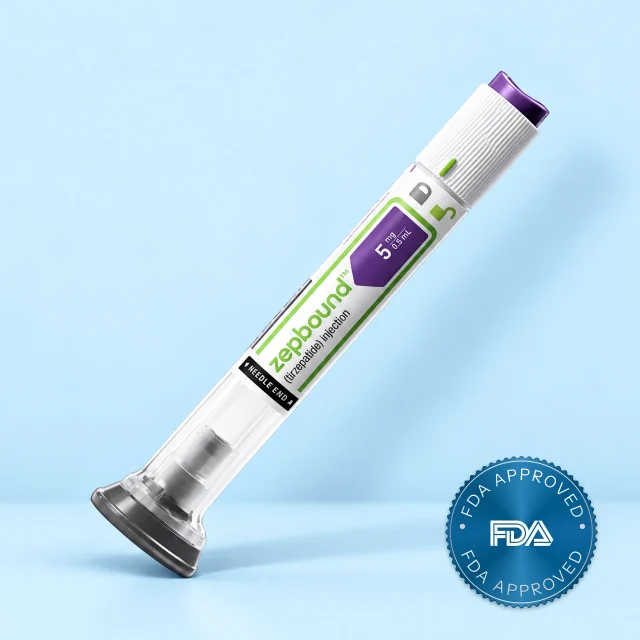
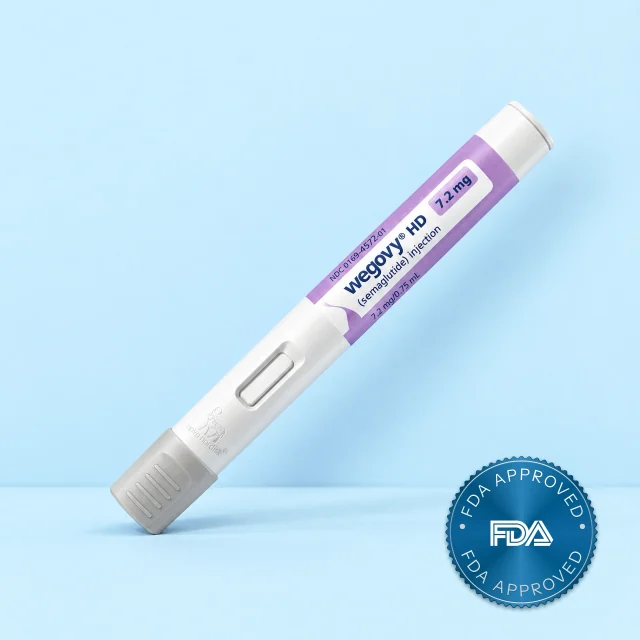
Wegovy and Zepbound are approved for use alongside a reduced-calorie diet and increased physical activity, so food and movement stay part of the plan.12,13 Nausea, diarrhea, vomiting and constipation are among the most common side effects of both. The GLP-1 side effects guide covers what to expect.
FitRx membership includes a dedicated coach and unlimited messaging with your provider, so you have someone to ask when eating enough protein gets hard. Whether a GLP-1 medication is appropriate for you is a decision for a licensed provider who has reviewed your health history. BMI is one of the things they look at, and the BMI calculator shows yours.
Frequently asked questions
How much protein do I need a day to lose weight?
A research review on protein in weight loss found that 1.2 to 1.6 grams per kilogram of body weight a day supports weight loss and maintenance. On the Lose weight setting, this calculator goes from 1.2 at the lowest activity level to 1.7 at the highest. For a 200-pound person with moderate activity, that works out to 127 to 136 grams a day.
Is the RDA of 0.8 grams per kilogram enough protein?
The Recommended Dietary Allowance for adults is 0.8 grams of protein per kilogram of body weight a day, and the calculator's Maintain weight setting starts there. The research cited on this page uses higher intakes for specific goals: 1.2 to 1.6 grams per kilogram for weight loss, 1.4 to 2.0 for most people who exercise, and 1.0 to 1.2 for adults over 65.
How much protein should I eat per meal?
The per-meal figure comes from splitting your daily range into three equal meals. A research review on protein and weight loss suggests about 25 to 30 grams per meal. A second review, on muscle building, proposes roughly 0.4 grams per kilogram of body weight per meal, over four or more meals. If you eat more often than three times a day, each serving can be smaller.
Should I use my current weight or my goal weight?
Enter what you weigh today. The calculator was built around current weight, and for most people that gives a workable range. At higher body weights the result can get very large, because the range rises with every pound. In that case, check with a clinician or dietitian, who may prefer to base your target on a goal weight.
Is a high-protein diet safe if I have kidney problems?
Do not raise your protein intake on the strength of a calculator if you have kidney disease or reduced kidney function, or if a clinician has advised you to restrict protein. Ask your clinician first. The ranges on this page are general estimates based on body weight, goal and activity level, and they do not take your medical history into account.
Do I need more protein while taking Wegovy or Zepbound?
This page does not set a separate protein number for people on GLP-1 medication. Weight lost with these medications includes some lean mass along with fat, and a smaller appetite can make protein easy to miss. The Lose weight setting is a reasonable starting point. Your provider can tell you whether your target should be higher or lower.
References (13)
- Neeland IJ, Linge J, Birkenfeld AL. Changes in lean body mass with glucagon-like peptide-1-based therapies and mitigation strategies. Diabetes Obes Metab. 2024;26(Suppl 4):16-27. https://pubmed.ncbi.nlm.nih.gov/38937282/
- Leidy HJ, Clifton PM, Astrup A, et al. The role of protein in weight loss and maintenance. Am J Clin Nutr. 2015;101(6):1320S-1329S. https://pubmed.ncbi.nlm.nih.gov/25926512/
- Westerterp KR. Diet induced thermogenesis. Nutr Metab (Lond). 2004;1(1):5. https://pubmed.ncbi.nlm.nih.gov/15507147/
- Institute of Medicine. Dietary Reference Intakes for Energy, Carbohydrate, Fiber, Fat, Fatty Acids, Cholesterol, Protein, and Amino Acids. National Academies Press; 2005. https://nap.nationalacademies.org/catalog/10490/dietary-reference-intakes-for-energy-carbohydrate-fiber-fat-fatty-acids-cholesterol-protein-and-amino-acids
- Bauer J, Biolo G, Cederholm T, et al. Evidence-based recommendations for optimal dietary protein intake in older people: a position paper from the PROT-AGE Study Group. J Am Med Dir Assoc. 2013;14(8):542-559. https://pubmed.ncbi.nlm.nih.gov/23867520/
- Morton RW, Murphy KT, McKellar SR, et al. A systematic review, meta-analysis and meta-regression of the effect of protein supplementation on resistance training-induced gains in muscle mass and strength in healthy adults. Br J Sports Med. 2018;52(6):376-384. https://pubmed.ncbi.nlm.nih.gov/28698222/
- U.S. Department of Agriculture, Agricultural Research Service. FoodData Central (SR Legacy food composition data). https://fdc.nal.usda.gov/
- Jager R, Kerksick CM, Campbell BI, et al. International Society of Sports Nutrition position stand: protein and exercise. J Int Soc Sports Nutr. 2017;14:20. https://pubmed.ncbi.nlm.nih.gov/28642676/
- Schoenfeld BJ, Aragon AA. How much protein can the body use in a single meal for muscle-building? Implications for daily protein distribution. J Int Soc Sports Nutr. 2018;15:10. https://pubmed.ncbi.nlm.nih.gov/29497353/
- Jensen MD, Ryan DH, Apovian CM, et al. 2013 AHA/ACC/TOS guideline for the management of overweight and obesity in adults. Circulation. 2014;129(25 Suppl 2):S102-S138. https://pubmed.ncbi.nlm.nih.gov/24222017/
- Drucker DJ. Mechanisms of action and therapeutic application of glucagon-like peptide-1. Cell Metab. 2018;27(4):740-756. https://pubmed.ncbi.nlm.nih.gov/29617641/
- Wegovy (semaglutide) injection and tablets. Prescribing information. Novo Nordisk; revised June 2026. https://www.novo-pi.com/wegovy.pdf
- Zepbound (tirzepatide) injection. Prescribing information. Eli Lilly and Company; revised August 2026. https://pi.lilly.com/us/zepbound-uspi.pdf
Sources were opened and checked on November 18, 2026. Prices, savings programs and labels change; confirm current terms with the manufacturer, your pharmacy or your provider.
A protein target is one part of the plan.
FitRx connects you with a licensed provider who reviews your health history and your goals, and decides whether GLP-1 medication is appropriate for you. A coach helps with the day-to-day.
Get startedFitRx membership costs $39 in month one and $135 a month from then on. Medication is a separate charge. Not everyone qualifies.
The FitRx care team
A calculator gives you a number. A care team helps you use it.
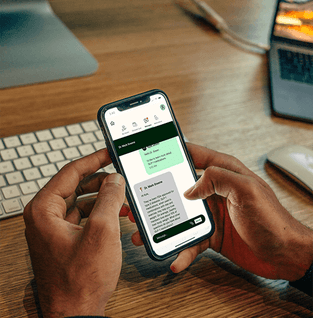
Hitting a protein number is harder when your appetite changes. FitRx members work with a licensed provider, a care coordinator and a coach, all online, so questions about eating enough, side effects and stalled progress go to people who know your history.
- U.S.-licensed providers review every intake and make every prescribing decision
- Unlimited secure messaging, plus monthly video or phone visits
- A care coordinator and a coach alongside your provider
- An insurance coordination team for brand-name GLP-1 prior authorizations
This page was written and reviewed by the FitRx care team and last updated November 18, 2026. It is general information, not personal medical advice.
GLP-1 medications our providers can prescribe
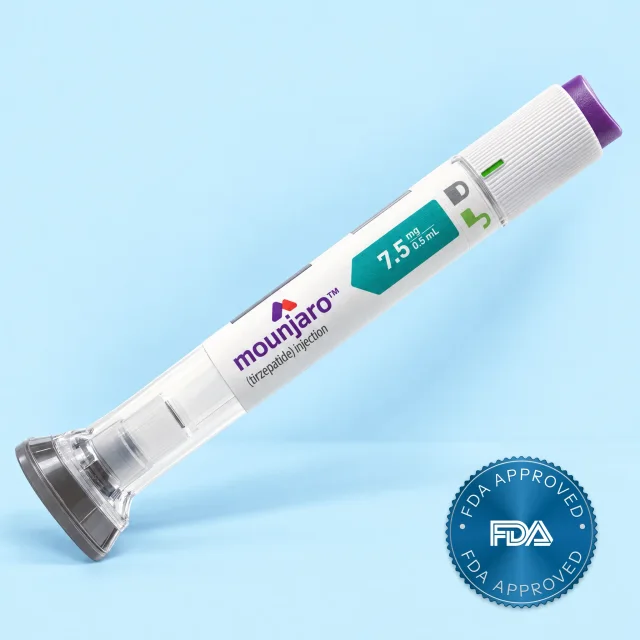
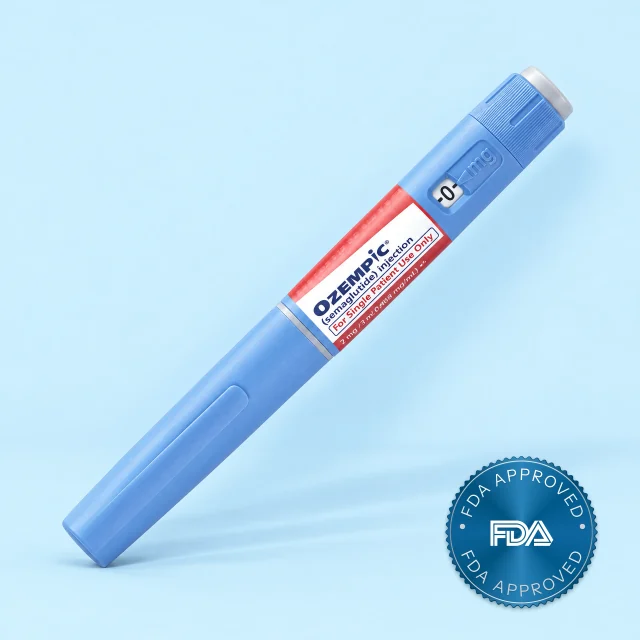
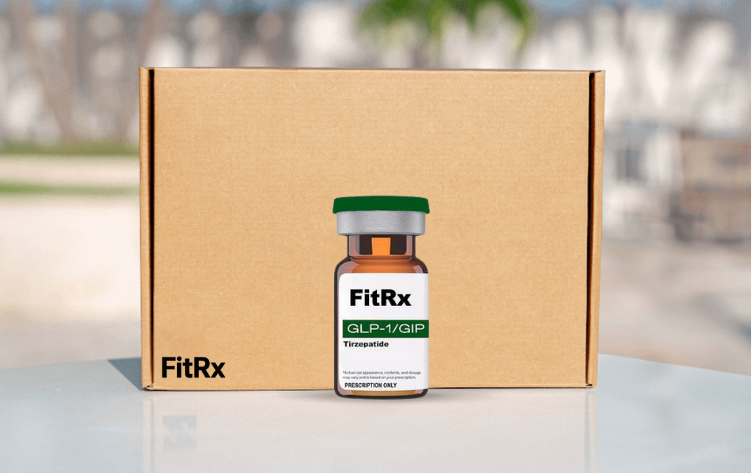
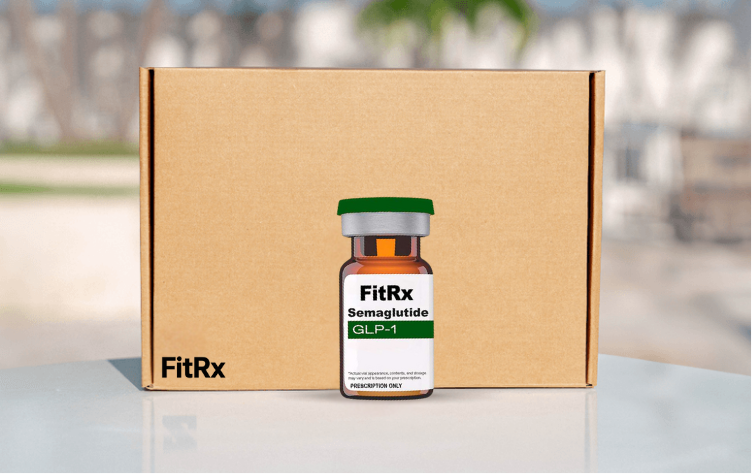
A provider decides which medication, if any, fits your health history. Compounded semaglutide and compounded tirzepatide are not FDA-approved and are not the same as the brand-name products.
More free weight loss tools
- Calorie Deficit CalculatorDaily calories to lose 1 or 2 pounds a week, and how long your goal may take.
- TDEE CalculatorHow many calories you burn in a day, activity included.
- BMR CalculatorThe calories your body uses at complete rest.
- BMI CalculatorYour body mass index and the CDC category it falls in.
- Food Noise ScoreA seven-question score for how loud thoughts about food are right now.
- Knee Relief CalculatorHow much load comes off your knees for every pound you lose.
- GLP-1 Supply TrackerFDA shortage status for GLP-1 medications, by brand and dose.
- GLP-1 Pipeline TrackerWeight loss drugs in development, by class, developer and trial phase.
- GLP-1 Insurance CheckerHow a GLP-1 coverage check works and what happens after it.