
BMI Calculator
Body mass index (BMI) is a quick way to see how your weight relates to your height. Enter both, and this BMI calculator shows your number, the CDC category it falls in and the healthy-weight range for someone as tall as you.
Your BMI
22.7
Healthy weight
Sample number. Enter your height and weight to see yours.
- CDC range for this category18.5 to 24.9
- Healthy-weight range at your height–
BMI is a screening number, not a diagnosis. A licensed provider can look at the rest: your health history, your labs and your goals.
See if you qualifyThis calculator is for adults 20 and older. BMI is a screening number. It is not a diagnosis, a body fat measurement or medical advice, and it is read differently for children and teens. It is not designed for use during pregnancy. Talk with a licensed clinician about what your result means for you.
What is BMI?
BMI stands for body mass index. It is one number built from two measurements, your weight and your height. It answers a narrow question: for a person of your height, is your weight low, in the expected range, or high?
The Centers for Disease Control and Prevention (CDC) sorts adult results into four categories: underweight, healthy weight, overweight and obesity. The CDC treats BMI as a screening measure: a number above or below the healthy range is a cue to investigate, and nothing more.1
A formula this simple is still used for two practical reasons:
- It is easy to get. All you need is a scale and a way to measure your height.
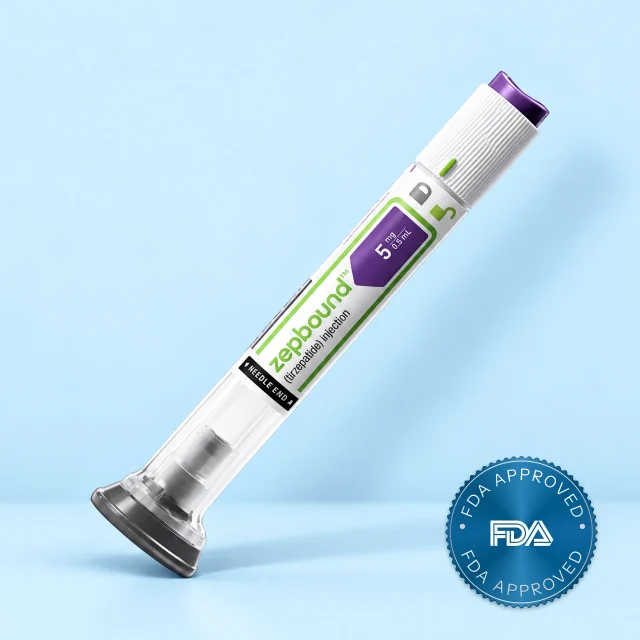
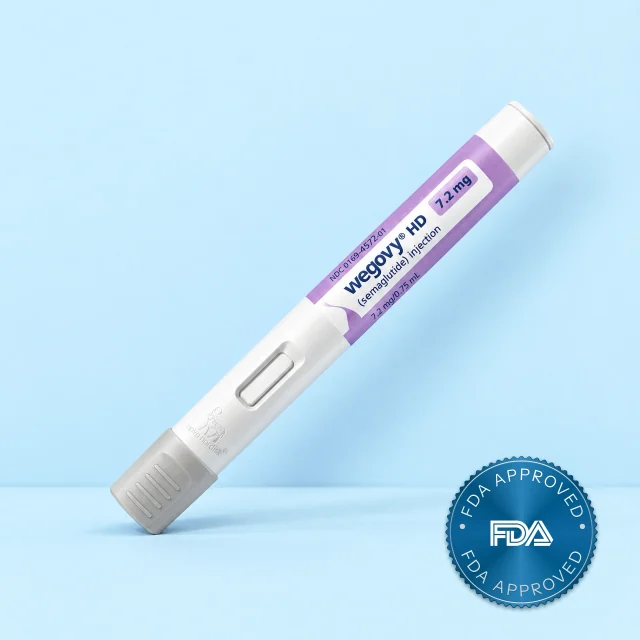
- It is a shared yardstick. The FDA-approved labels for the weight management medications Wegovy and Zepbound describe who the drugs are for in terms of obesity and overweight, and both of those are BMI categories.2,3
What BMI does not do is measure body fat. It cannot see what your weight is made of or where you carry it, a limit examined at length in a published critical review of the measure.4 The sections below explain how the number is worked out, what each category means and where the number falls short.
BMI is also a different kind of number from BMR or TDEE. Those estimate calories. If that is what you are after, try the BMR calculator or the TDEE calculator.
How is BMI calculated?
BMI is weight divided by height squared. The only wrinkle is the units:
| Units | BMI formula |
|---|---|
| Pounds and inches | weight in lb ÷ (height in inches × height in inches) × 703 |
| Kilograms and meters | weight in kg ÷ (height in meters × height in meters) |
This calculator uses the pounds-and-inches version. Your height is converted to inches (feet × 12, plus the inches you entered), the formula is run, and the answer is rounded to one decimal place. The category is chosen from that rounded number.
A worked example
Take an adult who is 5 feet 9 inches tall and weighs 180 pounds.
- Height in inches: (5 × 12) + 9 = 69
- Height squared: 69 × 69 = 4,761
- Weight divided by height squared: 180 ÷ 4,761 = 0.03781
- Multiply by 703: 0.03781 × 703 = 26.58, shown as 26.6
A BMI of 26.6 is in the overweight category (25 to 29.9). To check the answer in metric units, the same person weighs 81.65 kg and is 1.7526 m tall. Height squared is 3.0716, and 81.65 ÷ 3.0716 = 26.58. Same result.
Where 703 comes from
The 703 is a unit conversion. One pound is 0.45359237 kg and one inch is 0.0254 m, and 0.45359237 ÷ (0.0254 × 0.0254) = 703.07. Rounding that to 703 changes a BMI by less than a hundredth of a point.
What the calculator accepts
- Feet: a whole number from 3 to 8.
- Inches: 0 up to, but not including, 12. Decimals such as 5.5 are fine. If you leave inches blank, it counts as 0.
- Weight: 70 to 700 pounds. Decimals are fine here too.
It does not ask for your age or sex, because the adult BMI formula does not use them.
What does your BMI number mean?
Every result is matched to one of the CDC’s adult categories. Obesity is further divided into three classes.1
| Category | CDC definition (BMI) | Shown by this calculator as |
|---|---|---|
| Underweight | Below 18.5 | Underweight, below 18.5 |
| Healthy weight | 18.5 to less than 25 | Healthy weight, 18.5 to 24.9 |
| Overweight | 25 to less than 30 | Overweight, 25 to 29.9 |
| Obesity | 30 or greater | Obesity, 30 or higher |
| Class 1 obesity | 30 to less than 35 | Not labeled separately |
| Class 2 obesity | 35 to less than 40 | Not labeled separately |
| Class 3 obesity | 40 or greater | Not labeled separately |
Categories for adults 20 and older, from the CDC. The calculator shows any result of 30 or higher as Obesity and does not name the class.
Because the calculator rounds to one decimal before it picks a category, a result that works out to 24.96 is shown as 25.0 and counted as overweight, and a result of 18.46 is shown as 18.5 and counted as healthy weight.
In plain terms:
- Underweight. Your weight is low for your height. That is worth raising with a clinician, especially if you have lost weight without trying.
- Healthy weight. Your weight is in the range the CDC expects for your height. That is not a clean bill of health, because a scale cannot see blood pressure or blood sugar.
- Overweight. Your weight is above that range. It is a prompt to check other measures of health, not a finding by itself.
- Obesity. Your weight is well above the range, and the class tells you how far above. Talk with a provider about your health and your options.
The healthy-weight range for your height
Below your BMI, the calculator shows a healthy-weight range in pounds. It finds it by testing whole-pound weights at your height and reporting the lowest and highest ones whose BMI, rounded to one decimal, is between 18.5 and 24.9.
For an adult who is 5 feet 9 inches (69 inches, 4,761 when squared), the arithmetic is 18.5 × 4,761 ÷ 703 = 125.3 pounds and 24.9 × 4,761 ÷ 703 = 168.6 pounds. The calculator shows 125 to 168 lb. At 125 pounds the BMI is 18.46, which rounds to 18.5, so 125 is the first whole pound in the range. At 169 pounds the BMI is 24.95, which rounds to 25.0, so 168 is the last.
Here is how the categories translate into weight at a few heights:
| Height | Healthy weight (BMI 18.5 to 24.9) | Overweight (BMI 25 to 29.9) | Obesity (BMI 30 or higher) |
|---|---|---|---|
| 5 ft 0 in | 95 to 127 lb | 128 to 153 lb | 154 lb or more |
| 5 ft 2 in | 101 to 136 lb | 137 to 163 lb | 164 lb or more |
| 5 ft 4 in | 108 to 145 lb | 146 to 174 lb | 175 lb or more |
| 5 ft 6 in | 115 to 154 lb | 155 to 185 lb | 186 lb or more |
| 5 ft 8 in | 122 to 164 lb | 165 to 196 lb | 197 lb or more |
| 5 ft 9 in | 125 to 168 lb | 169 to 202 lb | 203 lb or more |
| 5 ft 10 in | 129 to 173 lb | 174 to 208 lb | 209 lb or more |
| 6 ft 0 in | 137 to 183 lb | 184 to 220 lb | 221 lb or more |
| 6 ft 2 in | 144 to 194 lb | 195 to 233 lb | 234 lb or more |
Whole-pound weights worked out with the same formula and rounding as the calculator. Anything below the healthy-weight column is in the underweight category.
The table also shows why weight alone tells you little. At 180 pounds, a person who is 5 feet 2 inches has a BMI of 32.9, and a person who is 6 feet 2 inches has a BMI of 23.1.
What does BMI not tell you?
BMI has two inputs. Anything that is not height or weight is invisible to it. That is why the CDC treats it as a screening measure, and why a published critical review of BMI spends so much time on its blind spots.1,4
- Body fat. BMI does not measure body fat directly. Muscle, bone, water and fat all count the same on a scale.
- Muscle. Someone with a lot of muscle can get a result in the overweight or obesity category while carrying little fat.
- Age. BMI can misread older adults. Someone who has lost muscle over the years can have a BMI in the healthy range and still carry more fat than the number suggests.
- Where fat is carried. Two people with the same BMI can carry their weight in very different places, and the formula cannot tell them apart.
- Everything a scale cannot see. Blood pressure, blood sugar, cholesterol, sleep, fitness and family history are not in the formula.
There are also people the adult categories are not meant for. They apply to adults 20 and older. For children and teens, BMI is read against percentiles, not the adult cut-offs, so this calculator is the wrong tool for anyone under 20.1 During pregnancy, weight is expected to change, and your clinician is the right person to ask.
None of this makes BMI useless. It means a BMI result should start a conversation, and other information should finish it. A provider can add the pieces the formula misses: your waist measurement, your blood pressure, your lab results and your health history.
How should you use your BMI result?
Treat your category as a starting point. What you do next depends on where you landed.
- Below 18.5. Talk with a clinician about why your weight is low before you try to change it yourself.
- 18.5 to 24.9. Your weight is not raising a flag. Regular checkups still matter, since BMI cannot see blood pressure or blood sugar.
- 25 or higher. Go over the rest of your health picture with a provider and decide together whether losing weight would help you.
You do not have to reach the healthy range to benefit
The healthy-weight range can look a long way off. It does not have to be the first goal. The clinical guideline for managing overweight and obesity in adults notes that losing 5% to 10% of body weight brings health benefits.5
Here is what that looks like for an adult who is 5 feet 9 inches and weighs 220 pounds, a BMI of 32.5:
| Weight lost | New weight | New BMI | Category |
|---|---|---|---|
| None | 220 lb | 32.5 | Obesity |
| 5% (11 lb) | 209 lb | 30.9 | Obesity |
| 10% (22 lb) | 198 lb | 29.2 | Overweight |
BMI worked out with the calculator’s formula and rounding. The healthy-weight range at this height tops out at 168 lb.
A 10% loss leaves this person 30 pounds above the healthy-weight range, and it is still the amount the guideline ties to health benefits. The category matters less than the direction.
How many pounds is one BMI point?
It depends on your height. One BMI point equals your height in inches, squared, divided by 703. At 5 feet 9 inches that is about 6.8 pounds. At 5 feet 4 inches it is about 5.8 pounds. Taller people need to lose more weight to move the number by the same amount.
Turn the number into a plan
BMI tells you where you are, not how to eat. Three other calculators handle that:
- Find your daily calorie burn with the TDEE calculator.
- Set a daily calorie target for your goal weight with the calorie deficit calculator.
- Get a daily protein range for your weight and goal from the protein calculator.
If you track your BMI over time, weigh yourself under the same conditions each time: same scale, same time of day, similar clothing. Body weight shifts from day to day with food and fluids, so compare like with like and watch the trend over several weeks.
What BMI do you need for weight loss medication?
BMI is one of the first things a provider checks when weight loss medication comes up, because the FDA-approved labels are written around it. For weight management in adults, alongside a reduced-calorie diet and more physical activity, the Wegovy and Zepbound labels cover:2,3
- Adults with obesity, which means a BMI of 30 or higher
- Adults with overweight, a BMI of 27 or higher, who also have at least one weight-related condition
This table shows the first whole-pound weight at which the calculator reports a BMI of 27.0 and of 30.0 at each height:
| Height | BMI reaches 27 at | BMI reaches 30 at |
|---|---|---|
| 5 ft 0 in | 139 lb | 154 lb |
| 5 ft 2 in | 148 lb | 164 lb |
| 5 ft 4 in | 158 lb | 175 lb |
| 5 ft 6 in | 167 lb | 186 lb |
| 5 ft 8 in | 178 lb | 197 lb |
| 5 ft 9 in | 183 lb | 203 lb |
| 5 ft 10 in | 188 lb | 209 lb |
| 6 ft 0 in | 199 lb | 221 lb |
| 6 ft 2 in | 210 lb | 234 lb |
Worked out with the calculator’s formula and one-decimal rounding. A provider works from your measured height and weight, not from this table.
Meeting the BMI number does not mean a prescription follows. It opens the question. A provider still reviews your health history, your other medications and the reasons a drug may not be safe for you. Both labels carry a boxed warning about thyroid C-cell tumors, and neither drug should be used by people with a personal or family history of medullary thyroid carcinoma or with MEN 2.2,3 Sometimes the right answer is a different treatment, or no medication.
For a sense of scale: in a 68-week trial of weekly Wegovy injections in adults without diabetes, people lost an average of 14.9% of their body weight, compared with 2.4% on placebo.6 In a 72-week trial of Zepbound in adults without diabetes, the average loss was 15.0% to 20.9% depending on the dose, compared with 3.1% on placebo.7 Those are averages across trial participants. Individual results vary.
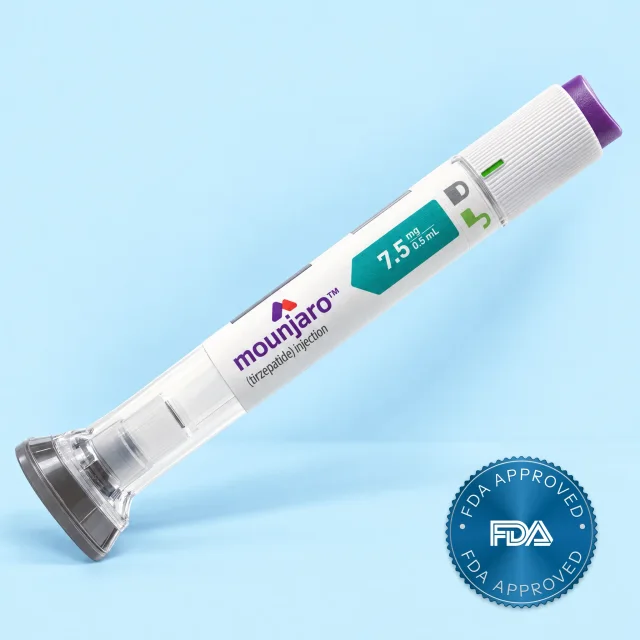
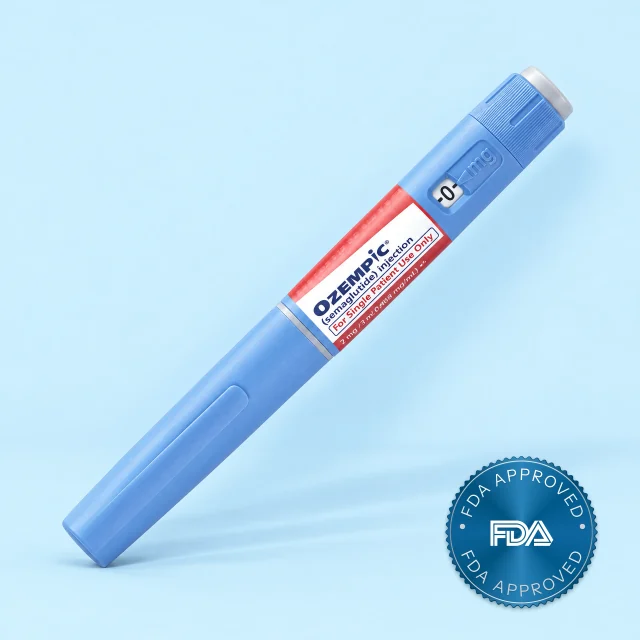
Ozempic and Mounjaro contain the same active ingredients, semaglutide and tirzepatide, but they are FDA-approved for type 2 diabetes and are not approved for weight loss.8,9
Insurance is a separate question. Plans set their own coverage rules, and those can differ from the label. The GLP-1 insurance checker explains how a coverage check works at FitRx.
Frequently asked questions
What is a healthy BMI for adults?
The CDC defines a healthy weight for adults 20 and older as a BMI of 18.5 to less than 25. This calculator shows that range as 18.5 to 24.9. Below 18.5 is underweight, 25 to less than 30 is overweight, and 30 or greater is obesity. For an adult who is 5 feet 9 inches, the healthy range works out to 125 to 168 pounds.
Is BMI accurate for muscular people or older adults?
Not always. BMI uses only height and weight, so it does not measure body fat directly and has no way of knowing whether a pound is muscle or fat. A very muscular person can get a result in the overweight or obesity category without carrying much fat, and an older adult who has lost muscle can get a healthy-weight result that understates their body fat. That is why BMI is treated as a screening number and read alongside other information.
Is the BMI formula different for men and women?
No. The adult formula uses only height and weight, and this calculator does not ask for your sex or age. The same CDC categories apply to all adults 20 and older. That simplicity is also one of the limits of BMI, because it cannot account for differences in body composition from one person to the next.
What BMI qualifies for Wegovy or Zepbound?
The FDA-approved labels for Wegovy and Zepbound cover adults with obesity, meaning a BMI of 30 or higher, and adults with overweight, meaning a BMI of 27 or higher, who also have at least one weight-related condition. Meeting the BMI number is only the first step. A licensed provider reviews your health history and makes the final decision, and insurance plans can set their own rules.
Can I use this BMI calculator for my child or teenager?
No. The categories on this page are for adults 20 and older. For children and teens, BMI is read against percentiles, not the adult cut-offs, so an adult calculator will give a misleading answer. Ask your child's pediatrician how their height and weight are tracking.
How much weight do I need to lose to lower my BMI by one point?
It depends on your height. One BMI point equals your height in inches, squared, divided by 703. For someone 5 feet 9 inches that is about 6.8 pounds, and for someone 5 feet 4 inches it is about 5.8 pounds. Taller people need to lose more pounds to move their BMI by the same amount.
References (9)
- Centers for Disease Control and Prevention. Adult BMI categories. https://www.cdc.gov/bmi/adult-calculator/bmi-categories.html
- Wegovy (semaglutide) injection and tablets. Prescribing information. Novo Nordisk; revised June 2026. https://www.novo-pi.com/wegovy.pdf
- Zepbound (tirzepatide) injection. Prescribing information. Eli Lilly and Company; revised August 2026. https://pi.lilly.com/us/zepbound-uspi.pdf
- Nuttall FQ. Body mass index: obesity, BMI, and health: a critical review. Nutr Today. 2015;50(3):117-128. https://pubmed.ncbi.nlm.nih.gov/27340299/
- Jensen MD, Ryan DH, Apovian CM, et al. 2013 AHA/ACC/TOS guideline for the management of overweight and obesity in adults. Circulation. 2014;129(25 Suppl 2):S102-S138. https://pubmed.ncbi.nlm.nih.gov/24222017/
- Wilding JPH, Batterham RL, Calanna S, et al. Once-weekly semaglutide in adults with overweight or obesity (STEP 1). N Engl J Med. 2021;384(11):989-1002. https://pubmed.ncbi.nlm.nih.gov/33567185/
- Jastreboff AM, Aronne LJ, Ahmad NN, et al. Tirzepatide once weekly for the treatment of obesity (SURMOUNT-1). N Engl J Med. 2022;387(3):205-216. https://pubmed.ncbi.nlm.nih.gov/35658024/
- Ozempic (semaglutide) injection. Prescribing information. Novo Nordisk; revised May 2026. https://www.novo-pi.com/ozempic.pdf
- Mounjaro (tirzepatide) injection. Prescribing information. Eli Lilly and Company; revised August 2026. https://pi.lilly.com/us/mounjaro-uspi.pdf
Sources were opened and checked on November 18, 2026. Prices, savings programs and labels change; confirm current terms with the manufacturer, your pharmacy or your provider.
Your BMI is one number. A provider looks at the whole picture.
At FitRx, a licensed provider reviews your health history and your goals, then decides whether GLP-1 medication is appropriate for you. It all happens online.
Get startedFitRx membership costs $39 in month one and $135 a month from then on. Medication is a separate charge. Not everyone qualifies.

The FitRx care team
A calculator gives you a number. A care team helps you use it.
BMI can tell you which category you are in. It cannot tell you why, or what to do about it. FitRx members work with a licensed provider, a care coordinator and a coach, all online, so the number gets read next to your health history, your medications and what you have already tried.
- U.S.-licensed providers review every intake and make every prescribing decision
- Unlimited secure messaging, plus monthly video or phone visits
- A care coordinator and a coach alongside your provider
- An insurance coordination team for brand-name GLP-1 prior authorizations
This page was written and reviewed by the FitRx care team and last updated November 18, 2026. It is general information, not personal medical advice.
GLP-1 medications our providers can prescribe
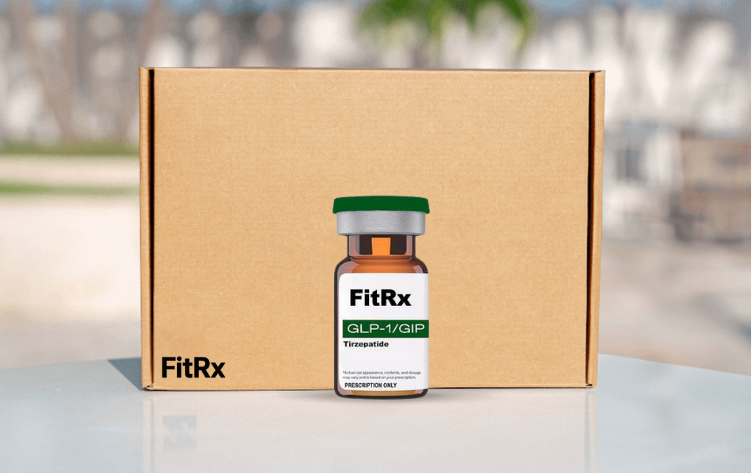
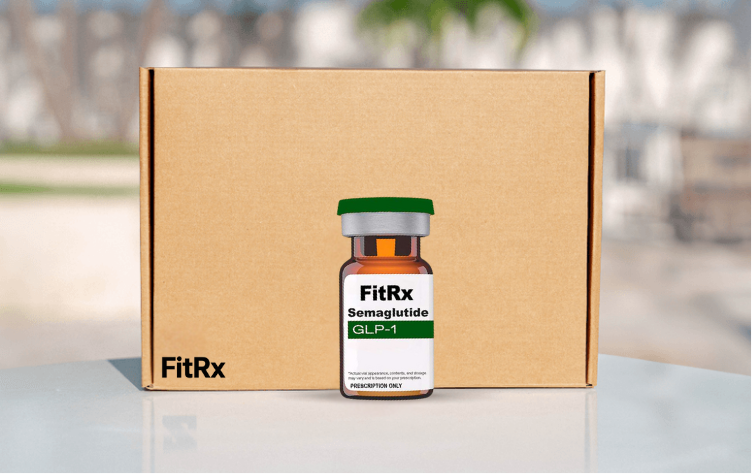
A provider decides which medication, if any, fits your health history. Compounded semaglutide and compounded tirzepatide are not FDA-approved and are not the same as the brand-name products.
More free weight loss tools
- Calorie Deficit CalculatorDaily calories to lose 1 or 2 pounds a week, and how long your goal may take.
- TDEE CalculatorHow many calories you burn in a day, activity included.
- BMR CalculatorThe calories your body uses at complete rest.
- Protein CalculatorA daily protein range for losing fat, maintaining or building muscle.
- Food Noise ScoreA seven-question score for how loud thoughts about food are right now.
- Knee Relief CalculatorHow much load comes off your knees for every pound you lose.
- GLP-1 Supply TrackerFDA shortage status for GLP-1 medications, by brand and dose.
- GLP-1 Pipeline TrackerWeight loss drugs in development, by class, developer and trial phase.
- GLP-1 Insurance CheckerHow a GLP-1 coverage check works and what happens after it.