The Ozempic dosing chart, step by step
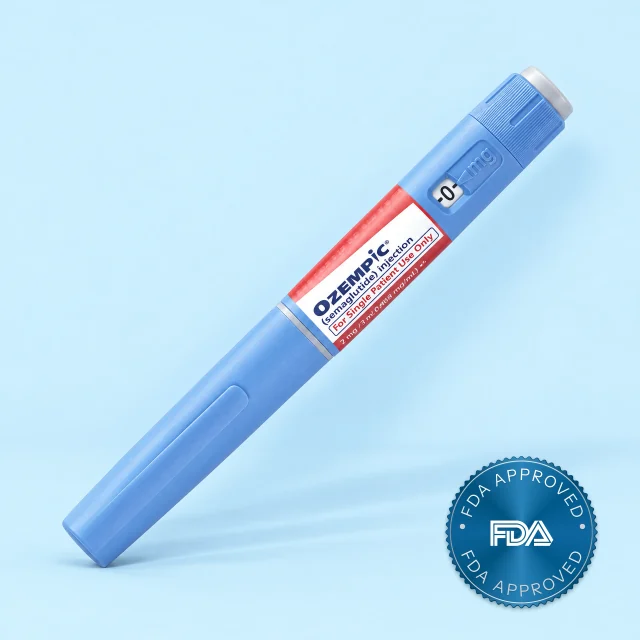
Ozempic (semaglutide) is a once-weekly GLP-1 injection made by Novo Nordisk. The FDA has approved it for adults with type 2 diabetes: to improve blood sugar control alongside diet and exercise, to lower the risk of major cardiovascular events in people with established cardiovascular disease, and to lower the risk of worsening kidney disease and cardiovascular death in people with chronic kidney disease.1
The schedule has one starting dose and three maintenance doses.
| Step | Weekly dose | Time at this dose | What the label says |
|---|---|---|---|
| Starting dose | 0.25 mg | 4 weeks | A starting dose, not a maintenance dose |
| First maintenance dose | 0.5 mg | At least 4 weeks before any increase | Follows the first 4 weeks |
| Second maintenance dose | 1 mg | At least 4 weeks before any increase | Only if more blood sugar control is needed. Also the maintenance dose for the kidney indication |
| Maximum dose | 2 mg | Ongoing | Only if more blood sugar control is needed after at least 4 weeks on 1 mg |
Source: Ozempic prescribing information, revised May 2026.1 The 4-week periods are minimums. Your prescriber sets your actual schedule.
How quickly can the dose go up?
Add up the minimums and you get the shortest route the label permits: 0.25 mg for weeks 1 to 4, 0.5 mg for weeks 5 to 8, 1 mg from week 9 at the earliest and 2 mg from week 13 at the earliest. That is a floor, not a timetable. Each step to 1 mg or 2 mg depends on a need for more blood sugar control, which your prescriber judges.
Is 2 mg the goal?
No. The label names three maintenance doses: 0.5 mg, 1 mg and 2 mg. In its 40-week trial of the top two, HbA1c (a blood test that reflects average blood sugar) fell by 2.1 points on 2 mg and 1.9 points on 1 mg.1 Both groups improved, and the gap was small.
What is the dose for kidney protection?
For adults with type 2 diabetes and chronic kidney disease, the label sets the maintenance dose at 1 mg once a week.1 FLOW, a trial in people with type 2 diabetes and chronic kidney disease, tested that dose.2
Three Ozempic pens: what dose does each one deliver?
There are three Ozempic pens, all prefilled. Each is a single-patient-use pen, meant for one person across more than one weekly injection. The pens hold different concentrations of semaglutide, so each is matched to particular doses.1
| Pen (total semaglutide) | Concentration | Dose it delivers | Doses in the pen |
|---|---|---|---|
| 2 mg in 3 mL | 0.68 mg/mL | 0.25 mg or 0.5 mg | Varies with your prescribed dose |
| 4 mg in 3 mL | 1.34 mg/mL | 1 mg | 4 |
| 8 mg in 3 mL | 2.68 mg/mL | 2 mg | 4 |
Source: Ozempic prescribing information.1 Your pharmacist can tell you how many injections to expect from your pen.
What about the prefilled syringes?
The label also lists single-dose prefilled syringes containing 0.25 mg, 0.5 mg or 1 mg in 0.5 mL.1 One syringe holds one dose. The list has no 2 mg syringe.
Why can’t you swap one pen for another?
The liquid inside is not the same strength. A milliliter from the 8 mg pen carries almost four times as much semaglutide as a milliliter from the 2 mg pen (2.68 mg versus 0.68 mg).
Counting clicks to reach an in-between dose is a workaround that circulates online. The doses the label gives for each pen are the ones in the table. If you think you need something different, raise it with your prescriber instead of working around the pen.
Pens versus compounded vials
Brand-name Ozempic is dosed in milligrams and delivered by a pen matched to the dose. Compounded semaglutide is a different product: it comes in a vial, and each dose is drawn up with a syringe. That measuring step is where mistakes have happened. The FDA has received reports of adverse events, some requiring hospitalization, that may be related to dosing errors with compounded injectable semaglutide, including patients measuring the wrong dose and clinicians miscalculating doses.3,4
Compounded semaglutide is not FDA-approved. The FDA does not review compounded drugs for safety, effectiveness or quality. Compounded semaglutide is not a generic of Ozempic or Wegovy and was not tested in their trials.4 A licensed provider decides whether it is appropriate for a patient. The chart on this page applies to brand-name Ozempic only. If your medication comes in a vial, follow your provider’s and pharmacy’s directions exactly, and ask before you inject if the amount is unclear.
Our semaglutide page explains both routes. The guide to tirzepatide dosing in units shows how milligrams, milliliters and syringe units relate for a different medication dispensed in vials.
How is Ozempic taken each week?
The routine on the label is short.1
Keep to one day of the week
Ozempic is injected once a week, on the same day each week.
Choose any time of day
Morning or evening, with or without meals.
Inject under the skin
The label names three areas: the abdomen, the thigh or the upper arm.
Use only your own pen
The label warns never to share a pen with anyone else.
Follow the instructions with your pen
They cover how to set the dose and inject. Ask your pharmacist or care team about anything unclear.
What should your prescriber know before a first dose or an increase?
These points come from the Ozempic label.1
- Thyroid history. Ozempic has a boxed warning about thyroid C-cell tumors, seen in rodents. It is contraindicated in people with a personal or family history of medullary thyroid carcinoma (MTC), with Multiple Endocrine Neoplasia syndrome type 2 (MEN 2), or with a past serious allergic reaction to semaglutide.
- Insulin or a sulfonylurea. Low blood sugar is a listed risk when Ozempic is used with insulin or a medicine that makes the body release insulin.
- Medicines taken by mouth. Ozempic slows stomach emptying, which may affect how they are absorbed.
- Other conditions. The label calls for monitoring in people with a history of diabetic retinopathy, and does not recommend Ozempic in severe gastroparesis.
- Pregnancy plans. The label says to stop Ozempic at least 2 months before a planned pregnancy, because semaglutide stays in the body a long time.
Missed a dose of Ozempic? The 5-day rule
The label gives one rule. If it is within 5 days of the day the dose was due, take it. If more than 5 days have gone by, skip that dose and take the next one on your usual day.1
Here is how that plays out for someone whose injection day is Monday.
| You remember on | Days since the dose was due | What the rule says |
|---|---|---|
| Wednesday | 2 | Within 5 days: take the missed dose |
| Friday | 4 | Within 5 days: take the missed dose |
| Sunday | 6 | More than 5 days: skip it and take Monday’s dose as usual |
Examples worked from the missed-dose rule in the Ozempic prescribing information.1
The rule never asks for a second dose to catch up. You either take the missed dose late or let it go. If a late dose lands close to your usual day, ask your prescriber or pharmacist when to take the next one.
Can you change your injection day?
Yes. The label allows it as long as the two doses are more than 48 hours (2 days) apart.1 Moving from Monday to Thursday leaves three days between injections, which clears the limit. Injecting on Monday and again on Tuesday would not.
What if you have missed more than one week?
The 5-day rule covers a single late dose. If you have gone two or more weeks without one, contact your prescriber before you inject again. How to restart is their decision.
Do other GLP-1 injections follow the same rule?
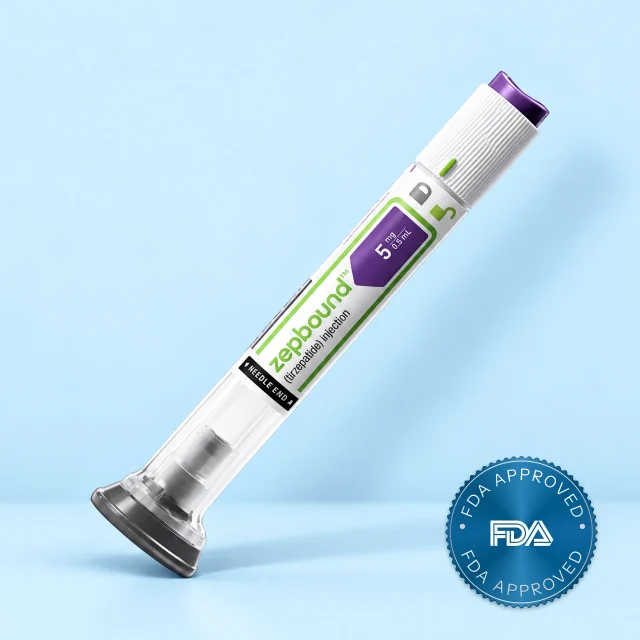
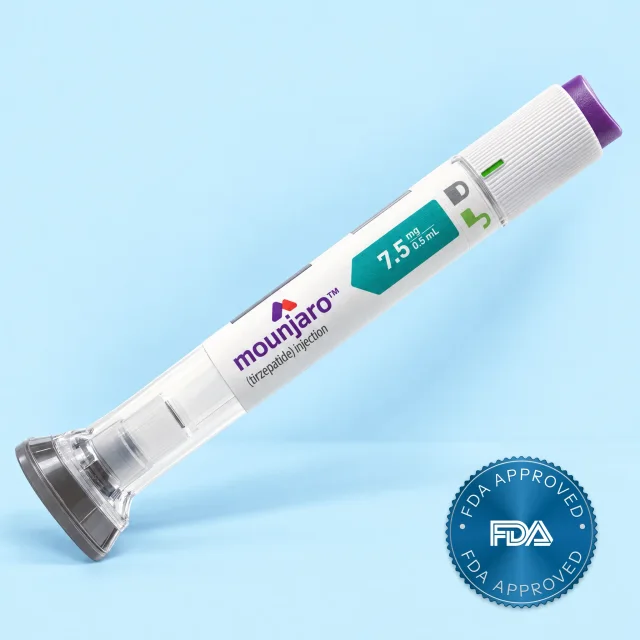
No. Mounjaro’s label, for example, gives 4 days (96 hours) to take a missed dose and asks for 3 days (72 hours) between doses when the day changes.5 Do not borrow a rule from a different medication. Mounjaro vs. Ozempic compares the two.
Is there an Ozempic dosage for weight loss?
No. Ozempic is FDA-approved for type 2 diabetes. It is not approved for weight loss, and its label has no weight-loss dosing schedule.1 The only schedule is the one at the top of this page, and the label’s reason for going from 0.5 mg to 1 mg or 2 mg is blood sugar control, not the number on the scale.
If a prescriber chooses Ozempic for someone whose main goal is weight, that is an off-label use. No separate set of doses exists for it, and how to proceed is the prescriber’s call.
What happened to weight in Ozempic’s trials?
The label reports weight changes from its trials. Everyone in them had type 2 diabetes.
| Trial in the label | Length | Average weight change on Ozempic | Comparison group |
|---|---|---|---|
| Ozempic used alone | 30 weeks | −3.8 kg on 0.5 mg; −4.7 kg on 1 mg | −1.2 kg on placebo |
| Ozempic versus sitagliptin, another diabetes medicine | 56 weeks | −4.2 kg on 0.5 mg; −5.5 kg on 1 mg | −1.7 kg on sitagliptin |
| 2 mg versus 1 mg | 40 weeks | −6.4 kg on 2 mg | −5.6 kg on 1 mg |
Average changes in adults with type 2 diabetes, from the Ozempic prescribing information.1 Ozempic is not FDA-approved for weight loss. Individual results vary. One kilogram is about 2.2 pounds.
In the trial of the two highest doses, people started at about 99 to 100 kg on average, so both results come to roughly 6% of body weight. The 2 mg group lost 0.8 kg more, on average, over 40 weeks.1
Which semaglutide product is approved for weight management?
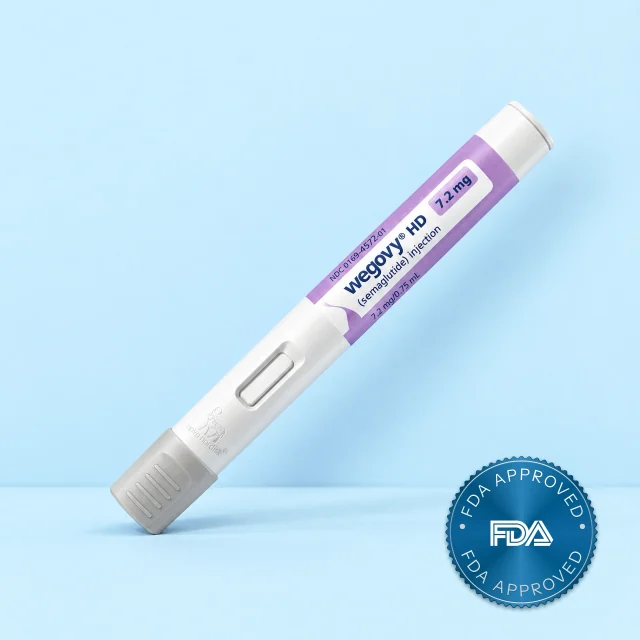
Wegovy. It contains semaglutide, comes from the same manufacturer, and is approved, with a reduced-calorie diet and more physical activity, to reduce excess body weight and keep it off. Its label has its own schedule, which climbs higher than Ozempic’s.6
| Ozempic | Wegovy injection | |
|---|---|---|
| FDA-approved for | Type 2 diabetes. Not approved for weight loss. | Weight management, among other uses |
| Starting dose | 0.25 mg a week for 4 weeks | 0.25 mg a week for weeks 1 to 4 |
| Steps after that | 0.5 mg, then 1 mg and 2 mg only if more blood sugar control is needed, at least 4 weeks apart | 0.5 mg (weeks 5 to 8), 1 mg (weeks 9 to 12), 1.7 mg (weeks 13 to 16) |
| Maintenance dose | 0.5 mg, 1 mg or 2 mg | From week 17: 2.4 mg (recommended) or 1.7 mg for adults |
| Maximum dose | 2 mg a week | 7.2 mg a week (Wegovy HD), an option after at least 4 weeks tolerating 2.4 mg, when more weight reduction is clinically indicated |
Sources: Ozempic and Wegovy prescribing information.1,6
Wegovy’s label reports weight as a percentage of body weight. In its main trial of adults without diabetes, average weight loss at 68 weeks was 14.9% on 2.4 mg and 2.4% on placebo. In a separate trial of adults with type 2 diabetes it was 9.6% and 3.4%.6 These trials enrolled different people than Ozempic’s, so the figures are not a like-for-like comparison. They are averages, and individual results vary.
Wegovy’s label covers adults with a BMI of 30 or higher, or 27 or higher with a weight-related condition, and a provider makes the final call. The BMI calculator shows where you fall. Our Wegovy page covers its doses, side effects and cost, and the Ozempic page explains what Ozempic is and is not approved for.
Ozempic pill dosage: how the tablets differ from the pen
Semaglutide also comes as a tablet. Two tablet brands share one label: Ozempic tablets and Rybelsus. Both are for type 2 diabetes only, for blood sugar control and to reduce cardiovascular risk in adults at high risk.7 Neither is approved for weight loss.
| Tablet | Starting dose | Next dose | Higher dose |
|---|---|---|---|
| Ozempic tablets | 1.5 mg once daily for 30 days | 4 mg once daily | 9 mg once daily, if more blood sugar control is needed |
| Rybelsus | 3 mg for 30 days | 7 mg | 14 mg |
Source: prescribing information for Rybelsus and Ozempic tablets, revised January 2026.7
Two cautions. Ozempic tablets and Rybelsus are not interchangeable milligram for milligram, so a dose of one cannot be read across to the other. And the tablet doses are daily amounts, while the pen doses are weekly. Nothing here converts one into the other. A switch is for your prescriber to work out.
How are the tablets taken?
- In the morning, on an empty stomach.
- With up to 4 ounces of water.
- Then wait 30 minutes before eating, drinking or taking other oral medicines.7
One more note on Rybelsus: the FDA’s drug shortage database lists its 3 mg, 7 mg and 14 mg tablets as “to be discontinued”, in an entry posted June 4, 2026.8 If you take it, ask your prescriber what that means for you.
Does a higher Ozempic dose mean more side effects?
For some side effects, yes. Ozempic’s most common side effects are in the stomach and gut. The label reports how often each happened at 0.5 mg and at 1 mg, next to placebo.1
| Reaction | Placebo | Ozempic 0.5 mg | Ozempic 1 mg |
|---|---|---|---|
| Nausea | 6.1% | 15.8% | 20.3% |
| Vomiting | 2.3% | 5.0% | 9.2% |
| Diarrhea | 1.9% | 8.5% | 8.8% |
| Abdominal pain | 4.6% | 7.3% | 5.7% |
| Constipation | 1.5% | 5.0% | 3.1% |
| Any stomach or gut reaction | 15.3% | 32.7% | 36.4% |
| Stopped treatment because of one | 0.4% | 3.1% | 3.8% |
Share of adults with type 2 diabetes reporting each reaction in placebo-controlled trials (262 on placebo, 260 on 0.5 mg, 261 on 1 mg), from the Ozempic prescribing information.1
The pattern differs by symptom. Nausea and vomiting were more common at 1 mg than at 0.5 mg. Diarrhea was about the same. Abdominal pain and constipation were reported less often at 1 mg. Overall, about a third of people on either dose reported a stomach or gut reaction, and fewer than 4 in 100 stopped treatment because of one.
What about 2 mg?
In the trial comparing the two highest doses, stomach and gut reactions were reported by 34% of people on 2 mg and 30.8% on 1 mg.1
Why does the schedule move in steps?
The label notes that most nausea, vomiting and diarrhea happened during dose escalation, the weeks when the dose was being raised.1 That makes the weeks after each increase the ones to watch.
What if a new dose is hard on your stomach?
- Tell your prescriber. Whether to stay, wait longer or change course is their decision.
- Keep drinking fluids. The medication guide says fluids lower the chance of dehydration when you have nausea, vomiting or diarrhea.1
- Do not change the dose yourself. Skipping ahead and doubling up are dose changes, and those go through your prescriber.
Get medical help for these warning signs. Severe pain in your stomach area that will not go away, with or without vomiting, sometimes felt in the back (possible pancreatitis). Pain in the upper stomach, fever, yellowing of the skin or eyes, or clay-colored stools (possible gallbladder problems). A lump or swelling in the neck, hoarseness, trouble swallowing or shortness of breath (possible thyroid tumor).1
For the wider drug class, see our guide to GLP-1 side effects.