Why do Ozempic weight loss coworker discussions come up so often?
Because a changing body is hard to miss in a place where the same people share elevators, meetings and lunch tables five days a week. A new blood pressure pill goes unnoticed. A looser blazer, or a salad where the sandwich used to be, does not.
Office life also runs on food: birthday cake, catered meetings, client dinners, happy hours. And plenty of the people asking are quietly wondering whether treatment could help them too.
The person asking may mean well. The person being asked may still feel judged or put on the spot. Good wording helps both.
What people mean when they say “Ozempic”
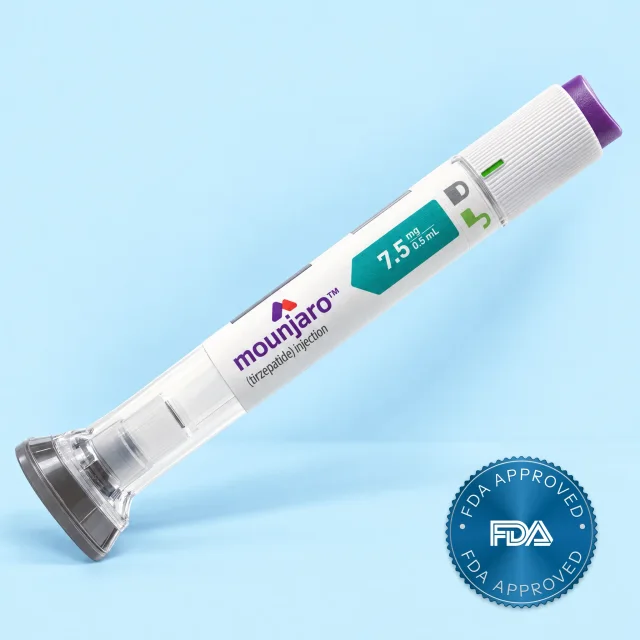
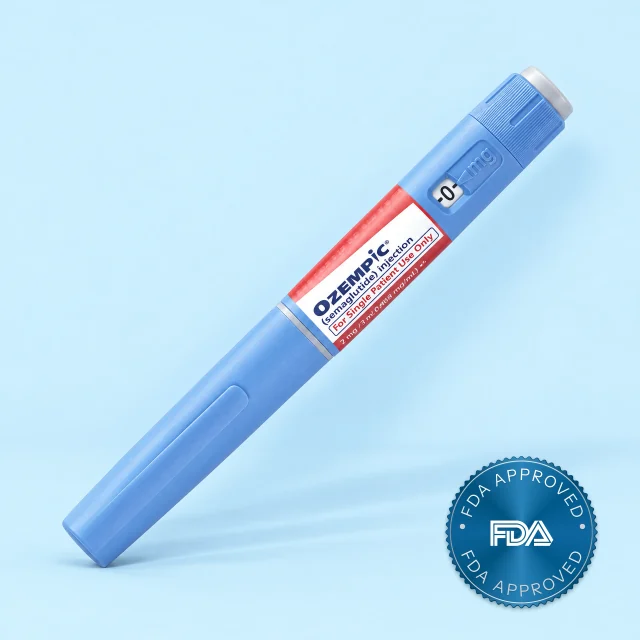
In office conversation, the brand name “Ozempic” gets stretched to cover a whole family of medicines. The differences matter if you are the one considering treatment:
| Medication | Active ingredient | FDA-approved for |
|---|---|---|
| Ozempic | Semaglutide | Type 2 diabetes. It is not FDA-approved for weight loss.2 |
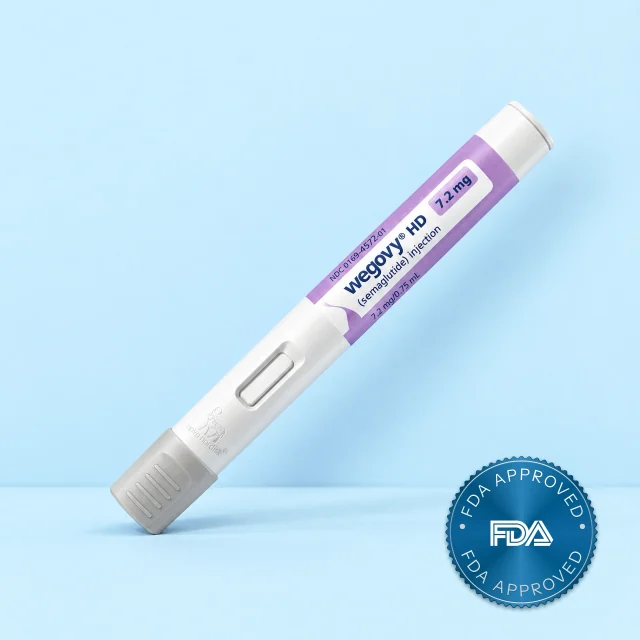
| Wegovy | Semaglutide, the same ingredient | Weight management, along with a reduced-calorie diet and more physical activity.3 |
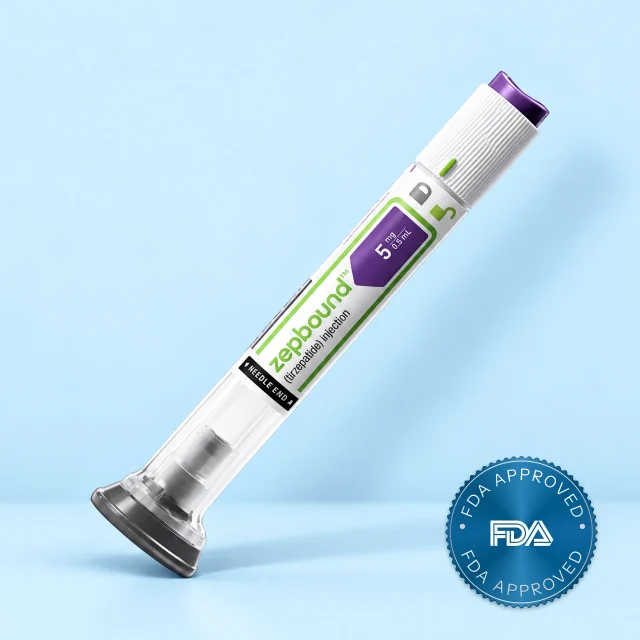
| Zepbound | Tirzepatide | Weight management, along with a reduced-calorie diet and more physical activity.4 |
Summarized from each label, which lists more detail and other approved uses.
So the coworker who is “on Ozempic” may be taking something else, or taking it for diabetes instead of weight. You usually cannot tell, which is one more reason not to guess out loud. Our guide to what GLP-1 means explains the drug class.
Do coworkers or your boss need to know you take Ozempic?
With coworkers, sharing is a choice. A colleague’s curiosity does not create a duty to explain your prescriptions, your weight or your lunch. With your employer, two pieces of federal guidance are worth knowing.
How far does HIPAA reach at work?
Not as far as office talk suggests. According to the U.S. Department of Health and Human Services, the HIPAA Privacy Rule generally does not apply to employers or to employment records. It limits what your health care provider or health plan may disclose.1 In practice:
- Your provider cannot give your employer information without your authorization, unless another law requires it.1
- A coworker asking “are you on something?” may be rude, but a question between colleagues is not what the rule regulates.
- Do not assume HIPAA protects what you choose to say at work. Share on purpose.
When an employer can ask for health information
HHS notes that an employer can ask you for a doctor’s note or other health information for sick leave, workers’ compensation, wellness programs or health insurance.1
Separately, EEOC guidance on the Americans with Disabilities Act says an employer may ask employees disability-related questions only when the question is job-related and consistent with business necessity.5 How that applies to a particular question or job depends on the facts, which is a matter for HR or an employment attorney.
If you decide to share with a manager or HR
Many people never mention their medication at work. If a little information would be practical, say for a sick-day note or a question about the health plan:
- Go to your manager or HR privately, not the team channel.
- Share the minimum. “I am adjusting to a new prescription” is often enough.
- Ask who else will see it.
- If your workplace has a written policy on reporting medications, ask HR how it works.
General information only. This section summarizes two federal sources. It is not legal advice and does not cover state or local rules.
How do you answer when a coworker asks, “Are you on Ozempic?”
The easiest time to choose your answer is before anyone asks. Pick a comfort level, give it one sentence, and reuse that sentence as often as needed. Borrow any of these and adjust them until they sound like you.
| Situation | What you could say |
|---|---|
| You are glad to talk about it | “I am. My doctor and I decided on it last year, and I’m glad we did.” |
| You want to share a little | “I’ve made some changes with my doctor’s help. It’s going well, thanks.” |
| You want to keep it private | “That’s kind of you. I don’t really talk about health things at work.” |
| They keep asking | “I’m going to leave it there, okay?” |
| It comes up in front of a group | “Not a meeting topic for me. Where were we on the timeline?” |
| They ask for a spare pen or a dose | “I can’t share it. It was prescribed for me.” |
| They call it “the shortcut” | “It hasn’t felt like one. Anyway, what are you working on?” |
Is keeping it private the same as lying?
No. Declining to discuss a prescription is not dishonest. “I have changed how I eat and move” is true for most people in treatment, since the weight-management labels describe the medication as used along with a reduced-calorie diet and increased physical activity.3,4
A flat denial is harder to live with. If you say it was all willpower and later decide to be open, you have a story to walk back. A boundary (“I keep that private”) never needs correcting.
What if you share and the questions keep coming?
Being open tends to bring a second round: which one, what it costs, how many pounds. Your dose and your cost are specific to you, so they are no guide for anyone else. A good close: “If you are thinking about it, talk to a provider.”
What if the comments do not stop?
A single clumsy question is ordinary office life. A pattern is different: the daily commentary, the “cheating” jokes. Tell the person once, plainly: “Please stop commenting on my weight.” If it carries on, write down what was said and when, and ask your manager or HR for help.
What is kind to say to a coworker who has lost weight, and what should you skip?
Start from one fact: you do not know why someone’s body changed. It might be a prescription. It might also be a health scare, a divorce, or a struggle with food that nobody at work knows about. So make it a habit: bodies stay out of work conversation unless the person brings theirs up.
| Skip this | Why it misses | Try this instead |
|---|---|---|
| “Is it Ozempic?” | It asks someone to disclose medical treatment on the spot. | Nothing. If they want you to know, they will tell you. |
| “So how many pounds is it?” | It turns a person into a number. | “How have you been?” |
| “You look amazing now.” | “Now” carries a verdict on how they looked before. | Praise the work: “That presentation was really clear.” |
| “Is that all you’re having?” | A comment on a plate is a comment on a body. | Talk about anything else at lunch. |
| Trading theories about a colleague’s weight | Speculation travels, and it reaches the person. | “I don’t know, and it isn’t ours to guess.” |
What if they bring it up first?
Follow their lead. Ask how they feel instead of how much they weigh: “I’m happy for you. How has it been going?” Do not ask for the dose, and do not pass it on. What a coworker tells you about their health is theirs to share.
What if your interest is really about your own options?
Then say so. An honest reason, a private moment and a clear way out make the question much easier to hear:
“Totally fine to say no. I’m weighing whether to ask my doctor about a GLP-1, and I wondered if you’d be up for telling me what it’s been like.”
Either way, you are hearing one person’s experience.
How do you manage work lunches, happy hours and side effects on a GLP-1?
GLP-1 medications slow stomach emptying and reduce appetite,6 so a smaller plate is an expected part of treatment. You do not have to narrate it.
Team lunches and happy hours
- Order from the starters, split a dish, or have half wrapped up early.
- Keep a line ready: “I’m all set, thank you.” You do not owe anyone a clean plate or a reason.
- At happy hour, nobody can tell a club soda from a cocktail, and “not tonight” is a complete answer. Take questions about alcohol and your medication to your provider.
Side effects at work
The most common side effects on these labels are stomach-related: nausea, diarrhea, vomiting, constipation and abdominal pain.2,3,4 In Ozempic’s trials, most of the nausea, vomiting and diarrhea happened while the dose was being raised,2 and a trial comparing tirzepatide with semaglutide saw the same pattern.7 So the weeks after a dose increase are the ones to plan around.
The medication guides also say to drink fluids to lower the chance of dehydration if you have nausea, vomiting or diarrhea.2,3,4 Our GLP-1 side effects guide covers what is common and what is serious.
A few modest ideas, none of them medical instructions:
- Keep water at your desk, and make lunch smaller and slower.
- Think about injection day. The Ozempic and Zepbound labels say the weekly dose can be taken at any time of day, with or without meals.2,4 If you notice a pattern in when you feel off, ask your provider whether a different day would suit your work week. The Ozempic dosage guide covers the schedule.
- Bring your provider in when symptoms start costing you workdays. The Wegovy label, for example, lets a prescriber consider delaying the next dose increase by 4 weeks when a step is not tolerated.3
Do not wait out warning signs at your desk. The medication guides list severe pain in the stomach area that will not go away; pain in the upper stomach, fever, or yellowing of the skin or eyes; and a lump or swelling in the neck, hoarseness, trouble swallowing or shortness of breath.2,3,4 Contact your provider right away if these happen.
Managers and HR: how do you set the tone when weight loss comes up?
If you lead a team, people take their cues from you. When the manager remarks on who has slimmed down, everyone learns that bodies are fair game. When the manager changes the subject, they learn the opposite.
These are good-practice suggestions, not a statement of what any law requires. Take policy and legal questions to your HR or legal team.
- Leave bodies out of feedback and small talk. That includes praise, which singles a person out as surely as criticism.
- Never ask what someone takes. EEOC guidance says an employer may ask employees disability-related questions only when job-related and consistent with business necessity.5 If you think you have a real work reason to ask a health question, check with HR first.
- Shut down guessing games. When talk turns to who might be taking what, one sentence does it: “Let’s not speculate about anyone’s health.”
- Keep food-centered events optional. Offer a range of food, do not track who eats what, and plan some team time around something other than a meal or a bar.
- Be a dead end for what people confide. If someone tells you about their treatment, thank them, ask what would help, and let it go no further.
- Keep plan questions with the plan. What the company health plan covers is for benefits staff to answer, never by polling employees about their prescriptions.
When someone praises a teammate’s weight loss in a meeting: “Let’s keep it on the project. Nice work on the launch, by the way.” When someone asks whether a colleague is “on Ozempic”: “I wouldn’t know, and I wouldn’t guess.”
Where do you start if a coworker’s weight loss has you thinking about treatment?
Curiosity is reasonable. You do not need your coworker’s story to act on it, and their result would not tell you much about yours anyway.
What did the trials find?
| Medication | Who was studied | Average weight lost |
|---|---|---|
| Wegovy (semaglutide) | Adults with obesity or overweight, without diabetes, 68 weeks | 14.9%, versus 2.4% with placebo3,8 |
| Zepbound (tirzepatide) | Adults with obesity or overweight, without diabetes, 72 weeks | 15.0% to 20.9% depending on dose, versus 3.1% with placebo4,9 |
| Ozempic (semaglutide) | Adults with type 2 diabetes, 40 weeks | 5.6 kg at 1 mg and 6.4 kg at 2 mg, roughly 6% of starting weight2 |
Averages from the trials in each label. Ozempic is approved for type 2 diabetes and is not FDA-approved for weight loss. Individual results vary.
Averages hide a wide spread. In the Wegovy trial, 83.5% of adults lost at least 5% of their weight and 30.2% lost at least 20%.3 Your coworker could sit anywhere in that spread, and so could you.
Who are these medications for?
For adults, the Wegovy and Zepbound labels cover a BMI of 30 or higher, or 27 or higher with at least one weight-related condition.3,4 Our BMI calculator shows where you fall. A licensed provider reviews your health history and makes the final call, and sometimes the answer is that medication is not appropriate.
If what caught your attention was a coworker saying they no longer think about food all day, the term researchers use for that mental chatter is food noise.10 Our food noise score is a seven-question self-check, not a diagnosis.
Why should you never borrow a dose?
Sometimes curiosity turns into an offer: “just try one of mine.” Say no, and do not offer yours. The Ozempic label says never to share a pen, and the Wegovy and Zepbound labels say the same about their single-patient-use pens.2,3,4 These are prescription drugs, each prescribed for one person after a provider reviews that person’s health history. The labels carry a boxed warning about thyroid C-cell tumors, one reason that review matters.2,3,4
How does FitRx work?
FitRx is fully online. You complete an intake. A licensed provider reviews it, typically within 1 to 2 business days, and decides whether medication is appropriate. Not everyone qualifies. If the provider prescribes, the prescription goes to a partner pharmacy. Membership includes unlimited secure messaging with your provider, monthly video or phone visits, a care coordinator and a coach.
Providers can prescribe brand-name GLP-1 medications such as Wegovy and Zepbound, and an insurance coordination team submits prior authorizations (the GLP-1 insurance checker explains how). They may also prescribe compounded semaglutide or compounded tirzepatide. Those are not FDA-approved: the FDA does not review them for safety, effectiveness or quality, and they are not generics of the brand-name drugs.11 A provider decides whether one is appropriate.
As of November 18, 2026, membership is $39 for the first month, then $135 a month, with medication billed separately. FitRx does not work with government insurance (Medicare, Medicaid or TRICARE). Confirm current pricing when you sign up.