Which GLP-1 side effects are most common?
Five side effects are on the “most common” list of all four labels: nausea, diarrhea, vomiting, constipation and abdominal (stomach) pain.1,2,3,4 Clinicians call them gastrointestinal, or GI, reactions.
There is a plain reason they gather there. Each label says the medication delays gastric emptying: food leaves your stomach more slowly, so a meal that once felt ordinary can feel like too much.
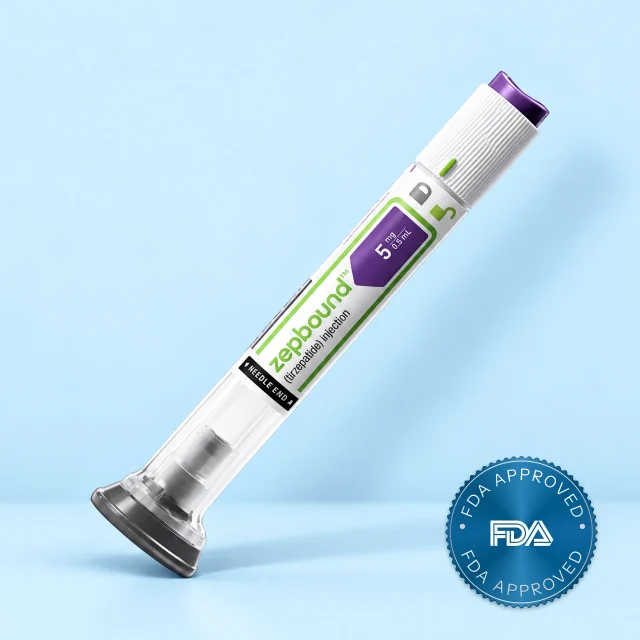
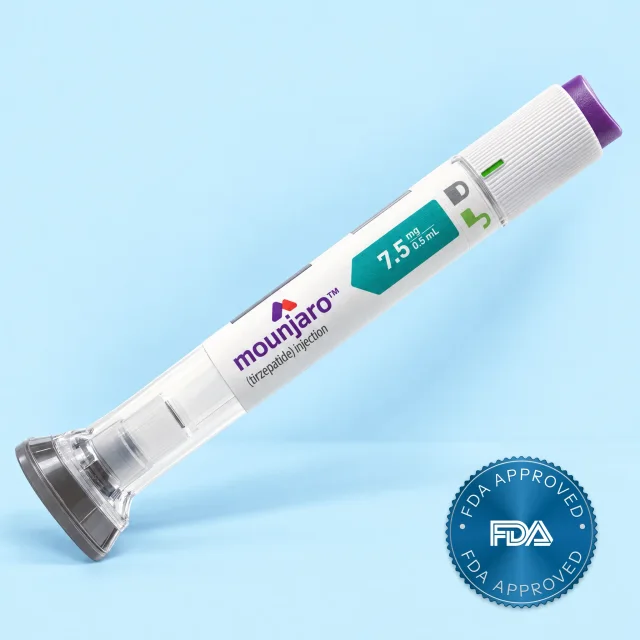
The lists for the two weight management products run longer. Zepbound’s adds indigestion, injection site reactions, fatigue, allergic reactions, belching, hair loss and acid reflux. Wegovy’s adds, among others, headache, fatigue, dizziness, bloating, hair loss and dysesthesia, an altered skin sensation. Mounjaro’s adds decreased appetite and indigestion. Ozempic’s stops at the five.
New to the vocabulary? Our guide to what GLP-1 means explains how this drug class works.
How common is nausea?
Nausea is first on every list. In the label trials it was reported by 12% (Mounjaro 5 mg) to 44% (Wegovy 2.4 mg) of people taking the medication, and by 4% to 16% of people taking placebo. Keep that second range in mind: some stomach upset happens with or without the drug, so not every queasy day on a GLP-1 is caused by the GLP-1.
Side effects beyond the stomach
The weight management labels also report these, shown against placebo from the same trials:1,2
- Fatigue. 5% to 7% on Zepbound versus 3%; 11% on Wegovy versus 5%.
- Headache. 14% on Wegovy versus 10%.
- Dizziness. 4% to 5% on Zepbound versus 2%; 8% on Wegovy versus 4%.
- Injection site reactions. 6% to 8% on Zepbound versus 2%.
- Hair loss. 4% to 5% on Zepbound and 3% on Wegovy, versus 1%.
When do GLP-1 side effects start, and how long do they last?
It depends on your dose schedule more than on the calendar. The trial data tie stomach side effects to the weeks when the dose is going up:
- The Ozempic label says most nausea, vomiting and diarrhea happened during dose escalation.4
- In SURMOUNT-5, a 72-week trial comparing tirzepatide with semaglutide in 751 adults with obesity, most adverse events were gastrointestinal, mild to moderate, and occurred mainly during dose escalation.5
- A separate published analysis looked at how well people tolerated semaglutide 2.4 mg and how stomach side effects related to weight loss.6
So the practical question is how long the step-up phase runs.1,2,3,4
| Medication | Starting dose | Step-ups on the label |
|---|---|---|
| Zepbound, Mounjaro | 2.5 mg weekly | 2.5 mg steps, at least 4 weeks apart, up to 15 mg |
| Wegovy pen | 0.25 mg weekly | Every 4 weeks through week 16; maintenance from week 17 |
| Wegovy pill | 1.5 mg daily | Every 30 days; 25 mg from day 91 |
| Ozempic | 0.25 mg weekly | 0.5 mg after 4 weeks; later steps at least 4 weeks apart, up to 2 mg |
Schedules from each prescribing information. Your provider sets your actual schedule, and not everyone needs the top dose.
At the fastest pace the labels allow, Zepbound 15 mg is at least 20 weeks away and Wegovy’s maintenance dose starts in week 17. Those first months are when new stomach symptoms are most likely. We cannot give you a number of days for any one episode: it varies by person and by step.
If they do not settle
Tell your provider. “At least 4 weeks” on a dose is a minimum, not a deadline, and the Wegovy label says a prescriber can consider delaying the next increase by 4 weeks when a step is not tolerated.2
Few people in the diabetes trials quit over stomach symptoms. In Ozempic’s trials, 3.1% (0.5 mg) and 3.8% (1 mg) stopped treatment because of them, versus 0.4% on placebo. For Mounjaro the figures were 3.0%, 5.4% and 6.6% across its three doses.3,4
Which GLP-1 side effects are serious, and what are the warning signs?
All four labels also warn about problems that need quick attention, and their medication guides describe the warning signs in plain terms. Learn them before your first dose.1,2,3,4
| What the labels warn about | Warning signs |
|---|---|
| Pancreatitis (an inflamed pancreas) | Severe pain in your stomach area that will not go away, with or without vomiting, sometimes felt in your back |
| Gallbladder problems, including gallstones | Pain in your upper stomach, fever, yellowing of your skin or eyes, clay-colored stools |
| Kidney injury from fluid loss | Vomiting or diarrhea that keeps you from holding down fluids |
| Serious allergic reactions | Swelling of your face, lips, tongue or throat; trouble breathing |
| Severe stomach reactions | Stomach symptoms that are severe or do not let up. Not recommended with severe gastroparesis |
| Low blood sugar | Mainly when combined with insulin or a sulfonylurea |
| Diabetic eye disease complications | Vision changes, if you have type 2 diabetes |
Any of these warning signs is a reason to contact a clinician right away, not at your next check-in. For swelling of the face or throat or trouble breathing, call 911.
Boxed warning: thyroid C-cell tumors. Tirzepatide and semaglutide caused these tumors in rodents; whether they do in people is not known. Do not use these medications if you or a family member has had medullary thyroid carcinoma (MTC), or if you have Multiple Endocrine Neoplasia syndrome type 2 (MEN 2). Report a lump or swelling in your neck, hoarseness, trouble swallowing or shortness of breath.1,2,3,4
If you have surgery or a procedure coming up
The labels warn that stomach contents can get into the lungs during general anesthesia or deep sedation. Tell your surgical team you take a GLP-1 when the procedure is scheduled.
The Wegovy label adds one more warning: an increase in heart rate, which prescribers are told to monitor.2 You can also report side effects to the FDA at 1-800-FDA-1088 or www.fda.gov/medwatch.
How do side effect rates differ between Zepbound, Wegovy, Mounjaro and Ozempic?
This table lines up the label figures for the main stomach side effects. Each cell shows the share of people reporting the reaction at each dose, with the placebo rate from the same trials in parentheses.1,2,3,4
| Side effect | Zepbound 5, 10, 15 mg | Wegovy 2.4 mg | Mounjaro 5, 10, 15 mg | Ozempic 0.5, 1 mg |
|---|---|---|---|---|
| Nausea | 25%, 29%, 28% (8%) | 44% (16%) | 12%, 15%, 18% (4%) | 15.8%, 20.3% (6.1%) |
| Diarrhea | 19%, 21%, 23% (8%) | 30% (16%) | 12%, 13%, 17% (9%) | 8.5%, 8.8% (1.9%) |
| Vomiting | 8%, 11%, 13% (2%) | 24% (6%) | 5%, 5%, 9% (2%) | 5.0%, 9.2% (2.3%) |
| Constipation | 17%, 14%, 11% (5%) | 24% (11%) | 6%, 6%, 7% (1%) | 5.0%, 3.1% (1.5%) |
| Abdominal pain | 9%, 9%, 10% (5%) | 20% (10%) | 6%, 5%, 5% (4%) | 7.3%, 5.7% (4.6%) |
From each prescribing information. Zepbound and Wegovy figures come from weight management trials; Mounjaro and Ozempic figures come from type 2 diabetes trials. Mounjaro and Ozempic are not FDA-approved for weight loss.
These rows are not head-to-head. Each column comes from different trials, with different people, conditions and lengths. Even placebo nausea ranged from 4% in the Mounjaro trials to 16% in the Wegovy trials. Use the table to see what each label reports, not to rank the drugs.
Patterns inside a column are firmer ground. Nausea rose with dose on Mounjaro (12% to 18%) and Ozempic (15.8% to 20.3%). Not everything climbs: constipation on Zepbound was 17% at 5 mg and 11% at 15 mg.
The two tirzepatide products
Zepbound and Mounjaro contain the same molecule, tirzepatide. In Mounjaro’s trials, 37.1% to 43.6% of people reported some stomach or gut reaction, compared with 20.4% on placebo.3 Both labels carry an instruction that is easy to miss: if you take birth control pills, switch to a non-oral method or add a barrier method for 4 weeks after starting and for 4 weeks after each dose increase.1,3
The two semaglutide products
Wegovy and Ozempic both contain semaglutide. In Ozempic’s trials, 32.7% of people on 0.5 mg and 36.4% on 1 mg reported a stomach or gut reaction, compared with 15.3% on placebo. In a separate trial of the 2 mg dose, the figures were 34% on 2 mg and 30.8% on 1 mg.4 See the Ozempic dosage guide for each step, or Mounjaro vs. Ozempic for a fuller comparison.
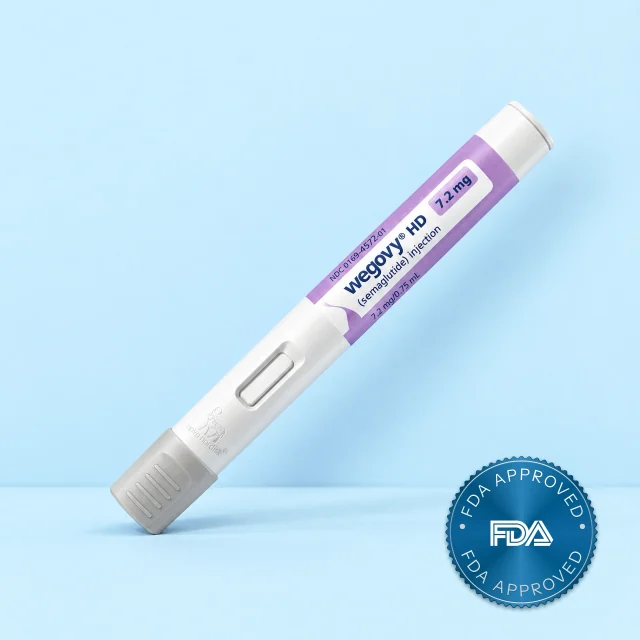
Wegovy also has a 7.2 mg dose (Wegovy HD), allowed only after 2.4 mg has been tolerated for at least 4 weeks and when more weight reduction is clinically indicated. Its trial reported:2
| Side effect | Placebo | Wegovy 2.4 mg | Wegovy 7.2 mg |
|---|---|---|---|
| Nausea | 13% | 35% | 39% |
| Vomiting | 6% | 16% | 22% |
| Altered skin sensation (dysesthesia) | 0% | 6% | 22% |
| Constipation | 8% | 19% | 20% |
| Hair loss | 1% | 3% | 6% |
The standout is dysesthesia: 22% of people on 7.2 mg reported it, against 6% on 2.4 mg and none on placebo.
What about compounded medication?
None of these percentages describe compounded medication. Compounded semaglutide and compounded tirzepatide are not FDA-approved: the FDA does not review them for safety, effectiveness or quality. They are not generics of the brand-name drugs and were not tested in the brand-name trials.7 A licensed provider decides whether one is appropriate.
Vials and syringes add their own risk. The FDA has received reports of adverse events, some requiring hospitalization, that may be related to dosing errors with compounded injectable semaglutide: patients measuring the wrong dose and clinicians miscalculating doses.8 If you draw up your own doses, check each one against your pharmacy’s written instructions and ask before injecting if anything is unclear. The tirzepatide units guide shows how milligrams and syringe units relate.
What helps with GLP-1 side effects?
The best-supported tools are the ones in the labels and medication guides: go up slowly, drink fluids and keep your provider informed.
Let the schedule do its job
Starting low is the side effect strategy built into these drugs. Every dose step waits at least 4 weeks, and going faster than the label allows is not a shortcut.1,2
Ask about staying on your dose
If a new dose hits hard, your provider can hold you there longer before the next increase. Make that call together, not by adjusting doses yourself.
Drink fluids
The medication guides for all four products say to drink fluids to lower the chance of dehydration when you have nausea, vomiting or diarrhea. Fluid loss is behind the kidney injury warning.
Eat for a slower stomach
Modest portions, an unhurried pace and putting the fork down once you feel full are sensible habits. These are general tips, not label instructions.
Rotate where you inject
The Zepbound label says to rotate injection sites: the abdomen or thigh, or the back of the upper arm if someone else gives the injection.1
Tell your provider early
Mention side effects when they start, along with every medicine you take by mouth, since slower stomach emptying may affect how oral medicines are absorbed. FitRx members have unlimited secure messaging with their provider and monthly video or phone visits.
Know when not to wait
Severe stomach pain that will not go away, yellowing skin or eyes, or being unable to keep fluids down means contacting a clinician right away. Trouble breathing or swelling of the face or throat means calling 911.
We have left out over-the-counter nausea remedies, laxatives and supplements on purpose. Ask your provider or pharmacist before adding one.
What do we know about long-term GLP-1 side effects?
These are long-term medications, so the long view matters. Here is what the labels and published research support.
Muscle along with fat
Weight lost on GLP-1 based therapy includes some lean mass, not only fat, and researchers have reviewed ways to limit it.9 The protein calculator gives a daily range to discuss with your care team.
Gallstones and hair loss
All four labels warn about acute gallbladder disease. Wegovy’s reports gallstones in 1.6% of people on the injection versus 0.7% on placebo, and 2.5% on the tablets versus 1%.2 Hair loss reached 6% in the Wegovy 7.2 mg trial.
Open questions
A 2023 analysis in JAMA examined signals for pancreatitis, gastroparesis and bowel obstruction among people taking GLP-1 medications for weight loss.10 The thyroid question is also open: the tumors behind the boxed warning were seen in rodents, and the human risk is unknown.
What happens after stopping
Stopping is its own long-term question, because weight tends to return. In the STEP 1 extension, people who had lost an average of 17.3% on semaglutide regained 11.6 percentage points in the year after stopping, a net loss of 5.6% at week 120.11 In SURMOUNT-4, after an average 20.9% loss over 36 weeks on tirzepatide, people who continued lost a further 5.5% by week 88, while those switched to placebo regained 14.0%.12 These are averages. Talk with your provider before stopping.
Who should avoid GLP-1 medications?
According to the labels, do not use these medications if:1,2,3,4
- You or a family member has had medullary thyroid carcinoma (MTC).
- You have MEN 2.
- You have had a serious allergic reaction to tirzepatide or semaglutide.
Other situations call for a different plan:
- Severe gastroparesis. Not recommended on any of the four labels.
- Pregnancy. The tirzepatide and Wegovy labels warn of possible fetal harm. Zepbound should be stopped when pregnancy is recognized, and the semaglutide labels say to stop at least 2 months before a planned pregnancy.1,2,3,4
- Breastfeeding. Not recommended during treatment with Wegovy tablets. Ask your provider about any other GLP-1.2
- A similar drug already. Zepbound is not recommended with other tirzepatide products or any GLP-1 receptor agonist.
For weight management, the Zepbound and Wegovy labels cover adults with a BMI of 30 or higher, or 27 or higher with a weight-related condition. Check yours with the BMI calculator. FitRx treats adults 18 and older, a licensed provider reviews every intake, and not everyone qualifies.