What do the letters in GLP-1 stand for?
The full name is glucagon-like peptide-1. GLP-1 is a hormone, which is to say a chemical messenger. Cells lining your intestine make it and send it into the bloodstream once food shows up.1
Piece by piece:
- Glucagon-like. Glucagon is a different hormone, one that pushes blood sugar up. GLP-1 resembles it chemically, which is where the name comes from, but it does not share the job. GLP-1 lowers glucagon.1
- Peptide. A string of amino acids, far shorter than a full protein.
- 1. The number sets it apart from a sister hormone, GLP-2, which is not what these medications copy.1
One term, two uses
In a science article, GLP-1 is the hormone. Nearly everywhere else, it is a medication. “I started a GLP-1” means a prescription such as Wegovy or Zepbound.
Those drugs have a formal name: GLP-1 receptor agonists. Cells carry receptors, which work like docking sites for hormones. An agonist is anything that attaches to a receptor and turns it on. Put together, the phrase describes a medicine that turns on the receptor your own GLP-1 uses.2 You will also see it written “GLP-1 RA” or “GLP-1 agonist.”
How does GLP-1 work in your body?
Think of GLP-1 as a mealtime signal. Your gut sends it out after you eat, and several organs respond at once.1
| Organ | What natural GLP-1 does there | What that looks like with the medications |
|---|---|---|
| Pancreas | Signals for more insulin when blood sugar is high, and turns glucagon down | Blood sugar control in type 2 diabetes is an approved use of Ozempic and Mounjaro |
| Stomach | Makes the stomach empty more slowly | The labels note delayed stomach emptying, which can change how other medicines taken by mouth are absorbed |
| Brain | Works on the centers that regulate appetite | Less appetite. The Mounjaro label lists decreased appetite among its common side effects |
Physiology from published reviews.1,2 Medication details from the prescribing information.5,6
Why your own GLP-1 does not last
Natural GLP-1 is a short message. Your body breaks it down within minutes of releasing it.1
The medications are built to last much longer.2 The semaglutide and tirzepatide injections are taken once a week, and the tablets once a day. The Ozempic label notes that semaglutide stays in the body a long time and says to stop it at least 2 months before a planned pregnancy.5
Which medications are GLP-1s?
A GLP-1 medication is a prescription drug that turns on the GLP-1 receptor. Some are approved for type 2 diabetes and some for long-term weight management. The brand name decides which, even when the ingredient inside is the same.
| Brand | Active ingredient | What the FDA approved it for | How it is taken |
|---|---|---|---|
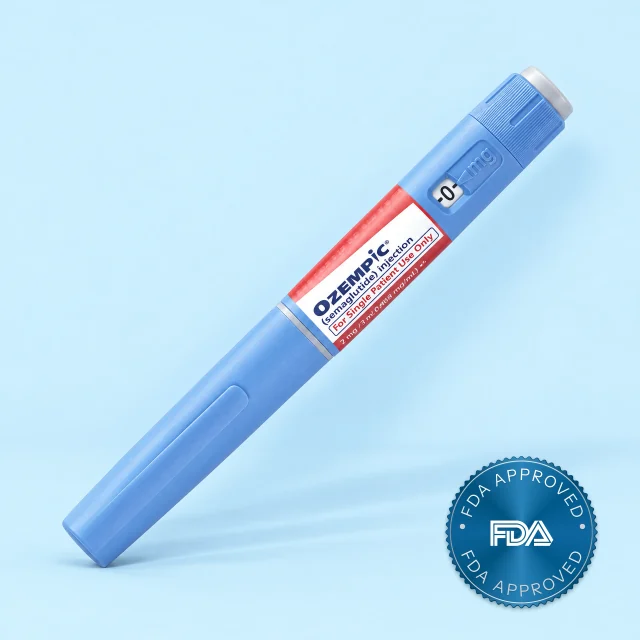
| Ozempic | Semaglutide | Adults with type 2 diabetes: blood sugar control; lower risk of major cardiovascular events in those with established cardiovascular disease; lower risk of kidney function decline, kidney failure and cardiovascular death in those with chronic kidney disease. Not approved for weight loss.5 | Weekly injection |
| Ozempic tablets and Rybelsus | Semaglutide | Type 2 diabetes only: blood sugar control, and lower cardiovascular risk in adults with type 2 diabetes at high risk.7 | Daily tablet, on an empty stomach |
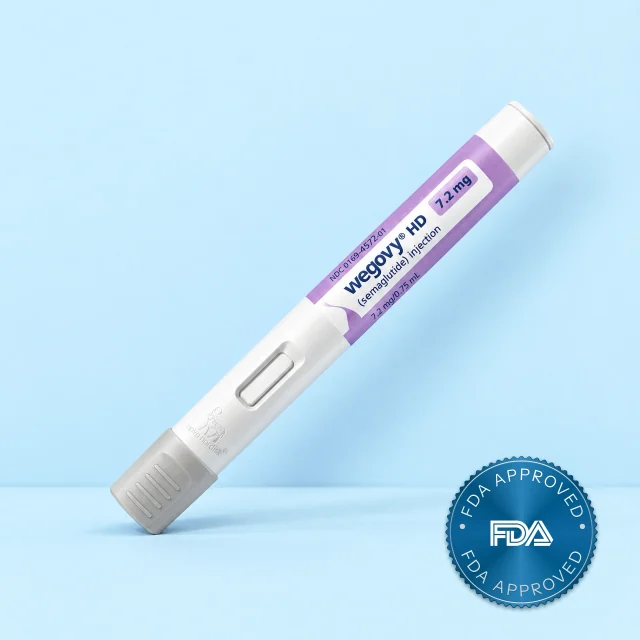
| Wegovy injection | Semaglutide | Weight reduction and long-term maintenance in adults and children 12 and older with obesity, and adults with overweight plus a weight-related condition. Also cardiovascular risk reduction and a liver condition called MASH in certain adults.3 | Weekly injection |
| Wegovy tablets | Semaglutide | Weight reduction and maintenance in adults with obesity, or with overweight plus a weight-related condition, and cardiovascular risk reduction in certain adults.3 | Daily tablet, on an empty stomach |
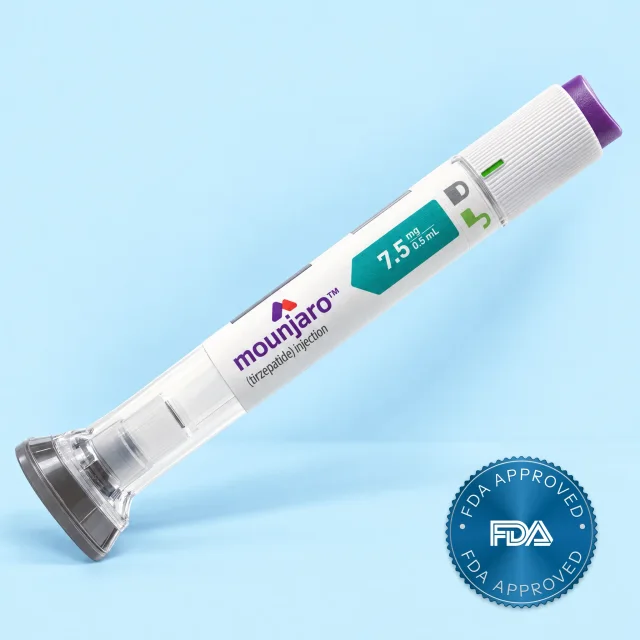
| Mounjaro | Tirzepatide (GIP and GLP-1) | Type 2 diabetes: blood sugar control in adults and children 10 and older, and lower risk of major cardiovascular events in adults at high risk. Not approved for weight loss.6 | Weekly injection |
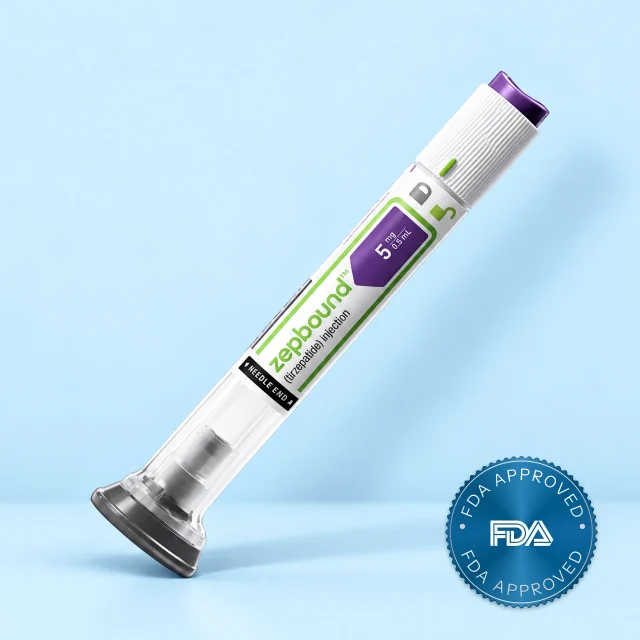
| Zepbound | Tirzepatide (GIP and GLP-1) | Weight reduction and long-term maintenance in adults with obesity, or with overweight plus a weight-related condition, and moderate to severe obstructive sleep apnea in adults with obesity.4 | Weekly injection |
| Foundayo | Orforglipron | Weight reduction and maintenance in adults with obesity, or with overweight plus a weight-related condition.8 | Daily tablet, with or without food |
Summarized from each product’s prescribing information. The Wegovy and Zepbound weight approvals are for use with a reduced-calorie diet and more physical activity. FitRx does not offer Foundayo; it is listed for context.
Same ingredient, different brand
Semaglutide is sold as Ozempic and Wegovy. Tirzepatide is sold as Mounjaro and Zepbound. Within each pair the ingredient is the same and the approved use is not. Ozempic and Mounjaro are diabetes medications. Wegovy and Zepbound are the brands approved for weight management.
Is tirzepatide really a GLP-1?
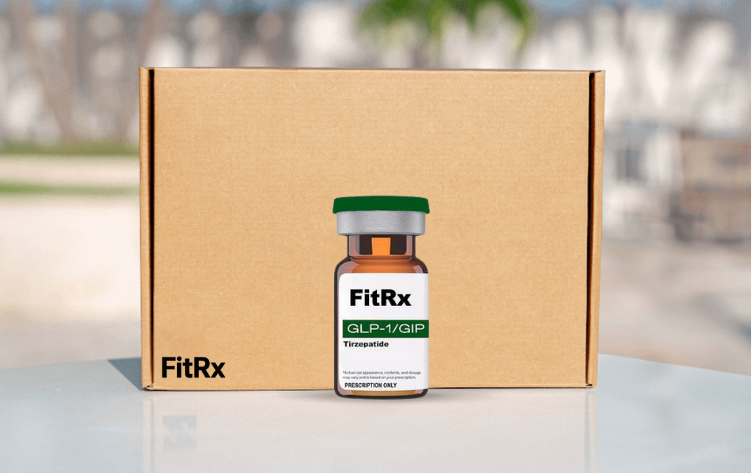
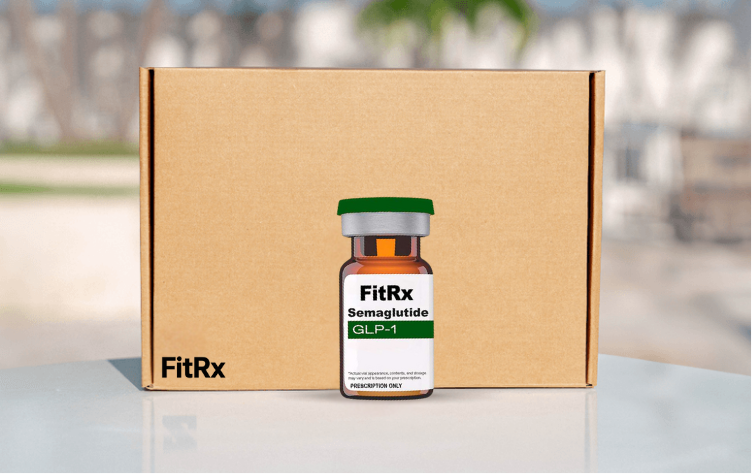
Strictly, it is more than one. Tirzepatide works on two receptors, the GLP-1 receptor and the receptor for another gut hormone called GIP, and its label names both: a GIP and GLP-1 receptor agonist.4 Semaglutide is labeled simply as a GLP-1 receptor agonist.5
Other names in the family
Foundayo, first approved in 2026, is a small-molecule GLP-1 receptor agonist taken as a daily tablet.8 You may also hear about liraglutide (Saxenda, Victoza) and dulaglutide (Trulicity). As of November 18, 2026, the FDA’s shortage database listed Saxenda and Rybelsus tablets as to be discontinued and Victoza as having limited availability, with no shortage record for Trulicity or for any semaglutide or tirzepatide injection.9
What do GLP-1 medications do for weight loss?
When the subject is weight, “GLP-1” refers to a prescription medication whose main effect is on appetite. It slows the stomach and acts on the brain’s appetite centers, which makes eating less easier to keep up.2
The Wegovy and Zepbound labels cover adults with obesity (a BMI of 30 or higher) and adults with overweight (a BMI of 27 or higher) who have at least one weight-related condition.3,4 The BMI calculator shows where you fall. A provider makes the final call.
What the trials found, on average
| Medication | Trial | Length | Average weight lost | Placebo group |
|---|---|---|---|---|
| Wegovy injection (semaglutide) | STEP 110 | 68 weeks | 14.9% | 2.4% |
| Wegovy tablets, 25 mg | OASIS 43 | 64 weeks | 13.6% | 2.4% |
| Zepbound (tirzepatide) 5, 10 and 15 mg | SURMOUNT-111 | 72 weeks | 15.0%, 19.5% and 20.9% | 3.1% |
| Foundayo (orforglipron) 5.5, 9 and 17.2 mg | Label data8 | 72 weeks | 7.4%, 8.3% and 11.1% | 2.1% |
Average change in body weight. The STEP 1, SURMOUNT-1 and Foundayo figures are for adults without diabetes. The trials enrolled different people, so the rows are not a like-for-like comparison. Individual results vary.
One trial did compare two of them directly. SURMOUNT-5 assigned 751 adults with obesity and without diabetes to tirzepatide or semaglutide, each at the highest dose the person could tolerate. After 72 weeks the average loss was 20.2% with tirzepatide and 13.7% with semaglutide.12
Two cautions. These are averages: some people lost more, some less. And Ozempic and Mounjaro, although weight fell in their diabetes trials, are approved for type 2 diabetes and are not FDA-approved for weight loss.5,6
What happens when the medication stops?
Weight tends to return. In the STEP 1 extension, a year after stopping semaglutide, participants had regained 11.6 percentage points of the 17.3% they had lost.13 In SURMOUNT-4, adults who had lost an average of 20.9% over 36 weeks on tirzepatide either continued or switched to placebo. By week 88 those who continued had lost a further 5.5%, and those who stopped had regained 14.0%.14
What about muscle?
Weight lost on any plan, medication included, is not all fat. Some of it is lean mass.15 Eating enough protein and keeping up strength training are the usual ways to protect it, and the protein calculator gives you a daily target.
What do the common GLP-1 words mean?
| Term | Plain meaning |
|---|---|
| Receptor agonist | Something that attaches to a receptor and turns it on. |
| GIP | Short for glucose-dependent insulinotropic polypeptide, another gut hormone. Tirzepatide switches on its receptor along with the GLP-1 receptor.4 |
| Semaglutide | The drug inside Ozempic, Wegovy and Rybelsus. A GLP-1 receptor agonist. |
| Tirzepatide | The drug inside Mounjaro and Zepbound. A GIP and GLP-1 receptor agonist. |
| Titration | Raising the dose in stages. Zepbound, for example, starts at 2.5 mg a week for 4 weeks, and each later increase comes after at least 4 weeks on the current dose.4 |
| Maintenance dose | The steady dose that follows the step-up period. For weight management the Zepbound label lists 5, 10 or 15 mg a week.4 |
| BMI | Body mass index: your weight relative to your height, used for screening. The CDC defines overweight as 25 to less than 30 and obesity as 30 or greater.16 |
| A1c | A lab value that tracks blood sugar averaged over recent months. Trials of Ozempic and Mounjaro report changes in it. |
| Food noise | A popular name for persistent thoughts about food that are hard to switch off.17 The food noise score calculator puts a number on it. |
| Prior authorization | A health plan’s sign-off, requested by your prescriber, before the plan pays for a medication. The GLP-1 insurance checker explains the process. |
| Compounded | Made to order by a compounding pharmacy for one patient’s prescription. Compounded semaglutide and compounded tirzepatide are not FDA-approved, are not reviewed by the FDA for safety, effectiveness or quality, and are not generics.18 |
| Boxed warning | The most prominent warning on a prescription label, printed inside a box. The Ozempic, Wegovy, Mounjaro and Zepbound labels carry one about thyroid C-cell tumors. |
| Pipeline | Medications still in trials or under FDA review. The GLP-1 pipeline tracker lists them by class and phase. |
What do people mistake GLP-1 for?
Five mix-ups come up again and again. GLP-1 is none of these.
A stimulant
A stimulant speeds up the nervous system. A GLP-1 medication does something different: it copies a gut hormone and acts where that hormone acts, in the pancreas, stomach and brain.2 That does not mean the heart is untouched. The Wegovy label lists an increase in heart rate as something to monitor.3
Insulin
Insulin is a separate hormone. What GLP-1 does is signal your pancreas to release its own when blood sugar is high.1 A GLP-1 medication is not a substitute for insulin, and the labels warn about low blood sugar in people who take both, or who take a sulfonylurea.3,4
A supplement
Every GLP-1 medication on this page requires a prescription. So a product sold over the counter under a GLP-1 name, in a store or online, is not one of these medicines. Separately, the FDA says counterfeit Ozempic and products labeled “for research purposes” are illegal, and that people should buy only from state-licensed pharmacies.18
A short course
For most people it is not. The weight management labels describe reducing weight and keeping it off long term.3,4 In SURMOUNT-4, 89.5% of people who stayed on tirzepatide kept at least 80% of their earlier loss, compared with 16.6% of those switched to placebo.14 Stopping is a decision to plan with a provider.
A generic, when it is compounded
A generic is a copy that the FDA has reviewed and approved. Compounded semaglutide and compounded tirzepatide are something else: medication made to order by a compounding pharmacy. They are not FDA-approved. The FDA does not check them for safety, effectiveness or quality before they reach patients, and they were not tested in the brand-name trials. They are not generics of Ozempic, Wegovy, Mounjaro or Zepbound.18
The FDA says compounded drugs should be used only when a patient’s medical needs cannot be met by an FDA-approved drug, and it treats a seller’s claim that a compounded drug is the same as an approved one as a red flag.18 Whether a compounded medication is appropriate is a licensed provider’s decision.
What should you know about GLP-1 side effects and safety?
Stomach and gut complaints lead the list. All four semaglutide and tirzepatide injection labels name nausea, diarrhea, vomiting, constipation and stomach pain among their most common side effects.3,4,5,6 In trials these clustered in the weeks when doses were stepping up.5,12
| Medication and doses studied | Nausea on the medication | Nausea on placebo |
|---|---|---|
| Wegovy injection, 2.4 mg | 44% | 16% |
| Zepbound 5, 10 and 15 mg | 25%, 29% and 28% | 8% |
| Ozempic 0.5 and 1 mg | 15.8% and 20.3% | 6.1% |
| Mounjaro 5, 10 and 15 mg | 12%, 15% and 18% | 4% |
From the placebo-controlled trials in each label.3,4,5,6 The trials differ in who took part and at what dose, so compare with care.
The boxed warning, in plain words. Semaglutide and tirzepatide caused thyroid C-cell tumors in rodent studies. Whether they do so in people is not known. Anyone who has had medullary thyroid carcinoma (MTC), has a family member who has, or has a condition called MEN 2 should not take them. Tell your provider about a lump or swelling in your neck, hoarseness, trouble swallowing or shortness of breath.
The labels also warn about pancreatitis, gallbladder problems, kidney injury from dehydration, severe stomach problems, serious allergic reactions, low blood sugar when combined with insulin or a sulfonylurea, eye complications in people with type 2 diabetes, food or liquid entering the lungs during anesthesia, and possible harm to an unborn baby.3,4 Severe stomach pain that will not go away is a reason to get medical help.
For the fuller picture, including what is common, what is serious and how long it tends to last, read the GLP-1 side effects guide.
Who decides whether a GLP-1 fits you?
A licensed provider who has seen your health history, not a quiz or an ad. At FitRx you fill out an online intake and a U.S.-licensed provider reviews it, typically within 1 to 2 business days. If medication is appropriate, the prescription goes to a partner pharmacy, and for brand-name GLP-1s an insurance coordination team submits the prior authorization. Not everyone qualifies, and FitRx does not work with government insurance such as Medicare, Medicaid or TRICARE.