
BMR Calculator
Your basal metabolic rate (BMR) is the energy your body spends just staying alive: breathing, circulating blood, keeping warm, repairing cells. Enter four details and this BMR calculator estimates that number in calories per day.
Your basal metabolic rate
1,578 calories a day
Sample number. Enter your details to see yours.
- Per hour, at rest66
- FormulaMifflin-St Jeor
Your resting burn is one piece of the picture. A licensed provider can put it together with your health history and goals.
See if you qualifyThis calculator gives an estimate for adults 18 and older, based on a published equation. It is not a measurement, a diagnosis or medical advice. Talk with a licensed clinician before making big changes to how much you eat, especially if you are pregnant, breastfeeding, managing a medical condition or have a history of disordered eating.
What is BMR?
BMR stands for basal metabolic rate. It is the number of calories your body would use over 24 hours if you did nothing at all: no walking, no digesting, no fidgeting. Think of it as the cost of keeping the lights on. Your heart, lungs, brain, liver and kidneys never clock out, and BMR is their combined energy bill.
For most adults, BMR is the single largest part of the calories burned in a day. The rest comes from three places:
- Digesting food. Breaking down and absorbing a mixed diet uses roughly 5% to 15% of daily energy expenditure, and protein costs more to process than fat or carbohydrate.1
- Everyday movement. Standing, walking to the car, carrying laundry, typing. Researchers call this non-exercise activity thermogenesis, and it varies a great deal from person to person.2
- Planned exercise. Workouts, sports and anything else you do on purpose to move.
Add all four together and you get total daily energy expenditure, or TDEE. BMR is the foundation the other three sit on, which is why almost every calorie formula starts here. If you want the full daily number, the TDEE calculator picks up where this one stops.
How to calculate BMR
This calculator uses the Mifflin-St Jeor equation, published in 1990 from measurements of resting energy use in healthy adults.3 It needs weight in kilograms, height in centimeters and age in years:
| Sex | Equation (calories per day) |
|---|---|
| Men | (10 × weight in kg) + (6.25 × height in cm) − (5 × age) + 5 |
| Women | (10 × weight in kg) + (6.25 × height in cm) − (5 × age) − 161 |
You enter pounds, feet and inches. The calculator converts them first (1 lb = 0.45359237 kg, 1 in = 2.54 cm), then runs the equation and rounds to the nearest calorie.
A worked example
Take a 40-year-old woman who is 5 feet 5 inches tall and weighs 200 pounds.
- Weight: 200 lb × 0.45359237 = 90.72 kg
- Height: 65 in × 2.54 = 165.1 cm
- (10 × 90.72) + (6.25 × 165.1) − (5 × 40) − 161
- 907.2 + 1,031.9 − 200 − 161 = 1,578 calories a day
A man with the same age, height and weight would get 1,744, because the equation ends in +5 instead of −161.
Why this equation?
There are older formulas, and you may see different numbers on other sites. A systematic review that compared four commonly used equations against measured values found that Mifflin-St Jeor was the most reliable: it landed within 10% of the measured resting rate in more people, with and without obesity, than the alternatives.4 The same review is clear that errors still happen for individuals, so treat your result as a good starting estimate, not a lab value.
Our TDEE and calorie deficit calculators use this same equation, so the BMR you see here is the BMR they build on. If you enter a body fat percentage in those tools, they switch to the Katch-McArdle formula, which works from lean body mass instead.5
What is a normal BMR?
There is no single normal number. BMR scales with body size, so a tall, heavy person will have a higher BMR than a short, light one, and neither is abnormal. What you can do is see what the equation gives for people like you. These examples come straight from the formula above:
| Person | Height | Weight | Estimated BMR |
|---|---|---|---|
| Woman, age 30 | 5 ft 4 in | 150 lb | 1,385 calories |
| Woman, age 45 | 5 ft 5 in | 200 lb | 1,553 calories |
| Woman, age 60 | 5 ft 3 in | 180 lb | 1,356 calories |
| Man, age 30 | 5 ft 10 in | 180 lb | 1,783 calories |
| Man, age 45 | 5 ft 10 in | 240 lb | 1,980 calories |
| Man, age 60 | 5 ft 9 in | 210 lb | 1,753 calories |
Estimates from the Mifflin-St Jeor equation, rounded to the nearest calorie. Your measured rate could be higher or lower.
Reading the equation tells you how each input moves the result:
- Weight. Each extra pound adds about 4.5 calories a day.
- Height. Each extra inch adds about 16 calories a day.
- Age. Each year subtracts 5 calories a day.
- Sex. With everything else equal, the result for men is 166 calories higher than for women.
The age term deserves a footnote. A large study that pooled measurements across the human lifespan found that, once body size and composition are accounted for, daily energy expenditure holds steady from about age 20 to 60.6 Much of what people blame on a slowing metabolism in midlife is really a change in muscle mass and activity, both of which you can influence.
What does your BMR mean?
Your BMR is a baseline. It tells you how much energy your body needs before you add a single step, meal or workout. Three practical things follow from that.
It is not your eating target. Nobody lies motionless for 24 hours. Your real daily burn is your BMR multiplied by an activity factor, which runs from 1.2 for a mostly seated day up to 1.9 for a physical job plus training. The woman in the example above, at 1,578 calories of BMR, burns about 2,170 calories a day if she is lightly active (1,578 × 1.375).
It explains why needs differ. Two people can eat the same meals and see different results on the scale. If one is six inches taller and 60 pounds heavier, their resting needs are several hundred calories apart before activity enters the picture.
It moves when you do. Because weight is in the equation, your BMR falls as you lose weight. Someone who drops from 200 to 170 pounds lowers their estimated BMR by about 136 calories a day. That is expected, and it is one reason a calorie target that worked in month one can stall by month six. Re-running the numbers every 10 to 15 pounds keeps the target honest.
What does your BMR not tell you?
An equation that takes four inputs cannot see everything. Keep these limits in mind:
- Body composition. Muscle uses more energy at rest than fat does. Two people at the same height and weight can have different true resting rates, and this equation will give them the same answer.
- Individual variation. Even the best-performing equation misses by more than 10% for some people.4 The only way to know your actual rate is to have it measured with indirect calorimetry, a breathing test offered by some clinics and labs.
- Health conditions and medications. The equation was built from measurements of healthy adults. It does not adjust for illness, pregnancy or the effects of medication.
- How much to eat. BMR is one input to a calorie target, not the target itself.
- How your body adapts. As weight comes off, energy use drops, partly because a smaller body costs less to run. Models of long-term weight change show that loss slows over time for this reason, and that the old rule of 3,500 calories per pound overstates how much weight a fixed deficit will take off.7,8
How to use BMR for weight loss
BMR is the first step in a short chain of arithmetic:
Find your BMR
Use the calculator at the top of this page.
Turn it into TDEE
Multiply by your activity factor: 1.2 sedentary, 1.375 light, 1.55 moderate, 1.725 very active, 1.9 extra active. The TDEE calculator does this for you.
Set a deficit
Eating about 500 calories below TDEE is a common target for losing about a pound a week at the start. The calorie deficit calculator adds a goal weight and a timeline.
Check the floor
Clinical guidelines for weight management prescribe 1,200 to 1,500 calories a day for women and 1,500 to 1,800 for men, or a deficit of 500 to 750 calories a day.9 Going below those ranges should happen only with medical supervision.
A few habits protect your resting burn while the scale moves. Eat enough protein, since weight lost on any plan, including GLP-1 medication, includes some lean mass along with fat.10 The protein calculator gives a daily range for your weight and goal. Keep or add resistance training. And avoid crash diets that put you far under your BMR for weeks at a time.
If you have done the arithmetic and hunger keeps winning, that is not a character flaw. Appetite is regulated by hormones, and prescription GLP-1 medications act on that system: they slow stomach emptying and reduce appetite, which makes a calorie deficit easier to hold.11 They are prescription drugs with real side effects and are not right for everyone. A licensed provider can tell you whether one fits your health history.
BMR vs. RMR: what is the difference?
You will see both terms, often used as if they were the same thing. They are close, but not identical.
| BMR (basal metabolic rate) | RMR (resting metabolic rate) | |
|---|---|---|
| What it measures | Energy use at complete rest under strict conditions | Energy use at rest under everyday conditions |
| How it is measured | After a full night of sleep and an overnight fast, lying still in a temperature-controlled room | After a shorter rest and fast, usually seated or reclined in a clinic |
| Typical result | The lower of the two | Slightly higher, because conditions are less strict |
| Where you meet it | Research settings | Clinics, gyms and most prediction equations |
Strictly speaking, the Mifflin-St Jeor equation was developed to predict resting energy expenditure.3 In everyday use, and on this page, the result is called BMR because that is the term most people search for. For planning what to eat, the gap between the two is smaller than the error in any equation, so you can treat them as the same number.
Frequently asked questions
What is a good BMR for my age?
There is no good or bad BMR. The number mostly reflects your body size: taller and heavier people have higher values, and the estimate drops by 5 calories for each year of age. The examples table on this page shows what the equation gives for adults of different ages and sizes. What matters is using your own number to set a realistic calorie target.
Is it safe to eat fewer calories than my BMR?
BMR is not a safety line by itself, because your total daily burn is higher than your BMR. The better guide is the calorie range used in clinical practice. Clinical guidelines for weight management use 1,200 to 1,500 calories a day for women and 1,500 to 1,800 for men, and going lower than that should only happen with medical supervision.
Can I raise my BMR?
A little. BMR tracks body size and composition, so building or keeping muscle through resistance training and eating enough protein helps you hold on to resting energy use while you lose weight. Claims that specific foods, drinks or supplements boost metabolism in a meaningful way are not supported by the equation or by the research cited on this page.
Why did my BMR go down after I lost weight?
Weight is part of the equation, so a lighter body has a lower estimated BMR. In the Mifflin-St Jeor equation each pound lost lowers the result by about 4.5 calories a day, which means a 30-pound loss lowers it by about 136. Recalculate every 10 to 15 pounds so your calorie target keeps up with your body.
How accurate is this BMR calculator?
It uses the Mifflin-St Jeor equation, which a systematic review found to be the most reliable of four common equations, predicting resting metabolic rate within 10% of the measured value for more people than the others. It can still be off for an individual, especially at the extremes of body composition. A breathing test called indirect calorimetry is the way to measure your actual rate.
References (11)
- Westerterp KR. Diet induced thermogenesis. Nutr Metab (Lond). 2004;1(1):5. https://pubmed.ncbi.nlm.nih.gov/15507147/
- Levine JA. Non-exercise activity thermogenesis (NEAT). Best Pract Res Clin Endocrinol Metab. 2002;16(4):679-702. https://pubmed.ncbi.nlm.nih.gov/12468415/
- Mifflin MD, St Jeor ST, Hill LA, et al. A new predictive equation for resting energy expenditure in healthy individuals. Am J Clin Nutr. 1990;51(2):241-247. https://pubmed.ncbi.nlm.nih.gov/2305711/
- Frankenfield D, Roth-Yousey L, Compher C. Comparison of predictive equations for resting metabolic rate in healthy nonobese and obese adults: a systematic review. J Am Diet Assoc. 2005;105(5):775-789. https://pubmed.ncbi.nlm.nih.gov/15883556/
- McArdle WD, Katch FI, Katch VL. Exercise Physiology: Nutrition, Energy, and Human Performance. Wolters Kluwer. (Source of the Katch-McArdle lean-mass equation.)
- Pontzer H, Yamada Y, Sagayama H, et al. Daily energy expenditure through the human life course. Science. 2021;373(6556):808-812. https://pubmed.ncbi.nlm.nih.gov/34385400/
- Hall KD, Sacks G, Chandramohan D, et al. Quantification of the effect of energy imbalance on bodyweight. Lancet. 2011;378(9793):826-837. https://pubmed.ncbi.nlm.nih.gov/21872751/
- Thomas DM, Martin CK, Lettieri S, et al. Can a weight loss of one pound a week be achieved with a 3500-kcal deficit? Commentary on a commonly accepted rule. Int J Obes (Lond). 2013;37(12):1611-1613. https://pubmed.ncbi.nlm.nih.gov/23628852/
- Jensen MD, Ryan DH, Apovian CM, et al. 2013 AHA/ACC/TOS guideline for the management of overweight and obesity in adults. Circulation. 2014;129(25 Suppl 2):S102-S138. https://pubmed.ncbi.nlm.nih.gov/24222017/
- Neeland IJ, Linge J, Birkenfeld AL. Changes in lean body mass with glucagon-like peptide-1-based therapies and mitigation strategies. Diabetes Obes Metab. 2024;26(Suppl 4):16-27. https://pubmed.ncbi.nlm.nih.gov/38937282/
- Drucker DJ. Mechanisms of action and therapeutic application of glucagon-like peptide-1. Cell Metab. 2018;27(4):740-756. https://pubmed.ncbi.nlm.nih.gov/29617641/
Sources were opened and checked on November 18, 2026. Prices, savings programs and labels change; confirm current terms with the manufacturer, your pharmacy or your provider.
Numbers are a start. Support gets you there.
FitRx pairs you with a licensed provider who reviews your health history, talks through your goals and decides whether GLP-1 medication is appropriate for you.
Get startedFitRx membership costs $39 in month one and $135 a month from then on. Medication is a separate charge. Not everyone qualifies.

The FitRx care team
A calculator gives you a number. A care team helps you use it.
Knowing your BMR is useful. Knowing what to do when the plan stops working is more useful. FitRx members work with a licensed provider, a care coordinator and a coach, all online, so questions about appetite, plateaus, side effects and dosing get answered by people who know your history.
- U.S.-licensed providers review every intake and make every prescribing decision
- Unlimited secure messaging, plus monthly video or phone visits
- A care coordinator and a coach alongside your provider
- An insurance coordination team for brand-name GLP-1 prior authorizations
This page was written and reviewed by the FitRx care team and last updated November 18, 2026. It is general information, not personal medical advice.
GLP-1 medications our providers can prescribe
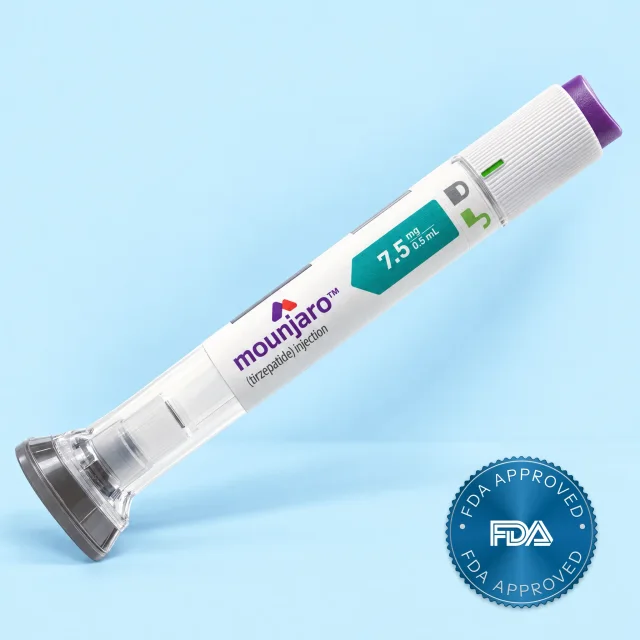
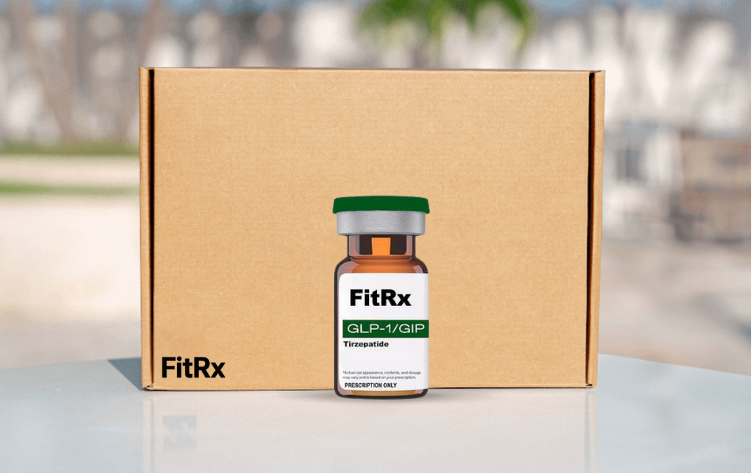
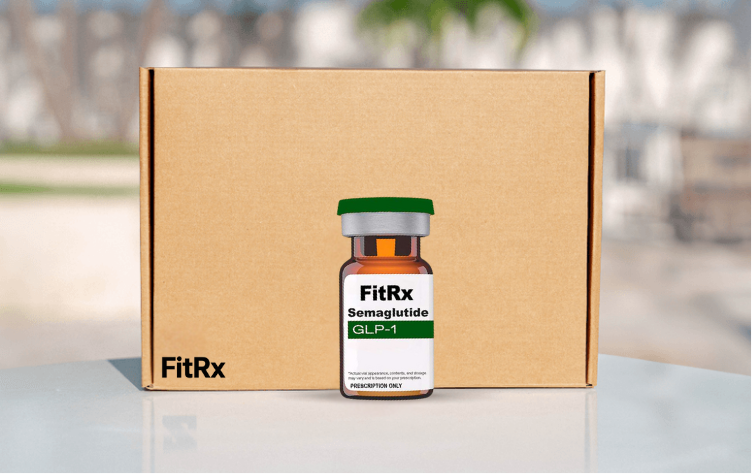
A provider decides which medication, if any, fits your health history. Compounded semaglutide and compounded tirzepatide are not FDA-approved and are not the same as the brand-name products.



More free weight loss tools
- Calorie Deficit CalculatorDaily calories to lose 1 or 2 pounds a week, and how long your goal may take.
- TDEE CalculatorHow many calories you burn in a day, activity included.
- BMI CalculatorYour body mass index and the CDC category it falls in.
- Protein CalculatorA daily protein range for losing fat, maintaining or building muscle.
- Food Noise ScoreA seven-question score for how loud thoughts about food are right now.
- Knee Relief CalculatorHow much load comes off your knees for every pound you lose.
- GLP-1 Supply TrackerFDA shortage status for GLP-1 medications, by brand and dose.
- GLP-1 Pipeline TrackerWeight loss drugs in development, by class, developer and trial phase.
- GLP-1 Insurance CheckerHow a GLP-1 coverage check works and what happens after it.