
GLP-1 Supply Tracker
This GLP-1 supply tracker reads the FDA’s drug shortage database and shows, brand by brand and strength by strength, whether Ozempic, Wegovy, Mounjaro, Zepbound, Saxenda, Victoza or Trulicity is on the list. A copy saved on November 18, 2026 appears first. Then your browser asks the FDA for the current records.
FDA shortage status, by brand and dose
Key: Not on the list In shortage Being discontinued. “Not on the list” means the FDA has no current shortage record for that strength. It does not promise that your local pharmacy has it on the shelf today.
This tracker repeats what the FDA's drug shortage database says about national supply. It cannot see your pharmacy's shelves, and it is not medical advice. Do not change, skip, split or stretch a dose because of what you see here. Ask your prescriber or pharmacist first.
How does the GLP-1 supply tracker work?
The FDA keeps a public database of drug shortages and discontinuations.1 It publishes the same records through openFDA, its open data service.2 This page asks openFDA for every record whose generic name is semaglutide, tirzepatide, liraglutide or dulaglutide, then sorts the answers into seven brand cards.
The saved copy appears first
The page ships with a copy of the FDA records saved on November 18, 2026, so you see something at once. The line above the cards begins “Showing the copy saved on November 18, 2026” and adds the date the FDA last updated its data.
Your browser asks the FDA
The request goes from your browser straight to openFDA. There is no form to fill in and nothing to type.
The cards update, or the saved copy stays
When the FDA answers, the line changes to “Live from the FDA drug shortage list, read just now.” If the request fails or takes longer than 10 seconds, the saved copy stays on screen and the page says the live list could not be reached.
You can ask again
The “Check the FDA list again” button repeats the request whenever you like.
What the tracker covers
| Brand | Active ingredient | Use shown on the card | Strengths listed |
|---|---|---|---|
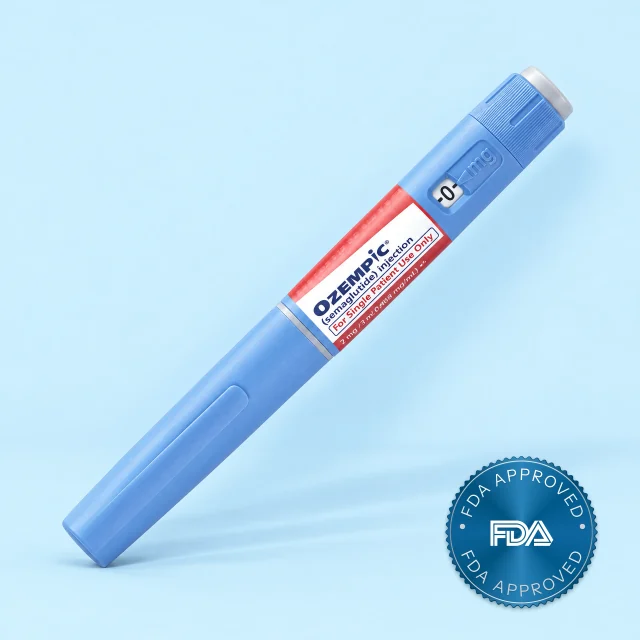
| Ozempic | semaglutide | Type 2 diabetes | 0.68, 1.34 and 2.68 mg per mL |
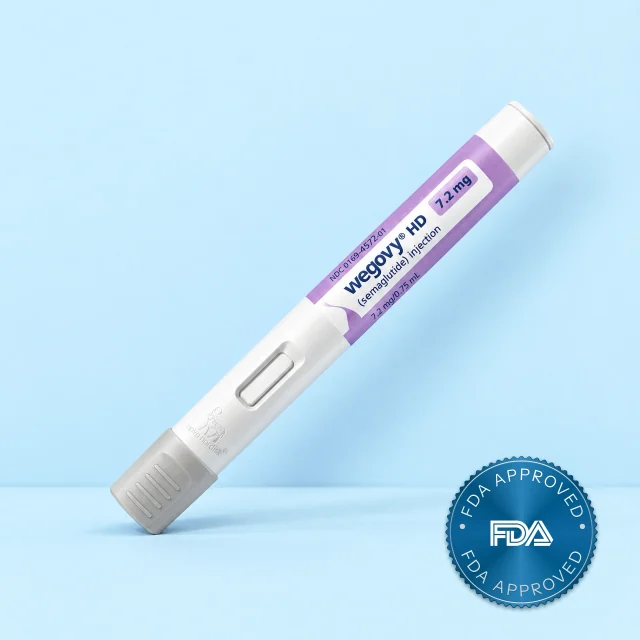
| Wegovy | semaglutide | Weight management | 0.25, 0.5, 1, 1.7 and 2.4 mg |
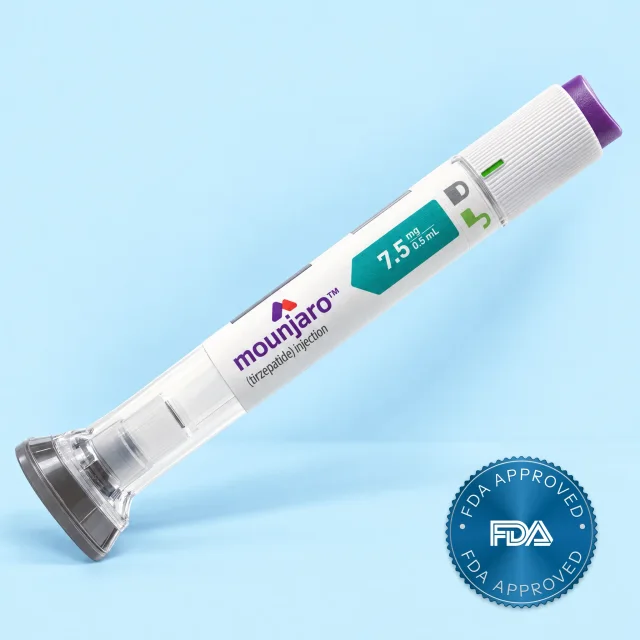
| Mounjaro | tirzepatide | Type 2 diabetes | 2.5, 5, 7.5, 10, 12.5 and 15 mg per 0.5 mL |
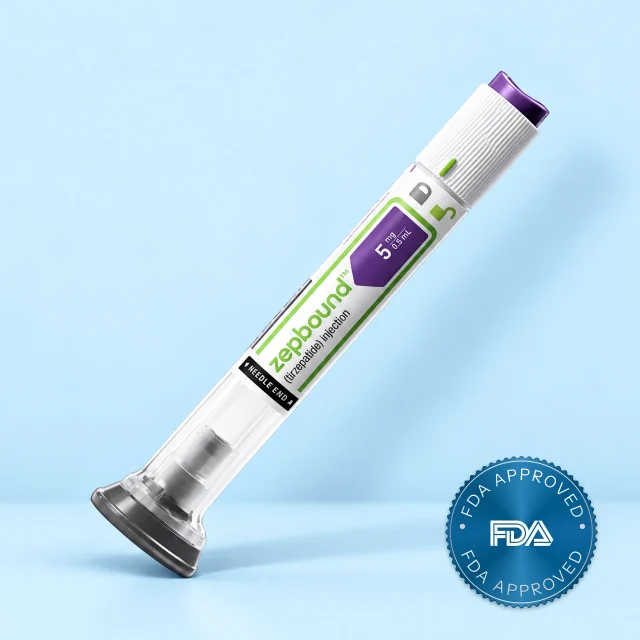
| Zepbound | tirzepatide | Weight management | 2.5, 5, 7.5, 10, 12.5 and 15 mg per 0.5 mL |
| Saxenda | liraglutide | Weight management | 6 mg per mL |
| Victoza | liraglutide | Type 2 diabetes | 6 mg per mL |
| Trulicity | dulaglutide | Type 2 diabetes | 0.75, 1.5, 3 and 4.5 mg per 0.5 mL |
Brands and strengths as listed in the tool. Ozempic and Mounjaro are FDA-approved for type 2 diabetes and are not approved for weight loss.3,4
Ozempic looks odd in that table because the FDA records describe the pen, not the weekly dose. The label connects the two: the 0.68 mg/mL pen delivers 0.25 mg or 0.5 mg doses, the 1.34 mg/mL pen delivers 1 mg doses and the 2.68 mg/mL pen delivers 2 mg doses.3
Some products have no dose row of their own: Wegovy tablets, the 7.2 mg Wegovy HD pen, and the KwikPen forms of Zepbound and Mounjaro. If the FDA posts a record for one of them, the brand’s card still changes its overall status and note. Records for these four ingredients that belong to none of the seven brands, such as generic liraglutide or Rybelsus tablets, appear in a line under the cards that begins “Other FDA records for these drugs.”
What do the status labels mean?
Each card carries one overall label for the brand and one label per strength. They come straight from two fields in the FDA record: the status (the tool looks for “Current” and “To Be Discontinued”) and, for current records, the availability wording.
| Label | Where you see it | What it means |
|---|---|---|
| No current shortage | Top of a brand card | The FDA has no current shortage record and no discontinuation record for that brand. |
| On the FDA shortage list | Top of a brand card | The FDA has at least one current record for the brand. The note under the strengths repeats the reason given to the FDA and the date the record was updated. |
| Being discontinued | Top of a brand card, or beside a strength | The FDA lists the product as to be discontinued, and there is no current shortage record that outranks it. |
| Not on the list | Beside a strength | No current shortage record and no discontinuation record matches that exact strength. |
| The FDA’s own wording, such as “Limited Availability” | Beside a strength | A current record matches that strength, and the tool prints the availability exactly as the FDA wrote it. If a record has no availability wording, the label reads “In shortage.” |
Labels as printed by the tool. Green marks no record, red marks a current shortage record and amber marks a discontinuation. The key under the cards shows all three.
Two details are easy to miss. First, a current shortage record wins over a discontinuation: a brand with both shows “On the FDA shortage list,” with a sentence underneath saying the FDA also lists it as to be discontinued. Second, being on the list is not the same as being gone. The FDA records an availability for each company’s product, and it can read “Available” even while the drug stays on the list.
The sentence above the cards counts brands, not strengths: “2 of 7 medications tracked here are on the FDA shortage list,” for example, or “None of the 7 medications tracked here are on the FDA shortage list.”
Which GLP-1 medications are on the shortage list right now?
The live cards at the top of the page are the answer for today. For reference, this is what the FDA database showed when the saved copy was made on November 18, 2026.1,2
| Medication | FDA status on November 18, 2026 | Detail in the record |
|---|---|---|
| Ozempic and Wegovy injections (semaglutide) | No current shortage record | None |
| Mounjaro and Zepbound (tirzepatide) | No current shortage record | None |
| Trulicity (dulaglutide) | No current shortage record | None |
| Victoza (liraglutide) 6 mg/mL | On the list: limited availability | Reason given: delay in shipping of the drug |
| Saxenda (liraglutide) 6 mg/mL | On the list: limited availability. Also listed as to be discontinued (posted August 25, 2026) | Reason given: discontinuation of the manufacture of the drug |
| Generic liraglutide 6 mg/mL | Listed as available from Hikma and Meitheal and under a Novo Nordisk listing | One Teva listing is marked to be discontinued |
| Rybelsus (semaglutide) tablets, 3, 7 and 14 mg | To be discontinued (posted June 4, 2026) | None |
Saved copy of the FDA drug shortage records, November 18, 2026. Listings change, so rely on the live cards and the FDA’s own page for the current picture.
In short: on that date, 2 of the 7 tracked brands were on the list, and both are liraglutide. None of the semaglutide or tirzepatide injections had a current shortage record.
A national listing is not your pharmacy’s shelf
The shortage list describes supply at the level of the manufacturer and the whole country, based on what companies tell the FDA. Your pharmacy is a much smaller picture. It can be out of one strength for a few days because of how it orders, what its wholesaler delivered or how many people nearby fill the same prescription, while the FDA list shows nothing at all.
The reverse happens too. A product can sit on the national list while a pharmacy near you still has it. So read the tracker as background, and ask your pharmacy the direct question: do you have my strength, and if not, when do you expect it?
Why does the shortage list matter for compounded GLP-1s?
Compounded semaglutide and compounded tirzepatide are prepared by compounding pharmacies. They are not FDA-approved. The FDA does not review them for safety, effectiveness or quality before they reach patients. They are not generics of Ozempic, Wegovy, Mounjaro or Zepbound, and they have not been tested in the brand-name trials.5,6
The FDA describes two situations in which a compounded drug might be appropriate: a patient has a medical need that an FDA-approved drug cannot meet, or the approved drug is not commercially available.5 The shortage list speaks to the second situation. On November 18, 2026 it held no current shortage record for any semaglutide or tirzepatide injection.1
That leaves the first situation, which is a medical judgment about one patient at a time. The agency puts it this way: “Compounded drugs should only be used in patients whose medical needs cannot be met by an FDA-approved drug.”5
How this works at FitRx. A licensed provider decides whether a compounded medication is appropriate for you. If it is prescribed, it is prepared by a state-licensed compounding pharmacy. Compounded products do not appear in this tracker, which covers FDA-approved products only. The semaglutide and tirzepatide pages explain the brand-name and compounded forms side by side.
A supply gap is also when risky offers get more tempting. The FDA’s list of red flags for online sellers includes claiming a compounded drug is the same as an FDA-approved one, deep discounts that seem too good to be true, and no screening or prescription by a licensed doctor.5
How can you check or report a shortage yourself?
The FDA runs the shortage list, so the FDA is the place to go. You can look up a drug, and report a supply problem, through the FDA’s drug shortages page.1 It is listed in the references at the bottom of this page.
If you are a FitRx member and you cannot fill a prescription, message your care team from your account. Tell them which medication and strength you could not get and what the pharmacy said about timing. Your provider can then decide what to do next with your history in front of them.
Frequently asked questions
Where does the supply tracker get its data?
From the FDA's drug shortage database, read through openFDA, the agency's open data service. The page asks for the records on semaglutide, tirzepatide, liraglutide and dulaglutide and shows them as the FDA wrote them. FitRx does not edit the statuses.
How often is the tracker updated?
Your browser asks the FDA for the current records each time you open the page, and again whenever you press the button to check the list. Above the cards you can see when the FDA last changed its data. When the FDA's service does not answer, the saved copy from November 18, 2026 stays on screen, and the page tells you that is what you are looking at.
Are Ozempic, Wegovy, Mounjaro or Zepbound in shortage?
When the FDA database was read on November 18, 2026, it had no current shortage record for any semaglutide or tirzepatide injection, which covers all four brands. Listings can change, so check the live cards at the top of this page. Ozempic and Mounjaro are approved for type 2 diabetes, not for weight loss.
My dose shows 'Not on the list' but my pharmacy is out. Why?
The FDA list describes national supply as reported by manufacturers. A single pharmacy can still run out of a strength for a while. Ask the pharmacy when it expects more, and tell your prescriber before you miss a dose. Do not split or stretch doses on your own.
What does 'Being discontinued' mean?
It means the FDA lists the product as to be discontinued. On November 18, 2026 the examples included Saxenda, posted August 25, 2026, and Rybelsus tablets in 3, 7 and 14 mg, posted June 4, 2026. Saxenda also had a current limited availability record, so its card shows the shortage label with a note about the discontinuation.
Does the tracker cover compounded medications?
No. It shows FDA-approved products only. Compounded semaglutide and compounded tirzepatide are not FDA-approved: the FDA does not review them for safety, effectiveness or quality, and they are not generics of the brand-name drugs. A licensed provider decides whether a compounded medication is appropriate.
How do I report a GLP-1 shortage?
Use the FDA's drug shortages page, which is where the agency posts the list and where a supply problem can be reported. FitRx does not take shortage reports. If you are a FitRx member and cannot fill a prescription, message your care team so your provider can decide on next steps.
References (8)
- U.S. Food and Drug Administration. FDA Drug Shortages database. https://www.accessdata.fda.gov/scripts/drugshortages/default.cfm
- U.S. Food and Drug Administration. openFDA drug shortages endpoint (FDA Drug Shortages database). https://open.fda.gov/apis/drug/drugshortages/
- Ozempic (semaglutide) injection. Prescribing information. Novo Nordisk; revised May 2026. https://www.novo-pi.com/ozempic.pdf
- Mounjaro (tirzepatide) injection. Prescribing information. Eli Lilly and Company; revised August 2026. https://pi.lilly.com/us/mounjaro-uspi.pdf
- U.S. Food and Drug Administration. FDA's concerns with unapproved GLP-1 drugs used for weight loss. Content current as of October 1, 2026. https://www.fda.gov/drugs/postmarket-drug-safety-information-patients-and-providers/fdas-concerns-unapproved-glp-1-drugs-used-weight-loss
- U.S. Food and Drug Administration. Compounding and the FDA: questions and answers. https://www.fda.gov/drugs/human-drug-compounding/compounding-and-fda-questions-and-answers
- Wegovy (semaglutide) injection and tablets. Prescribing information. Novo Nordisk; revised June 2026. https://www.novo-pi.com/wegovy.pdf
- Zepbound (tirzepatide) injection. Prescribing information. Eli Lilly and Company; revised August 2026. https://pi.lilly.com/us/zepbound-uspi.pdf
Sources were opened and checked on November 18, 2026. Prices, savings programs and labels change; confirm current terms with the manufacturer, your pharmacy or your provider.
Supply changes. Your care team keeps up with it.
FitRx pairs you with a licensed provider who reviews your health history and decides whether a GLP-1 medication is appropriate for you, and which one.
Get startedFitRx membership costs $39 in month one and $135 a month from then on. Medication is a separate charge. Not everyone qualifies.

The FitRx care team
A tracker shows the list. A care team helps when your dose is missing.
A status label cannot tell you what to do about next week’s injection. FitRx members can message a licensed provider and a care coordinator, all online, so a pharmacy delay turns into a plan made by someone who knows your history instead of a guess.
- U.S.-licensed providers review every intake and make every prescribing decision
- Unlimited secure messaging, plus monthly video or phone visits
- A care coordinator and a coach alongside your provider
- An insurance coordination team for brand-name GLP-1 prior authorizations
This page was written and reviewed by the FitRx care team and last updated November 18, 2026. It is general information, not personal medical advice.
GLP-1 medications our providers can prescribe
A provider decides which medication, if any, fits your health history. Compounded semaglutide and compounded tirzepatide are not FDA-approved and are not the same as the brand-name products.
More free weight loss tools
- Calorie Deficit CalculatorDaily calories to lose 1 or 2 pounds a week, and how long your goal may take.
- TDEE CalculatorHow many calories you burn in a day, activity included.
- BMR CalculatorThe calories your body uses at complete rest.
- BMI CalculatorYour body mass index and the CDC category it falls in.
- Protein CalculatorA daily protein range for losing fat, maintaining or building muscle.
- Food Noise ScoreA seven-question score for how loud thoughts about food are right now.
- Knee Relief CalculatorHow much load comes off your knees for every pound you lose.
- GLP-1 Pipeline TrackerWeight loss drugs in development, by class, developer and trial phase.
- GLP-1 Insurance CheckerHow a GLP-1 coverage check works and what happens after it.