Medical weight management (MWM) is a physician-led, science-based, non-surgical program that combines medical assessment, personalized nutrition, behavioral care, and — when appropriate — prescription medications to help people with obesity lose weight safely and keep it off. The clinical term you’ll hear in practice is “obesity medicine,” and it frames excess weight as a chronic disease requiring ongoing care, not a willpower problem to solve in 30 days.
Who should consider it? People with obesity or weight-related health conditions who have tried self-directed dieting without lasting success. Realistic early expectations: losing 5% of body weight over six months is a clinically meaningful target, and the program model is built for maintenance, not just the initial loss.
Every credible MWM program shares a core set of building blocks. Knowing them helps you compare offerings and spot gaps.
Medical assessment and diagnostics come first. The initial visit typically runs about an hour and covers full medical history, a medication review, and baseline labs. Many programs also order an EKG to rule out cardiac contributors. This isn’t just paperwork — it’s how clinicians identify endocrine causes of weight retention (thyroid dysfunction, for example) before setting a plan.
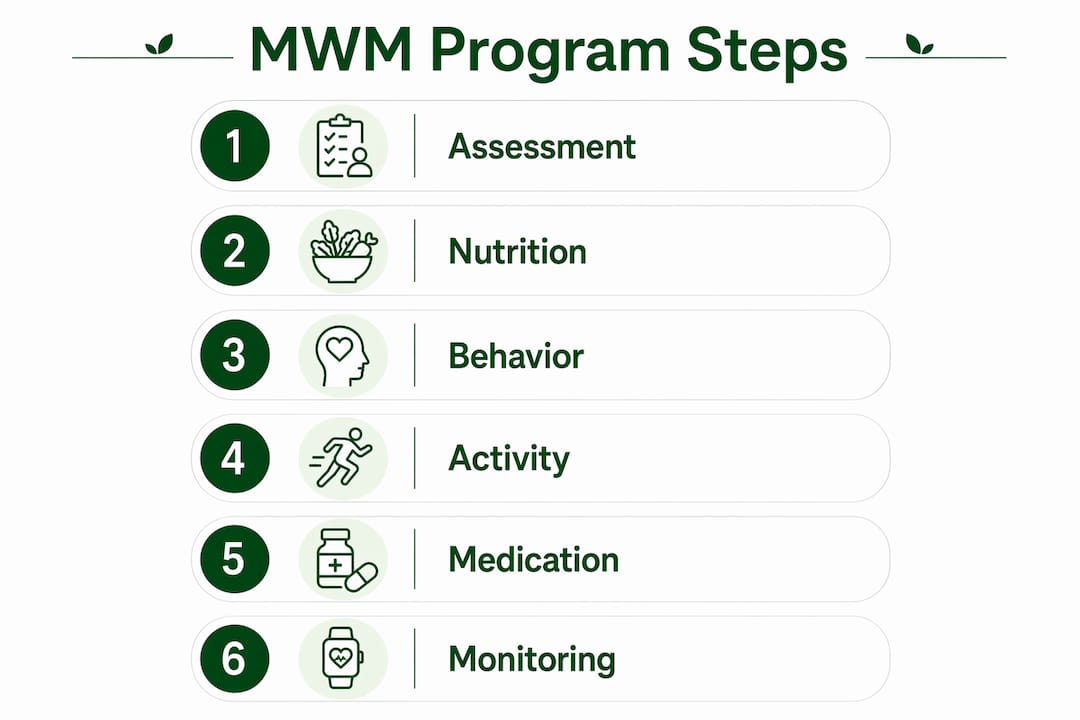
Individualized nutrition planning goes beyond handing you a calorie target. Registered dietitians build plans around your metabolic profile, food preferences, and schedule. Some programs use structured meal-replacement phases during active loss, then transition to food-based eating for maintenance.

Behavioral and psychological support is where most self-directed diets fall short. MWM programs include counseling for habit formation, emotional eating, and relapse prevention. This isn’t optional — it’s what separates a medically supervised plan from a commercial diet.
Physical activity prescription is tailored, not generic. A provider accounts for joint disease, cardiovascular fitness, and daily schedule before recommending exercise type and intensity.
Medication management, when indicated, addresses the biological hunger signals that behavioral plans alone often miss. More on that in a dedicated section below.
Regular monitoring runs throughout. Programs typically phase from active loss into a transition period and then structured maintenance, with follow-up visits scheduled accordingly.
Pro Tip: Bring a complete medication list and any recent lab results to your first visit. Clinicians use that information to screen for drug interactions and avoid repeating tests you’ve already had — it can meaningfully shorten the time before your plan starts.
Most programs use BMI as the primary entry threshold, but comorbidities can qualify you at a lower BMI. The table below reflects typical program-level thresholds used across U.S. health systems.
| Candidacy Level | BMI Threshold | Comorbidity Trigger |
|---|---|---|
| Standard eligibility | BMI ≥ 30 | None required |
| Lower BMI with comorbidity | BMI 27–35 | One or more weight-related conditions |
| Higher-risk / priority | BMI ≥ 35 | Multiple or severe comorbidities |
Common comorbidities that increase priority for MWM:
Clinical judgment matters beyond the numbers. Age, prior bariatric surgery, pregnancy status, and psychiatric history all factor into whether a specific program and medication approach are appropriate for a given patient. A BMI alone never tells the whole story.
The patient journey follows a predictable arc, even if the details vary by program.
Intake and testing. The first visit typically lasts about an hour and includes comprehensive labs, an EKG when indicated, medication reconciliation, and goal-setting. Come prepared with your medical records and a list of current medications.
Your care team. A team-based approach is the standard in evidence-based programs. Expect a board-certified physician (often with obesity medicine certification), a registered dietitian, and behavioral health support. Larger programs may also include nurses, physical therapists, and psychologists.
Visit cadence. During active loss, follow-ups are typically more frequent, sometimes every two to four weeks. As you move into maintenance, visits space out to monthly or quarterly check-ins. Programs that skip a structured transition phase tend to see higher rates of weight regain.
Costs and insurance. Initial assessments and some follow-up visits may be covered by insurance, particularly when obesity-related diagnoses are documented. Prescription medications, meal replacements, and program fees are often partially or fully out-of-pocket. Prior authorization is common for weight-loss medications. Always verify your specific plan’s coverage before enrolling.
Timeline callout: The CDC notes that people who lose weight at a gradual, steady pace — about a gradual, steady pace of weight loss — are more likely to keep it off than those who lose weight faster. MWM programs are designed around exactly that pace.
Medications don’t replace behavioral work. They address the biological side of the equation — specifically, the hormonal hunger signals that make sustained calorie reduction so difficult for many people. Uncontrolled hunger driven by hormonal signaling is a frequent barrier that purely behavioral plans often miss; effective MWM targets that physiology directly.
Common medication classes used in U.S. practice:
Safety monitoring is non-negotiable. Before starting any weight-loss medication, expect baseline labs, a review of current medications for interactions, and a discussion of contraindications. Pregnancy is a contraindication for most weight-loss medications. Psychiatric history matters for certain drug classes.
Insurance and prior authorization. Coverage for weight-loss medications varies widely by plan. Many require documented prior authorization, and some medications remain out-of-pocket even with coverage. Ask your provider specifically about the authorization process before your prescription is written.
Red flags that require urgent provider contact:
Set the right benchmark early. Losing 5% of body weight over six months is a clinically meaningful target — it’s enough to produce measurable improvements in blood pressure, blood sugar, and cholesterol. Greater losses are possible, but 5% is the floor that most clinical guidelines use to define a successful intervention.
Statistic callout: Clinical guidelines support a target of a gradual, steady pace of weight loss as the sustainable rate for behavioral weight-loss programs, with behavioral goals typically set over a minimum of six months to build durable habits.
Why outcomes vary so much between patients:
The shift from active loss to maintenance is where many programs lose patients. Active loss typically runs three to six months; maintenance is indefinite. Programs that build a structured transition phase, rather than abruptly ending active support, produce better long-term outcomes. Leading obesity medicine experts frame MWM as chronic disease management — the same way a cardiologist manages blood pressure — not a course you complete and leave.
MWM is generally safe when delivered by a qualified team, but it carries real risks that patients should understand before starting.
Common side effects with medical approaches:
Medication-specific concerns:
Non-medication risks:
Programs that include structured maintenance groups and periodic follow-ups reduce the risk of abrupt transition, which is when regain and nutritional gaps are most likely to occur.
MWM and bariatric surgery aren’t competing options. They work together at different points in a patient’s care.
Pre-operative use. Many bariatric programs require or strongly recommend medically supervised weight loss before surgery. Pre-op weight loss reduces surgical risk by decreasing liver size, improving cardiovascular markers, and demonstrating the patient’s ability to follow a structured plan. Some programs set a specific pre-op weight-loss target as a condition for surgical clearance.
Post-operative use. Weight regain after bariatric surgery is common, particularly beyond the two-year mark. MWM integrates with surgical care pathways to manage regain using non-surgical tools: medication adjustments, behavioral re-engagement, and nutrition monitoring.
When MWM is the primary path:
When surgery is typically recommended over MWM alone:
Not all programs are equal. Here’s a practical checklist and the questions worth asking before you commit.
Review your patient rights before signing up for any weight-loss program — a reputable provider will welcome the scrutiny.
Both models can deliver effective medical weight management. The right choice depends on your health complexity, location, and how you engage with care.
Core differences:
What telehealth can deliver safely:
When in-person evaluation is still needed:
Checklist for vetting a telehealth program:
The benefits of telehealth weight management are real, but the program still needs the same clinical infrastructure as an in-person one. Convenience without medical rigor is just a subscription.
Pro Tip: Before your first telehealth visit, arrange a local lab order for baseline bloodwork. Bring a home scale and log your weight at the same time each morning. These two steps make a remote visit as medically thorough as most in-person intakes.
Medical weight management is a physician-led, chronic-disease model that combines medical assessment, nutrition, behavioral care, and medication to produce sustainable weight loss — not a short-term diet program.
| Point | Details |
|---|---|
| Clinical definition | MWM is a science-based, non-surgical, physician-guided program for people with obesity or weight-related conditions. |
| Realistic timeline | Losing 5% of body weight over six months is a clinically meaningful target; about 1 to 2 pounds per week is the sustainable pace supported by clinical guidelines. |
| Medications are one tool | Weight-loss medications address biological hunger signals and work best as part of a broader team-based plan. |
| Costs vary widely | Some visits may be covered by insurance; medications, meal replacements, and program fees are often out-of-pocket. |
| FitRx option | FitRx offers physician-led telehealth MWM with medication management and app-based support — learn more here. |
Most people come to medical weight management after years of trying and failing with self-directed diets. The frustration is real, and it’s usually not a character flaw — it’s biology. Hormonal hunger signals, metabolic adaptation, and genetics create a playing field that willpower alone can’t level. That’s the actual case for medically supervised care.
What I’d push back on is the expectation that MWM is a faster version of dieting. It isn’t. The programs that produce durable results treat weight like blood pressure: something you manage over years with the right tools, not something you fix in a single course of treatment. Patients who go in expecting a six-month solution and then independence often regain within a year. Patients who accept the chronic-disease model — regular check-ins, medication adjustments as needed, behavioral maintenance — tend to hold their results.
The other thing worth saying plainly: not every program that calls itself “medical” deserves the label. A physician’s name on a website doesn’t guarantee board-certified obesity medicine expertise, a registered dietitian on staff, or a structured maintenance phase. Ask the hard questions before you enroll. A program confident in its outcomes will answer them.
If you’ve read this far and you’re ready to move from research to action, FitRx offers a physician-led telehealth weight management program built around the same principles covered here: personalized treatment plans, licensed provider consultations, prescription medication management when appropriate, and continuous support through the app.

Medications are shipped directly to your home, and your care plan incorporates nutrition, activity, and sleep guidance alongside any prescription treatment. Before joining, confirm that FitRx providers are licensed in your state, review the lab and refill workflow, and check pricing transparency for your specific plan. If you want to find out whether weight-loss injections or other prescription options could be right for you, the intake process starts with a clinical assessment — not a sales call.
This article is general health information, not medical advice. Confirm current clinical guidelines and your individual eligibility with a qualified healthcare provider before starting any weight management program.


.svg)