TL;DR:
- Tirzepatide has shown an average weight loss of nearly 21 percent over 72 weeks in clinical trials. It is FDA-approved for weight management in adults with obesity or overweight with related health issues. The medication works by reducing appetite and slowing gastric emptying through dual hormone receptor activation.
In the SURMOUNT-1 trial, published in the New England Journal of Medicine, adults taking tirzepatide at the highest dose lost a mean of 20.9% of their body weight over 72 weeks. That is not a rounding error or a best-case outlier. It is the average. At 10 mg, the mean was 19.5%; at 5 mg, 15.0%. Placebo participants lost 3.1%. The FDA approved Zepbound, the weight-management brand of tirzepatide, for chronic weight management in adults with obesity or overweight with at least one weight-related condition. A Cochrane systematic review confirmed medium- and long-term weight loss with tirzepatide, while noting that long-term outcomes like mortality remain uncertain.
The single most useful thing you can do right now: schedule a conversation with a clinician to review your eligibility, discuss dose escalation, go over side effects, and check your insurance prior authorization requirements before your first prescription.
Tirzepatide is a synthetic peptide that acts as a dual agonist at two hormone receptors: GIP (glucose-dependent insulinotropic polypeptide) and GLP-1 (glucagon-like peptide-1). It is given as a once-weekly subcutaneous injection. No other approved anti-obesity medication targets both receptors simultaneously, which is the core reason its trial results stand apart from older agents.
Two U.S. brands use tirzepatide as the active ingredient:
The official prescribing information on DailyMed is the authoritative source for indications, contraindications, boxed warnings, and dosing details. Any clinician prescribing tirzepatide for weight loss should be working from the Zepbound label, not the Mounjaro label, when the goal is weight management rather than glycemic control.
The short version: tirzepatide binds to both GIP and GLP-1 receptors in the brain, gut, and pancreas, reducing appetite, slowing how quickly food leaves the stomach, and improving the body’s response to insulin. The result is that people eat less, feel full sooner, and burn energy more efficiently.
GLP-1 receptor agonism was already established as a weight-loss mechanism before tirzepatide arrived. Drugs targeting GLP-1 alone reduce appetite and slow gastric emptying. What GIP adds is less straightforward. GIP receptors are expressed in adipose tissue and the central nervous system, and preclinical data suggest that GIP agonism may amplify the appetite-suppressing signal from GLP-1 rather than simply duplicating it. Early phase clinical data supported this additive hypothesis, which is why the dual-agonist approach was pursued through Phase 3 trials.
The practical effect is a stronger and more sustained reduction in caloric intake than GLP-1 monoagonism alone tends to produce. Gastric emptying slows, so meals feel satisfying at smaller volumes. Appetite signals from the hypothalamus are dampened. And because glycemic control improves alongside weight loss, the metabolic environment shifts in ways that support continued fat loss rather than compensatory metabolic slowdown. Whether tirzepatide also affects resting metabolic rate directly is still being studied, but the appetite and satiety effects alone are enough to explain the trial results.
The SURMOUNT-1 trial is the clearest answer available. It enrolled 2,539 adults without type 2 diabetes, randomized them to one of three tirzepatide doses or placebo, and ran for 72 weeks with a structured dose-escalation phase. The results, published in the New England Journal of Medicine, showed dose-related weight loss across all active arms.
| Dose | Mean % weight change | Approximate lbs lost (200 lb baseline) |
|---|---|---|
| Placebo | −3.1% | ~6 lbs |
| 5 mg/week | −15.0% | ~30 lbs |
| 10 mg/week | −19.5% | ~39 lbs |
| 15 mg/week | −20.9% | ~42 lbs |
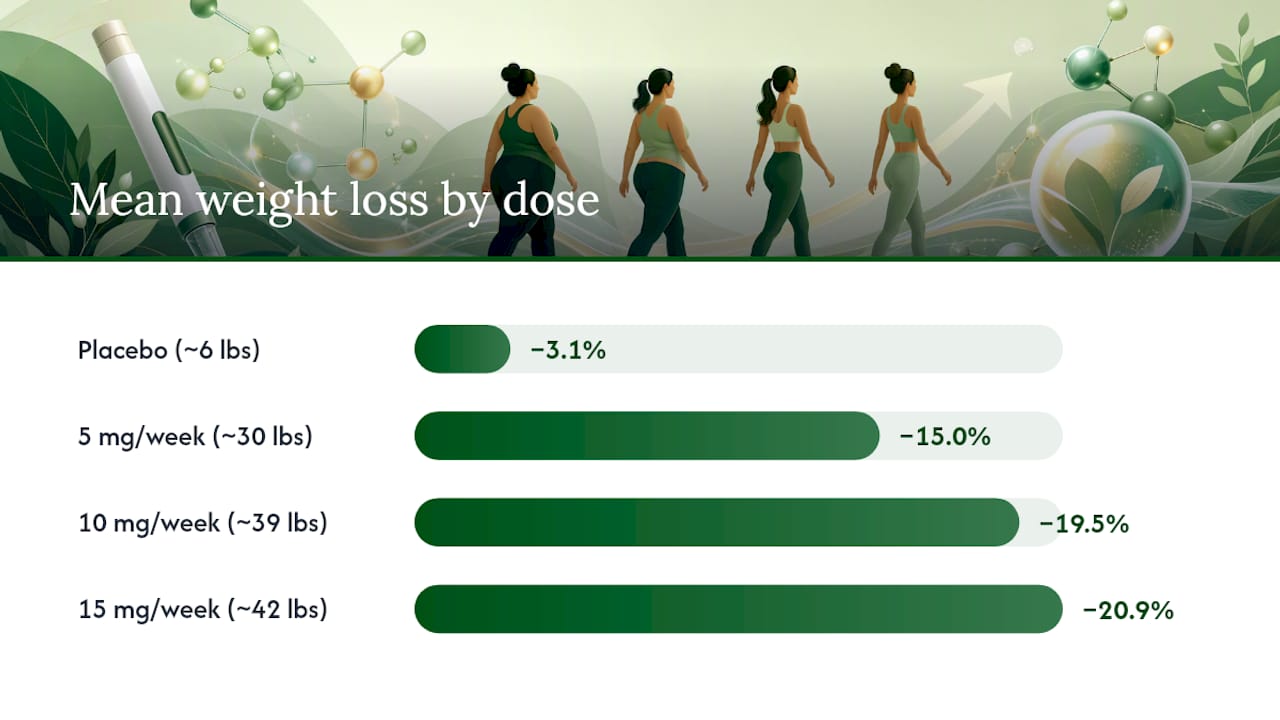
The approximate pound figures use a 200-pound baseline for illustration. Your actual result depends on your starting weight, the dose you reach and tolerate, adherence, and lifestyle factors.
Timeline: Most of the loss happens between months 3 and 15. The first few weeks at the starting dose (2.5 mg) produce modest results while the body adjusts. Once titration reaches therapeutic doses, weight loss accelerates. By around month 15, most people on stable doses reach a plateau, and further loss slows substantially. This is not a sign the medication stopped working; it reflects a new energy equilibrium.
Semaglutide (Wegovy), a GLP-1 monoagonist approved for weight management, produced mean weight loss of roughly 15% in its pivotal trial at 2.4 mg weekly. Tirzepatide’s 15 mg dose averaged 20.9% in SURMOUNT-1. The Cochrane review and other systematic analyses confirm that tirzepatide tends to produce larger mean percent weight losses than semaglutide across comparable trial durations, though head-to-head trial data are limited. Both drugs require dose escalation, weekly injections, and ongoing use to maintain results.
Real-world results vary more than trial averages suggest. Trial participants follow structured protocols with close monitoring. In practice, dose escalation may be slower, adherence varies, and comorbidities can affect response.
Eligibility for Zepbound follows the FDA-approved label, which clinicians use as the starting framework. Most insurers and prior authorization criteria track closely to those same thresholds.
Common eligibility criteria based on the label and trial populations:
People with type 2 diabetes can use tirzepatide for weight loss, but the prescribing context matters. Mounjaro is labeled for glycemic control in diabetes; Zepbound is labeled for weight management. A clinician managing both conditions will decide which label and which insurance pathway applies to your situation.
Contraindications to discuss with your clinician include a personal or family history of medullary thyroid carcinoma, Multiple Endocrine Neoplasia syndrome type 2 (MEN 2), a known hypersensitivity to tirzepatide, and active pancreatitis. These are not minor cautions; they are label-level contraindications that require a frank conversation before any prescription is written. Check whether weight loss injections could be right for you as a starting point, but a licensed clinician makes the final determination.
Pro Tip: If you are of reproductive age, discuss contraception and pregnancy plans with your clinician before starting tirzepatide. The drug is not recommended during pregnancy, and because weight loss itself can affect fertility and menstrual cycles, your clinician may want to address both topics together.
Tirzepatide is injected subcutaneously once a week, typically in the abdomen, thigh, or upper arm. The injection itself takes seconds. The dose escalation schedule exists for one reason: GI side effects (nausea, vomiting, diarrhea) are most intense at higher doses, and titrating slowly gives the gut time to adapt.
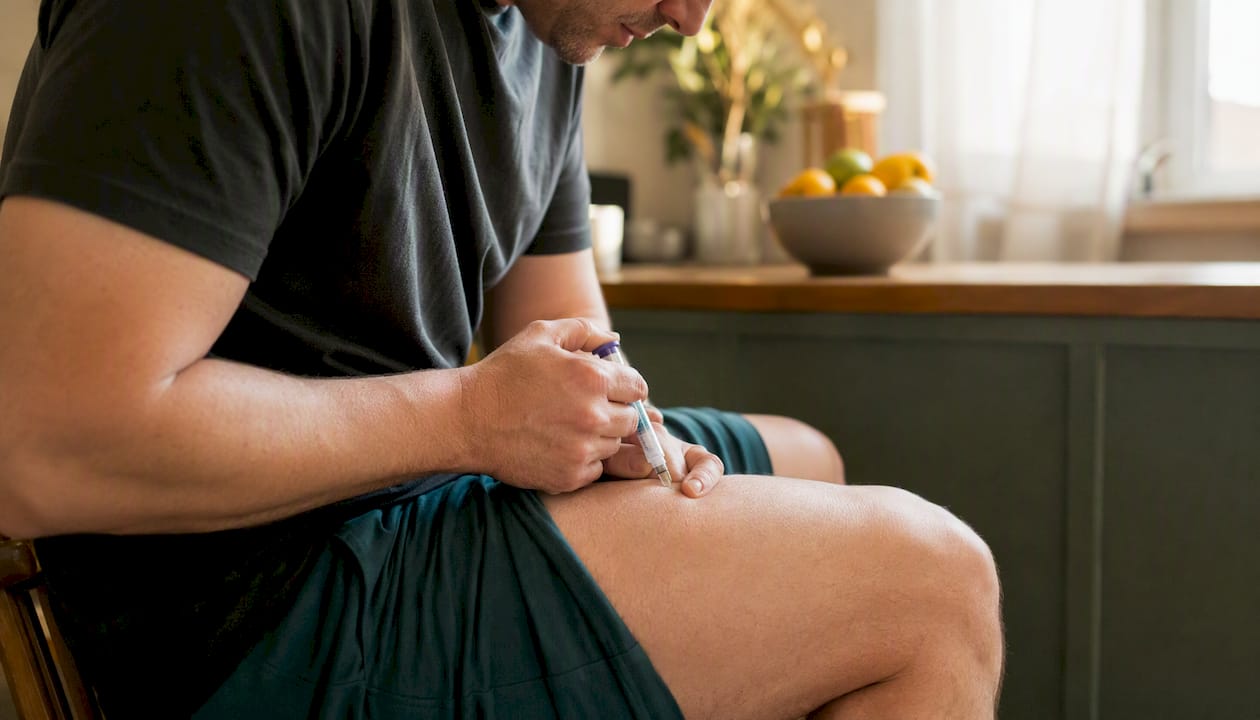
The standard escalation per the Zepbound label starts at 2.5 mg weekly for four weeks, then steps up by 2.5 mg increments every four weeks until reaching the target maintenance dose (5 mg, 10 mg, or 15 mg). Some patients stay at 5 mg if they respond well or cannot tolerate higher doses. Others push to 15 mg for maximum efficacy. The right dose is the one that balances results with tolerability, and that decision belongs to you and your clinician.
Before your first dose, review these items with your provider:
Storage matters too. Tirzepatide pens require refrigeration (36°F–46°F) and should not be frozen. For step-by-step guidance on self-administration, FitRx’s injection technique resource covers the practical details. Follow-up visits during titration typically occur every four to eight weeks to assess tolerability, review labs, and adjust the escalation pace.
Most people experience side effects during dose escalation. The good news: they are usually mild to moderate and tend to improve once you reach a stable dose.
Common side effects:
The Cochrane review found that tirzepatide increases non-serious adverse events compared to placebo, consistent with what SURMOUNT-1 reported. Serious adverse events did not differ substantially from placebo in the trial data, and the review found limited evidence of any effect on mortality.
Seek urgent care if you experience:
The DailyMed label carries a boxed warning about thyroid C-cell tumors observed in rodent studies. The relevance to humans is not established, but the warning exists and is the reason for the medullary thyroid carcinoma contraindication.
Pro Tip: The most effective tactic for managing GI side effects is slowing the escalation schedule. If 5 mg causes significant nausea, staying at 5 mg for eight weeks instead of four before moving to 7.5 mg is clinically reasonable. Eating smaller, lower-fat meals and avoiding lying down after eating also helps. Ask your clinician about antiemetics if nausea is limiting your ability to stay on the medication.
List price for Zepbound runs over $1,000 per month without insurance. That number is real, and it stops many people before they even ask their doctor. But out-of-pocket cost depends heavily on your insurance plan, formulary tier, and whether the prescription is written for weight management or diabetes.
Insurance coverage for weight-loss medications in the U.S. is inconsistent. Medicare Part D, as of current policy, does not cover anti-obesity medications for weight loss alone (though this may change). Many commercial plans cover Zepbound, but require prior authorization with documented BMI, comorbidities, and sometimes evidence of a prior supervised weight-loss attempt. Mounjaro, prescribed for type 2 diabetes, has broader formulary coverage in many plans.
Steps to check your coverage and reduce costs:
Pro Tip: When your clinician submits a prior authorization, ask them to include your BMI, documented comorbidities, and any prior weight-loss attempts in the clinical notes. Payers are more likely to approve when the medical necessity documentation is specific and complete.
SURMOUNT-1 was a Phase 3 randomized, double-blind, placebo-controlled trial enrolling 2,539 adults with obesity or overweight plus at least one comorbidity, excluding those with type 2 diabetes. Participants were randomized to tirzepatide 5 mg, 10 mg, or 15 mg, or placebo, once weekly for 72 weeks, with a structured four-week dose-escalation phase at each step.
| Arm | Mean % weight loss at 72 weeks | ≥5% weight loss responders |
|---|---|---|
| Placebo | −3.1% | ~35% |
| Tirzepatide 5 mg | −15.0% | ~85% |
| Tirzepatide 10 mg | −19.5% | ~89% |
| Tirzepatide 15 mg | −20.9% | ~91% |
The 10 mg and 15 mg arms produced mean weight losses of approximately 19–21%, which are substantially larger than results from older anti-obesity medications and explain the significant clinical and public interest in tirzepatide. Cardiometabolic markers (blood pressure, lipids, waist circumference) also improved across active arms. Most adverse events were gastrointestinal and occurred during dose escalation.
Methods note: SURMOUNT-1 used both an intention-to-treat estimand (all randomized participants) and a treatment-regimen estimand (participants who remained on treatment). The trial was industry-sponsored by Eli Lilly, which is standard for Phase 3 drug trials but worth noting when interpreting effect sizes. Trial populations were also healthier and more adherent than typical clinical populations, so real-world results may be modestly lower.
The Cochrane review included nine studies covering 7,111 adults. Its conclusions: tirzepatide likely produces significant weight loss in the medium term and probably maintains it long-term; non-serious adverse events increase compared to placebo; and evidence for effects on mortality, serious adverse events, and quality of life remains limited or uncertain. This is the most balanced synthesis of the available evidence and is worth reading alongside the individual trial data.
Tirzepatide (Zepbound) is the most effective FDA-approved weight-loss medication currently available in the U.S., with mean trial weight losses of 15–21% over 72 weeks depending on dose.
| Point | Details |
|---|---|
| Clinical efficacy | SURMOUNT-1 showed mean weight loss of 15.0%, 19.5%, and 20.9% at 5, 10, and 15 mg doses over 72 weeks. |
| FDA approval and eligibility | Zepbound is approved for adults with BMI ≥30, or BMI ≥27 with a weight-related comorbidity. |
| Side effects and safety | GI side effects are common during escalation; serious adverse events were not significantly higher than placebo in trials. |
| Long-term reality | Weight regain is common after stopping; ongoing treatment and lifestyle support are needed to maintain results. |
| FitRx access pathway | FitRx offers virtual clinician consults, eligibility review, and prescription support for tirzepatide weight loss treatment. |
The numbers from SURMOUNT-1 are genuinely impressive. A mean weight loss of nearly 21% at the highest dose, in a randomized controlled trial of over 2,500 people, is not something you see often in obesity medicine. And the Cochrane review’s confirmation of durable on-drug weight loss gives those numbers staying power beyond a single industry-funded study.
What I think gets underplayed in most coverage of tirzepatide is the gap between “the drug works” and “the drug works for you, at this dose, with this insurance plan, managed by this clinician.” The trial populations were carefully selected, closely monitored, and highly adherent. Real-world patients deal with formulary denials, dose escalation that takes longer than the protocol allows, GI side effects that aren’t managed well, and no structured behavioral support. Those gaps are where results diverge from trial averages.
The other thing worth saying plainly: tirzepatide is a treatment for a chronic condition, not a course of medication you finish. Stopping it typically means regaining weight. That is not a failure of the drug; it is how obesity biology works. The honest framing is that tirzepatide gives you a powerful tool to reduce weight and improve metabolic health, and the question of how long to use it is one you and your clinician should revisit periodically based on your health goals, your response, and your access to the medication.
If the evidence has you ready to find out whether tirzepatide is right for you, the practical barrier is usually the same: getting in front of a licensed clinician who can evaluate your eligibility, handle prior authorization, and manage your care over time.

FitRx connects you with licensed clinicians through virtual consultations, so you can discuss your BMI, comorbidities, current medications, and weight-loss history without waiting weeks for an in-person appointment. If tirzepatide is appropriate for your situation, your clinician can write the prescription and coordinate delivery directly to your home. The platform also includes ongoing support for nutrition, activity, and sleep, which matters because medication alone rarely produces the best long-term outcomes.
To get started: check whether you may qualify for weight loss injections, then book a virtual consult. Bring your most recent labs if you have them, a list of current medications, and any questions about insurance or prior authorization. FitRx clinicians can help navigate the coverage process.
This article is general health information, not medical advice. Tirzepatide requires a clinician evaluation and a valid prescription issued by a licensed provider after individual assessment. Confirm current prescribing guidelines and insurance requirements with your clinician or pharmacist.
These are the primary sources behind the clinical claims in this article. If you want to read the original data before your clinician appointment, start here.
For a person starting at around 200 lbs, losing 20 lbs represents roughly 10% of body weight. Based on SURMOUNT-1 data and practical timeline analyses, most people at therapeutic doses reach that threshold within three to six months, with the steepest loss occurring between months 3 and 15.
Trial data suggest tirzepatide produces larger mean percent weight loss than semaglutide at comparable durations. SURMOUNT-1 showed mean losses of 15–21% with tirzepatide versus approximately 15% with semaglutide 2.4 mg in its pivotal trial, though these were separate studies with different populations rather than a direct head-to-head comparison.
Weight regain is common and often substantial after stopping tirzepatide, even with continued lifestyle changes. The Cochrane review and trial extension data both support this pattern, which reflects the chronic nature of obesity rather than a drug failure.
The FDA-approved label for Zepbound covers adults with a BMI of 30 or higher, or a BMI of 27 or higher with at least one weight-related condition such as hypertension, sleep apnea, or prediabetes. A licensed clinician makes the final eligibility determination after reviewing your full medical history. You can review common eligibility factors at FitRx before your consult.


.svg)