Most people on SSRIs deal with mild, short-term issues like nausea, headache, and sleep changes that ease up within four to six weeks. A much smaller group hits rare but dangerous complications, including serotonin syndrome, dangerous heart rhythm changes, and, in people under 25, a documented rise in suicidal thoughts. If you notice severe confusion, fainting, uncontrolled bleeding, or any thought of self-harm, treat it as an emergency and get medical care immediately.
TL;DR:
- Most SSRI side effects, including nausea, headache, and sleep disruption, typically peak within the first two weeks and mostly resolve by six weeks.
- Serious complications like serotonin syndrome and heart rhythm changes are rare but require immediate emergency care if they present, especially with high doses or drug interactions.
- Weight gain risk varies among SSRIs, with escitalopram, paroxetine, and duloxetine carrying slightly higher probabilities of at least 5 percent weight increase over six months.
- Younger individuals under 25 need close monitoring for worsening suicidal thoughts, particularly in the first one to two months of treatment.
- Managing side effects often involves dose adjustments, timing changes, or gradual tapering, and abrupt discontinuation can trigger withdrawal symptoms lasting days to weeks.
Nausea, headache, dizziness, dry mouth, and disrupted sleep top the list of complaints people report after starting an SSRI, and they tend to show up fast, often within the first few days of treatment. The Cleveland Clinic notes that most of these symptoms start improving within the first few weeks, though how much they bother you personally, what clinicians call side-effect burden, can linger even after the raw symptom count drops.
Here’s the practical breakdown of what you’re likely to notice and why:
Weight gain is one of the more variable effects. A 2024 analysis found that escitalopram, paroxetine, and duloxetine carried a 10 to 15 percent higher risk of gaining at least 5 percent of baseline body weight over six months compared with sertraline. Average weight changes over extended periods were small and varied slightly among escitalopram, sertraline, and paroxetine in aggregate data, small numbers on paper, but the direction and consistency matter more than the raw pounds. Sexual side effects and weight shifts have been recognized in clinical literature for decades, and they’re often the two effects that outlast everything else on this list.
The dangerous stuff is uncommon, but it’s not theoretical. Knowing the pattern of symptoms buys you time when minutes matter.
Serotonin syndrome happens when serotonin activity spikes too high, usually from combining an SSRI with another serotonergic drug (another antidepressant, certain migraine medications, or even some illicit drugs) or from an overdose. Watch for a cluster: high fever, agitation, tremor, muscle rigidity, and confusion appearing together, not isolated. This needs emergency evaluation, not a wait-and-see approach.
QT prolongation is a heart-rhythm risk tied specifically to citalopram and escitalopram at higher doses. The StatPearls clinical reference flags citalopram’s dose ceiling as a genuine cardiac caution, which is why doctors sometimes order an ECG before or during treatment for patients with existing heart conditions or those on other QT-prolonging drugs.
Bleeding risk climbs when SSRIs are combined with NSAIDs like ibuprofen or with blood thinners, because serotonin plays a role in platelet function. Hyponatremia, dangerously low sodium, shows up mostly in older adults and can look like confusion, weakness, or headache rather than anything obviously “sodium related.”
The most publicized risk is the FDA boxed warning for increased suicidal thoughts in people under 25, issued in 2004 and still the standard for close monitoring in that age group during the first weeks of treatment.
Side effects usually announce themselves within the first two weeks, sometimes within days. The iSPOT-D study, which tracked 1,008 adults on escitalopram, sertraline, or venlafaxine, found that side-effect frequency and intensity peak around week two and start declining by week four.
That’s the average pattern. What tends to stick around longer:
Here’s the part that gets overlooked: the same iSPOT-D data found that how much side-effect burden you feel in the first days predicts your treatment outcome months later. People who felt overwhelmed by side effects early were more likely to have worse outcomes down the line, which is exactly why fast follow-up with your provider in week one matters more than most patients realize.
Age, other medications, and pregnancy status all change the risk calculation. Nobody’s SSRI experience is generic, and your provider should be tailoring monitoring to your specific situation, not applying a one-size-fits-all protocol.
Pharmacovigilance reviews consistently point to these same groups needing individualized monitoring rather than a standard checklist applied uniformly.
Most side effects are manageable without abandoning the medication altogether. The goal is reducing discomfort while keeping the antidepressant benefit intact.
Pro Tip: Keep a simple symptom log for the first month, noting timing, severity, and what you ate or when you took the dose. That log turns a vague “I feel off” into specific, actionable information your prescriber can use to adjust your plan.
Stopping an SSRI suddenly, or even missing a few doses, can trigger discontinuation syndrome: dizziness, flu-like fatigue, irritability, and a strange sensory symptom some people describe as “brain zaps.” These typically start within a few days of stopping and can last one to several weeks depending on the drug.
This isn’t addiction. It’s your nervous system readjusting to a serotonin level it had adapted to, a physiological response, not a psychological dependence.
Pro Tip: If you’ve missed a couple of doses and feel dizzy or irritable, don’t panic and don’t double up. Contact your prescriber about resuming your regular schedule or starting a formal taper instead.
A handful of combinations turn a manageable side effect into a genuine emergency risk. Worth knowing before you pick up a prescription at the pharmacy counter.
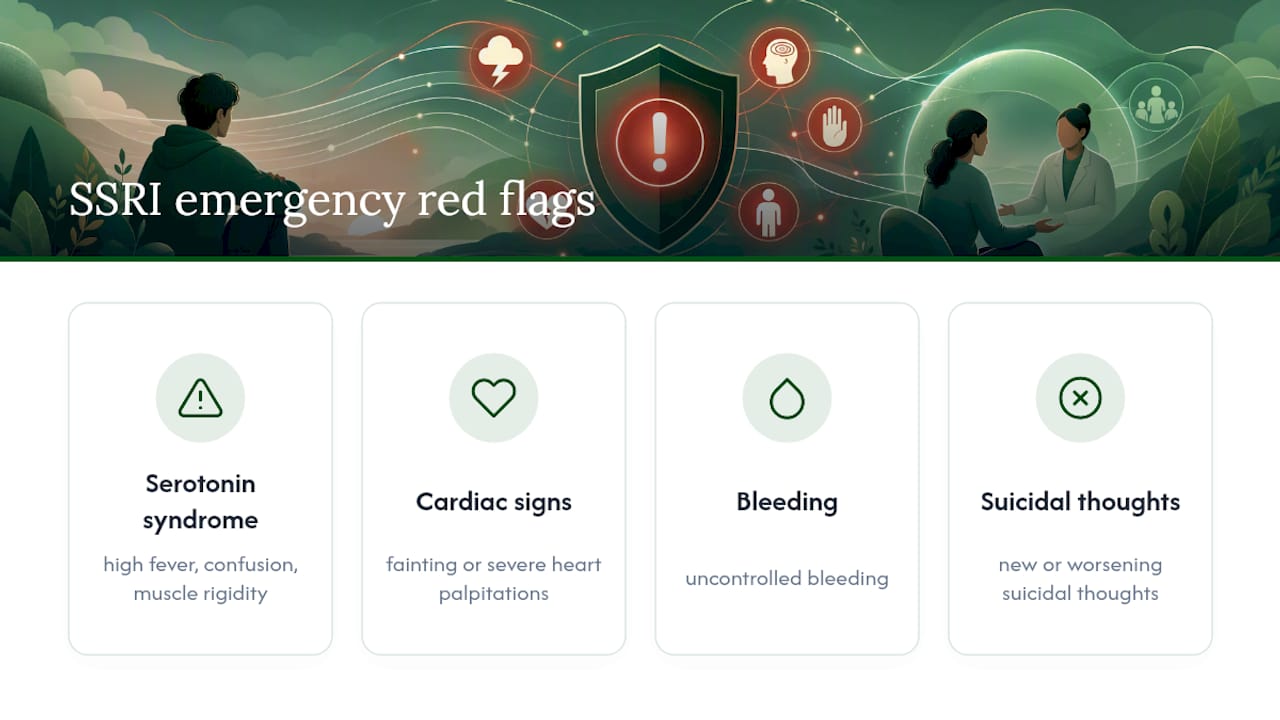
Call 911 or go to the nearest emergency room, and mention you’re taking an SSRI, if you notice: high fever with confusion or muscle rigidity (possible serotonin syndrome), fainting or severe heart palpitations, uncontrolled bleeding, or any new or worsening thoughts of suicide. These situations don’t wait for a scheduled appointment.
Getting a fast answer in week one matters more than most people assume, and that’s exactly where virtual care earns its keep. FitRx connects patients with licensed clinicians who can review side effects, adjust dose timing, or start a formal tapering conversation without waiting weeks for an in-person slot. If your side effects call for lab work or an ECG, a telehealth visit can route that referral quickly instead of leaving you guessing.
Whatever platform you use, confirm the follow-up plan and emergency protocol before you end any virtual visit. That single question, “what happens if this gets worse tonight,” is worth asking every time.
Figuring out whether a side effect is normal adjustment or a sign you need a dose change shouldn’t require guessing alone at home. You can get direct access to licensed clinicians who can review your symptoms, adjust your regimen, or build a supervised tapering plan, avoiding long waits typical of in-person psychiatry scheduling.

If nausea, sleep disruption, or sexual side effects are making your current SSRI hard to stick with, that’s worth a conversation, not a decision to quit cold. FitRx’s personalized anxiety care connects you with a provider who can walk through your options, from dose timing changes to a different agent entirely, and coordinate monitoring like lab work when it’s warranted. Schedule a visit to review your current medication and get a plan that actually fits your side-effect profile.
This article is general information, not a substitute for advice from a qualified doctor. Consult a qualified healthcare professional about your own circumstances before acting on anything here.
The most dangerous are serotonin syndrome, QT prolongation (heart rhythm changes, particularly with citalopram), severe bleeding, hyponatremia in older adults, and increased suicidal thoughts in people under 25. All are rare but require immediate medical attention.
SSRIs increase available serotonin in the brain by blocking its reabsorption into neurons, which over several weeks helps regulate mood and anxiety circuits. Improvement in anxiety symptoms typically builds gradually rather than appearing immediately.
Side effects often show up within days, while anxiety and depression symptom improvement usually takes four to six weeks to become noticeable, according to iSPOT-D timelines. Some people notice partial changes sooner, but full effect takes time.
Yes, a temporary increase in anxiety or jitteriness during the first one to two weeks is common as your body adjusts to higher serotonin activity. This typically settles down as side-effect intensity peaks around week two and declines by week four.
Most common side effects like nausea and headache improve within four to six weeks, though sexual dysfunction and weight changes can persist longer for some patients. If a side effect hasn’t improved by six weeks, it’s worth discussing a dose adjustment or switch with your prescriber.

.svg)