Most people on semaglutide deal with mild, temporary stomach trouble; serious complications are uncommon but worth knowing how to spot. Nausea, vomiting, diarrhea, constipation, and abdominal pain top the list, and they cluster around the start of treatment and each dose increase. The DailyMed prescribing information for WEGOVY and MedlinePlus are the two references worth bookmarking if you want the unfiltered clinical picture rather than a summary.
Here’s what to do right now, whether you’re starting semaglutide (sold as Wegovy or Ozempic, or as the oral tablet Rybelsus) or already a few weeks in:
Stop the medication and get emergency care if you notice severe, persistent abdominal pain radiating to your back, yellowing skin or eyes, swelling of the face or throat with trouble breathing, or fainting paired with a racing heartbeat. Anything short of that usually warrants a call to your prescriber rather than a trip to urgent care.
Most semaglutide side effects are mild gastrointestinal symptoms tied to dose escalation, while serious complications like pancreatitis or kidney injury are uncommon but require immediate action.
| Point | Details |
|---|---|
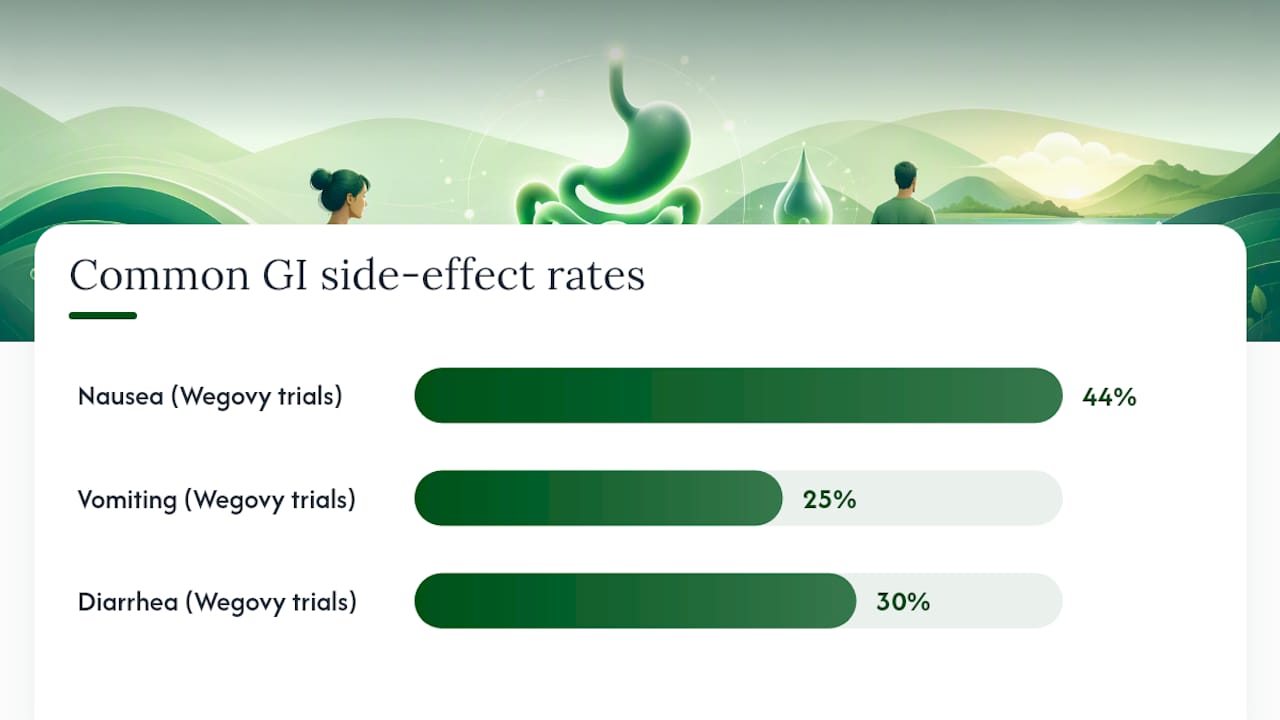
| GI symptoms dominate | Nausea (44%), vomiting (25%), and diarrhea (30%) are the most reported reactions in Wegovy trials. |
| Timing follows dose changes | Symptoms cluster around treatment start and each dose increase, often easing within weeks. |
| Red flags need urgent care | Severe abdominal pain, jaundice, facial swelling, or fainting call for immediate medical attention. |
| Slower titration helps most | Flexible dose schedules cut nausea and dropout compared with fixed escalation timelines. |
| FitRx builds plans around tolerance | Personalized titration, app check-ins, and clinician access support safer semaglutide use. |
This article is general information, not a substitute for advice from a qualified doctor. Consult a qualified healthcare professional about your own circumstances before acting on anything here.
Gastrointestinal symptoms dominate the side-effect profile of semaglutide, and the numbers back that up clearly. Nausea affected 44% of patients versus 16% on placebo, vomiting hit 25% versus 6%, and diarrhea showed up in 30% versus 16%, according to the full WEGOVY prescribing information. Constipation and abdominal pain round out the most frequently reported reactions.
Beyond the gut, some patients notice headache, fatigue, dizziness, or soreness at the injection site. Hair thinning gets mentioned often in patient forums, and while it’s not among the top-line trial numbers, it tends to track with rapid weight loss rather than the drug itself, a pattern seen with many aggressive weight-loss interventions.
Two things drive how bad these symptoms get: dose and speed. Side effects cluster tightly around dose escalation, meaning the jump from one dose tier to the next is usually when nausea spikes, then eases as your body adjusts. StatPearls notes that GI effects are dose-dependent and represent the primary tolerability issue with GLP-1 drugs generally, not just semaglutide.
Pro Tip: Eat protein and vegetables first at each meal, stop before you feel full, and skip carbonated drinks during the first two weeks after a dose increase. Small changes like these often blunt nausea more than any medication adjustment.

If you’re new to injections, it helps to get the technique right from the start. A shaky hand or wrong injection site won’t cause nausea, but proper injection technique does reduce site reactions and bruising, which are common enough to be worth avoiding.
Serious complications from semaglutide are uncommon, but they’re not theoretical, and knowing the signs matters more than memorizing a list. Harvard Health’s review of research on the drug found that serious adverse events remain rare even though gastrointestinal complaints are widespread, which is exactly the tension this section is built around.
Pancreatitis is the one to take most seriously. It typically shows up as severe, persistent abdominal pain that can radiate to the back, sometimes with nausea or vomiting that doesn’t match your usual pattern. If that happens, stop the medication and get evaluated urgently rather than waiting to see if it passes.
Gallbladder disease and gallstones (cholelithiasis) also appear in the WEGOVY safety data, generally presenting as steady right-upper-quadrant pain, fever, or jaundice. Acute kidney injury is another concern, almost always downstream of dehydration caused by vomiting or diarrhea rather than a direct kidney effect. GLP-1 receptor agonists have been linked to postmarketing reports of both acute pancreatitis and kidney injury tied to volume loss from GI symptoms.
Dehydration from nausea, vomiting, or diarrhea can trigger acute kidney injury. Aggressive fluid replacement during the early weeks of therapy isn’t just about comfort. It’s a specific, evidence-based way to lower renal risk while your body adjusts to the medication.
Other red flags include severe hypoglycemia (mainly a risk if you’re also on insulin or a sulfonylurea), hypersensitivity reactions ranging from rash to anaphylaxis, and a boxed warning about thyroid C-cell tumors seen in animal studies. Human risk from this last one remains unconfirmed, but it’s why the label carries the warning at all.
If you experience any of these, stop the medication, seek emergency or urgent care depending on severity, and consider reporting the reaction to the FDA’s MedWatch program so the safety data stays current for everyone else on the drug.
Most gastrointestinal symptoms show up early, either in the first couple of weeks after starting the drug or right after each dose increase. Nausea tends to peak during these escalation windows and then settle down as your system adapts, a pattern consistent across the trial data for Wegovy and Ozempic.
A 2026 review in Frontiers in Endocrinology found that slower, more flexible titration schedules reduce both nausea severity and treatment dropout compared with fixed, standard escalation. Roughly 60 to 70 percent of patients reach their full target dose with only minor GI discomfort, while 30 to 40 percent struggle more during the climb. That’s a meaningful chunk of people, and it’s the main reason many prescribers now default to a slower ramp-up rather than rushing to the maintenance dose.
If your side effects aren’t following this pattern, particularly if something new shows up well into treatment, that’s worth flagging rather than assuming it will resolve on its own. For a broader sense of how quickly the drug acts on appetite and weight, see how semaglutide’s onset of action tracks against the side-effect timeline.
Semaglutide isn’t right for everyone, and the contraindications aren’t just fine print. A personal or family history of medullary thyroid carcinoma (MTC) or Multiple Endocrine Neoplasia syndrome type 2 (MEN 2) rules it out, tied directly to the thyroid C-cell tumor warning on the label. A prior serious hypersensitivity reaction to semaglutide is an automatic no. Pregnancy and breastfeeding also call for avoiding the drug, and it’s typically discontinued well before a planned pregnancy.
Beyond outright contraindications, some patients face a higher risk of complications and need closer monitoring:
If you’re on insulin or a sulfonylurea, your risk of hypoglycemia climbs when semaglutide is added, and your provider will likely reduce those other medications preemptively. Before starting, walk through this checklist with your prescriber: past pancreatitis, thyroid or retinal disease, current diabetes medications, and any gallbladder history. It takes five minutes and can prevent a much longer conversation later.
Semaglutide slows gastric emptying, which is part of how it works but also the source of most interaction concerns. If you take insulin or an insulin secretagogue like a sulfonylurea, combining it with semaglutide raises your hypoglycemia risk meaningfully. Expect closer glucose monitoring and likely a dose reduction in those other medications when you start.
That same delayed gastric emptying can affect how well your body absorbs certain oral medications, since they spend more time in the stomach before moving on. StatPearls points to this mechanism directly and recommends monitoring for drugs with a narrow therapeutic window. Levothyroxine is one worth watching, since absorption shifts can throw off thyroid levels over time.
A few other precautions matter:
Most side effects respond well to a handful of practical adjustments, and the order you try them in matters.
Pro Tip: Keep a simple symptom log for the first eight weeks: what you ate, when you injected, and what you felt. Patterns that seem random in your memory often become obvious on paper, and it gives your provider something concrete to work with.
Compounded semaglutide has flooded the market, largely as a cheaper alternative to Wegovy or Ozempic, but the safety trade-off is real. Compounding pharmacies aren’t held to the same manufacturing standards as approved drug makers, which means dose variability and sterility concerns are legitimate risks rather than hypothetical ones.
Compounded versions haven’t gone through the same clinical trials, so there’s no equivalent safety data to point to. You’re essentially taking an unstudied variant and assuming it behaves the same way.
If cost or access is the reason you’re considering a compounded product, that’s worth raising directly with your prescriber. There are often more options, insurance pathways, or manufacturer savings programs, than most patients realize.
Expect your provider to take a baseline history covering thyroid, pancreatic, and gallbladder health before you start. If you experience ongoing GI symptoms, periodic kidney function checks are reasonable, especially early in treatment. Patients with diabetes or existing retinopathy typically need eye exams during treatment, since GLP-1 drugs have been associated with a retinopathy signal in some populations.
During dose titration, expect check-ins every four to eight weeks, timed around each dose increase. Know who to contact in your care team for side-effect questions between visits, and use it.
A typical telehealth workflow starts with intake and a remote clinician review, screening for the contraindications covered above before any prescription is written. From there, you get an individualized titration plan and ongoing check-ins through an app rather than waiting for a scheduled office visit.
This model helps with the exact risks this article covers: reminders about hydration, a fast channel to flag red-flag symptoms, and quick medication adjustments when side effects run hot. Pro Tip: With FitRx specifically, that means prescription delivery to your door, in-app symptom check-ins during titration, and direct access to clinician guidance if something feels off.
The honest tension with semaglutide is that the same mechanism driving weight loss, slowed digestion and reduced appetite, is what causes most of the nausea and GI discomfort patients report. That’s not a flaw to be managed away entirely; it’s the trade-off the drug is built on. What separates a good experience from a bad one is usually pacing: how quickly the dose climbs, how closely someone’s diet adapts, and how fast red flags get addressed instead of dismissed as “normal.” None of that replaces an actual conversation with your prescriber about your specific health history, and it shouldn’t.
FitRx builds the titration plan around your actual tolerance instead of a one-size schedule, which is the single biggest lever for avoiding the nausea and dropout risk covered above. Every patient gets a remote clinician review before any prescription ships, a personalized dose schedule, and in-app check-ins during the weeks when side effects are most likely to show up.

That combination, medical oversight plus fast access when something feels off, is what a slower, flexible ramp-up actually requires in practice. Medication ships to your door, and adjustments happen through the app rather than waiting weeks for the next office visit. If you’re weighing whether semaglutide fits your health picture, you can find out if weight loss injections could be right for you and get a clinician’s read on your specific risk factors before you start.
The main risks are gastrointestinal, but rare serious dangers include pancreatitis, gallbladder disease, acute kidney injury from dehydration, and severe allergic reactions, all of which warrant prompt medical attention.
Weight loss speed varies widely by starting weight, dose, and individual response, so there’s no fixed timeline. Most people see gradual, steady loss over months rather than weeks, tracking closely with how quickly semaglutide reaches its target dose.
Side effects typically peak during the first few weeks after starting treatment and again after each dose increase, then ease as your body adjusts over the following weeks.
Appetite and weight often return toward baseline once the medication is stopped, since semaglutide’s appetite-suppressing effects fade without ongoing use. Many providers recommend a gradual tapering plan and continued nutrition and activity support rather than stopping abruptly.
Long-term data continues to accumulate, but current evidence suggests most side effects remain gastrointestinal and diminish over time rather than worsening, with serious events staying uncommon. Regular monitoring through your provider, including check-ins available through platforms like FitRx, remains the best way to catch any changes early.


.svg)