Semaglutide commonly causes constipation, affecting about one in four people who take it, and the fix starts within hours, not weeks: drink more water, get moving, and add a fiber source or gentle stool softener before things back up completely. Most cases resolve with these steps without stopping treatment. If you develop severe pain, vomiting, or can’t pass gas at all, call your provider the same day.
TL;DR:
- About 24% of people on semaglutide experience constipation, mainly during dose increases, and it can last around 47 days on average.
- Hydration, movement, and starting soluble fiber early can significantly reduce symptoms before resorting to laxatives.
- PEG (MiraLAX) typically provides relief within one to three days, making it the preferred first-line OTC treatment for drug-induced constipation.
- Severe pain, vomiting, inability to pass gas, or blood in stool require urgent medical evaluation due to potential serious complications.
- Maintaining open communication with your healthcare provider and adjusting lifestyle or medication timing can help prevent and manage constipation effectively.
Most people can manage semaglutide constipation at home by prioritizing hydration and lifestyle steps before progressing to laxatives.
Pro Tip: Take your fiber supplement a few hours away from your semaglutide dose and with a full glass of water. Taking fiber right before or during a meal when your stomach is already emptying slowly can intensify fullness and bloating, defeating the purpose.
Semaglutide belongs to a drug class called GLP-1 receptor agonists, and the same mechanism that curbs your appetite also slows your gut down. It delays gastric emptying and reduces intestinal motility, meaning food spends more time in your stomach and moves through your intestines at a slower pace. That’s the whole reason you feel full longer, but it’s also why stool sits around longer and loses moisture.
The effect is dose-dependent, which explains why constipation often flares right after a dose increase and eases as your body adjusts. There’s a secondary factor too: eating less naturally means drinking less fluid and consuming less fiber from food, both of which firm up stool independent of the drug’s direct effect on motility. The good news is that most gastrointestinal side effects are mild to moderate and transient, rarely serious enough to require stopping treatment.
Patience matters here more than with other semaglutide side effects. Clinical trial data puts the median duration of constipation at about 47 days, considerably longer than nausea, which typically resolves in a median of around eight days.
By the numbers: Constipation affects roughly 1 in 4 people on semaglutide, with symptoms typically peaking during dose escalation and often settling by around week 10 of treatment.
Duration varies by individual. Higher doses, a personal history of slow-transit constipation, and dehydration all tend to stretch symptoms out longer. If you’re still struggling well past that 10-week mark, it’s worth a conversation with your provider rather than assuming it will simply fade on its own.
Constipation from semaglutide is usually a nuisance, not a danger, but a small number of cases escalate into something serious. Rare postmarketing reports have linked GLP-1 medications to ileus and intestinal complications, so it pays to know the warning signs.
Call your provider or seek urgent care if you notice:
At a visit, expect a physical exam, a review of your current medications, and possibly imaging like an X-ray or CT scan if obstruction or fecal impaction is suspected. MedlinePlus lists these symptoms explicitly among the reasons to contact a doctor rather than wait it out.
Docusate and PEG cover most cases, but it helps to understand how each one works before you reach for it. Docusate softens stool by letting water penetrate it more easily; it’s gentle but slow, often taking one to three days. PEG pulls water into the colon by osmosis and tends to act faster and more reliably for drug-induced constipation, which is why it’s frequently the go-to recommendation for semaglutide-related cases.
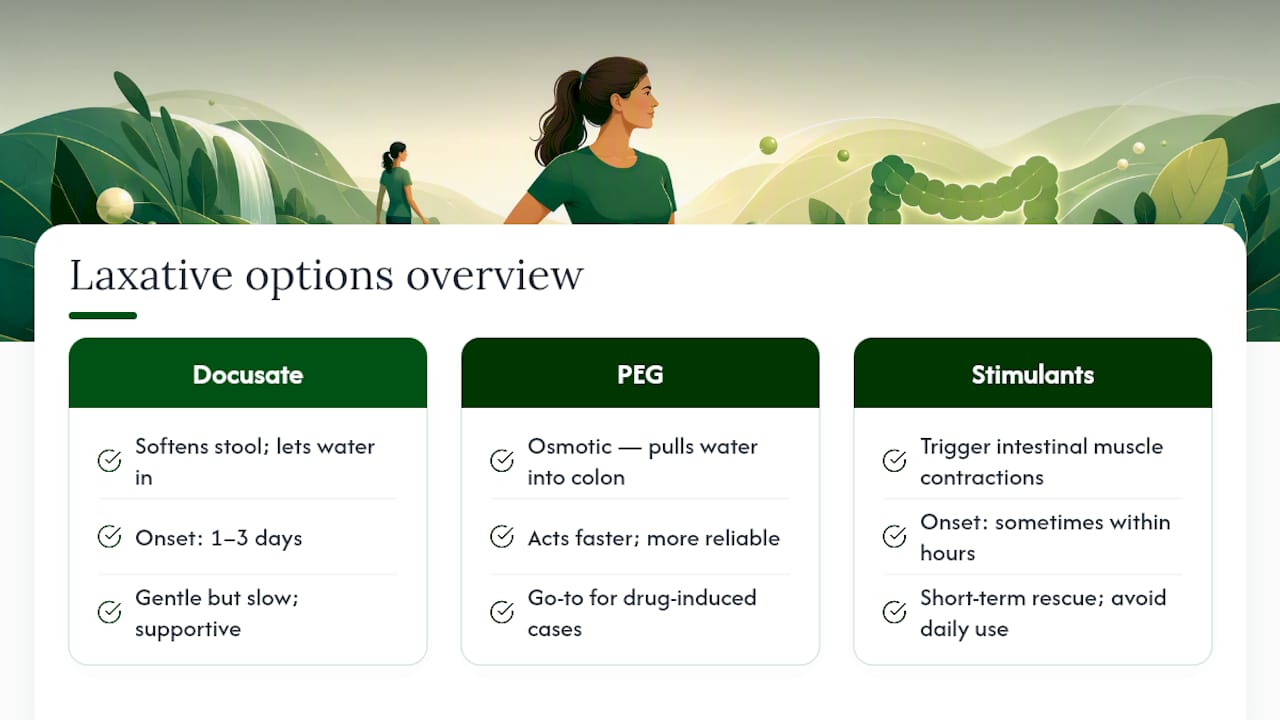
Stimulant laxatives like bisacodyl or senna trigger muscle contractions in the intestinal wall. They work quickly, sometimes within hours, but they’re a short-term rescue tool, not a daily habit. Using them repeatedly can lead to dependency where your bowel stops responding without them.
If OTC options aren’t cutting it after a reasonable trial, your prescriber has other levers to pull. Cleveland Clinic’s guidance on managing GLP-1 side effects recommends slowing the pace of dose escalation before abandoning treatment altogether, since giving your gut more time to adjust often resolves the issue without sacrificing weight-loss progress. Always mention new or worsening constipation at your next check-in. It’s rarely worth toughing out silently, and it’s almost never a reason to quit semaglutide outright.
The best defense against semaglutide constipation is starting before you need one.
Prevention beats treatment here because it’s a lot easier to keep things moving than to unstick a system that’s already backed up.
Getting through dose escalation is easier with someone reviewing your case, not just a pamphlet. Licensed providers can review your medications, adjust titration pace, and help build a side-effect management plan tailored to your history.
App-based support can offer practical advice on injection technique, activity guidance, and symptom management decisions. That kind of ongoing check-in matters more for constipation than for most side effects, given how long it can linger compared to nausea. Our semaglutide side effects resource walks through what’s typical and what’s not.
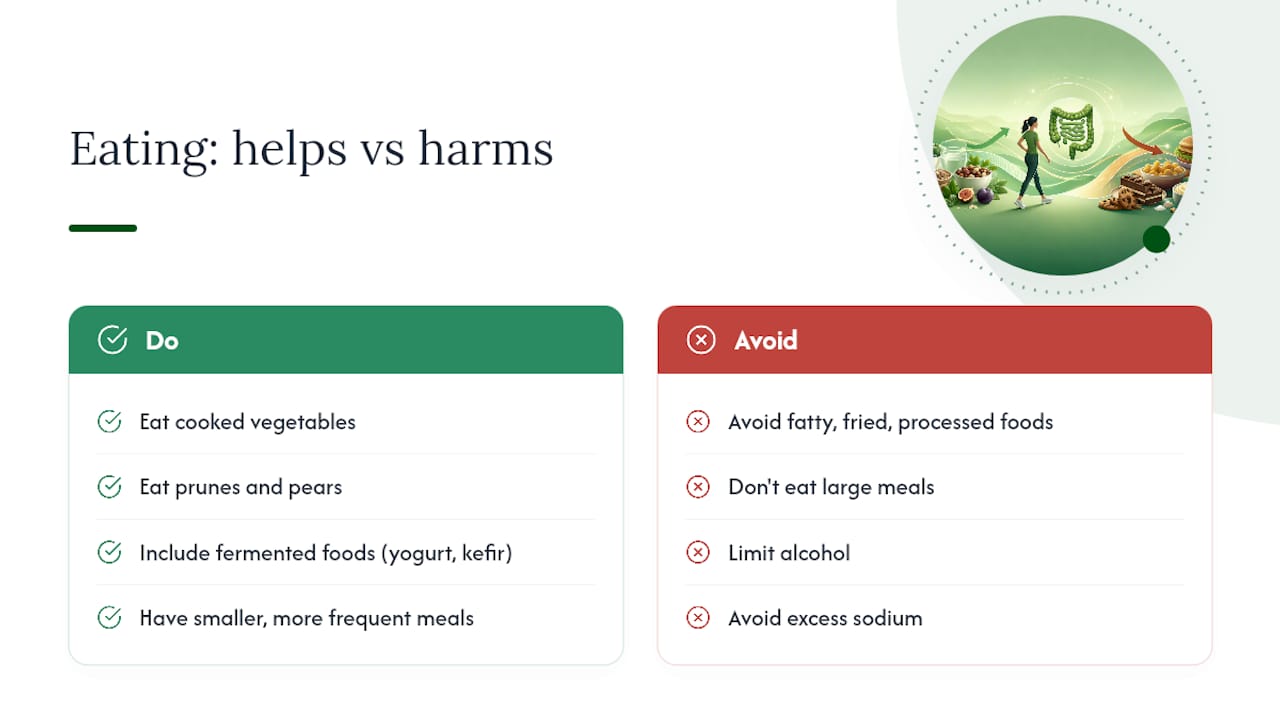
Fiber gets most of the attention, but what you eat around it matters just as much. Fatty, fried, and heavily processed foods slow digestion further on top of what semaglutide is already doing, which can compound the backup rather than relieve it. Large meals are a similar problem: with gastric emptying already delayed, a big plate sits there longer and leaves less appetite for the fluids and produce that actually help.
Foods worth leaning into include cooked vegetables (easier to digest than raw when your gut is sluggish), prunes and pears, which contain natural sorbitol with a mild laxative effect, and fermented foods like yogurt or kefir for their probiotic content. Smaller, more frequent meals tend to sit better than three large ones, since they place less demand on a stomach that’s already emptying slowly.
Watch your sodium and caffeine intake too. Excess sodium can contribute to dehydration, and while a moderate amount of caffeine can stimulate bowel activity for some people, too much acts as a diuretic that works against your hydration goals. Alcohol carries a similar dehydrating effect and is worth limiting during the weeks you’re actively managing symptoms.
None of this requires an overhaul of your diet. It’s a matter of sequencing: smaller portions, less fried food, more of the produce that naturally supports motility, and fluids treated as a priority rather than an afterthought.
Semaglutide rarely constipates you in isolation. Plenty of common medications compound the effect, and if you’re on more than one, the combination might be doing more damage than semaglutide alone.
Opioid pain medications are the most potent offenders, slowing gut motility through a different mechanism than GLP-1 drugs but stacking on top of it. Iron supplements, frequently prescribed alongside weight-loss treatment if bloodwork shows low iron, are notorious for firming up stool. Certain blood pressure medications, particularly calcium channel blockers, and some antidepressants, especially tricyclics, carry constipation as a known side effect as well. Antacids containing calcium or aluminum add to the load too.
None of this means you need to stop these medications. It means your provider needs the full list of what you’re taking, not just the semaglutide prescription, to figure out whether constipation is a single-drug problem or a cumulative one. Sometimes the fix isn’t more fiber. It’s swapping an iron formulation or adjusting an antacid. Bring your complete medication list, supplements included, to every check-in during dose escalation, since this is exactly the kind of interaction that gets missed when appointments focus only on the weight-loss medication itself.
If you’ve tried hydration, movement, fiber, and PEG for a couple of weeks with little improvement, it’s time to treat this as a refractory case rather than something to push through longer. That distinction changes what your provider will likely try next.
A prescription-strength osmotic or secretagogue laxative may be added under supervision if OTC PEG isn’t cutting it. Providers sometimes recommend a short structured bowel regimen combining a scheduled stool softener with a stimulant laxative used two to three times a week rather than only as an emergency rescue. In cases where fecal impaction has developed, a clinician may need to address it directly before any oral regimen will work.
This is also the point where titration itself comes under review. Holding your current dose for a few extra weeks instead of moving up on schedule gives your gut more time to catch up, and it’s a legitimate strategy, not a failure. Our semaglutide weight loss overview covers how dosing schedules are typically structured and where flexibility exists.
What refractory constipation is not is a routine reason to abandon semaglutide altogether. It’s a signal to escalate the management plan, not the medication decision, unless red-flag symptoms like severe pain or vomiting appear alongside it.
Discomfort is one of the top reasons people quietly skip doses or stop semaglutide altogether, and constipation is a frequent culprit given how long it tends to stick around compared to other side effects. That’s a problem, because inconsistent dosing undercuts the metabolic benefits the medication is meant to provide in the first place.
The pattern usually looks the same: symptoms build during a dose increase, the person delays or skips the next scheduled dose without mentioning it to their provider, and momentum on the treatment plan stalls. The fix isn’t willpower. It’s communication. Providers can’t adjust a titration schedule or suggest a management plan for a problem they don’t know exists.
Checking in proactively, even for something that feels minor like irregular bowel movements, keeps your treatment plan responsive instead of reactive. Interestingly, one retrospective analysis found that patients who experienced constipation actually saw somewhat greater total body weight loss than those who didn’t, though this is an observational finding, not a reason to view the side effect as worth tolerating in silence. The better strategy is managing it well enough that it never becomes a reason to quit.
Constipation is common on semaglutide, but common doesn’t mean you have to just live with it. The patients who do best treat it as a solvable logistics problem, not a reason to question the medication itself. That means working with your prescriber on hydration, movement, fiber timing, and titration pace as a package, adjusting the plan rather than gritting your teeth or quietly stopping doses. The goal is comfort that lets you stay the course, not a trade-off you accept in silence.
— Bryan
Telehealth services can connect you with licensed providers who review your case, adjust plans as needed, and may arrange prescription delivery.

Ongoing app-based support covering nutrition, activity, and sleep alongside medication can integrate constipation management into weight-loss treatment. If dose escalation has been rougher than expected, that’s worth a visit on its own. Start a consultation on the FitRx weight loss page and get a plan built around how your body is actually responding, not a generic dosing chart.
This article is general information, not a substitute for advice from a qualified doctor. Consult a qualified healthcare professional about your own circumstances before acting on anything here.
Increase fluids to roughly 11.5 to 15.5 cups daily, walk after meals, and add soluble fiber gradually starting from your first dose rather than waiting for symptoms to appear.
PEG (polyethylene glycol, sold as MiraLAX) is generally the most effective first choice, often working within one to three days, with docusate as a gentler but slower alternative.
True obstruction is rare, but postmarketing reports have linked GLP-1 medications to ileus and intestinal complications, which is why severe pain, vomiting, or inability to pass gas needs prompt medical evaluation.
There’s no universal number, but going longer than three days without a bowel movement, or straining significantly when you do, is a signal to start hydration and stool-softener measures right away.


.svg)