Track your protein in grams, not just your total calories, and log hydration and side effects daily. This matters because appetite suppression on GLP-1 medications can quietly cut your protein intake in half, putting muscle at risk during rapid weight loss. Aim for roughly 1.2 to 1.6 grams of protein per kilogram of body weight per day, personalized with your provider, and flag any troubling symptoms to them right away.
TL;DR:
- Most users fall significantly short of the recommended 1.0 to 1.6 grams of protein per kilogram of body weight without deliberate tracking, risking muscle loss.
- Tracking protein in grams per day and per meal, along with symptoms and medication timing, helps preserve muscle and manage side effects effectively.
- Simplified methods like photo logging or quick-app favorites enable consistent tracking despite low appetite or nausea, with regular review every few days.
- High-protein foods like Greek yogurt, canned fish, and fortified shakes are best eaten first and in small portions to meet density needs within limited stomach volume.
- Regular lab tests and symptom monitoring are essential to detect micronutrient deficiencies early, especially when calorie intake drops below 1,200 calories daily.
Appetite suppression is the whole point of GLP-1 medications, but it comes with a side effect nobody puts on the label: you stop eating enough protein without noticing. A retrospective cohort study found some users averaging as little as 753 calories and 33 grams of protein per day, far below what’s needed to preserve lean tissue during weight loss. That same study on dietary intake among GLP-1 users found higher protein intake tracked with greater overall weight loss, not less.
The stakes go beyond the scale. Data presented at ENDO 2025 showed that without enough protein, a substantial portion of the weight someone loses on these medications can come from lean muscle mass rather than fat. Higher protein intake was linked to better muscle preservation and improved blood sugar control in the same data.
This is why absolute protein grams matter more than protein as a percentage of calories. That’s not enough. A peer-reviewed review in AJCN recommends active nutrition monitoring alongside GLP-1 therapy for exactly this reason. Tracking isn’t busywork. It’s how you protect muscle, blunt GI side effects, and keep your metabolism working with you instead of against you.
Nutrition tracking for weight loss meds doesn’t need to be complicated, but a few numbers matter far more than others. Skip the granular macro breakdowns and focus on the metrics that actually predict how well you’ll preserve muscle and avoid side effects.
Primary metric: protein, in grams.
Secondary metrics that round out the picture:
Symptoms worth a one-line note each day:
Medication log:
Writing all of this down doesn’t take long. It takes about the same time as scrolling a food delivery app, and it gives your provider something concrete to work from instead of a vague “I’ve been kind of nauseous.”
The biggest barrier to consistent tracking on weight loss medication isn’t motivation. It’s that most calorie tracking for weight loss was built for people eating three normal meals a day, not for someone who feels full after four bites of chicken. The fix is to lower the friction until logging takes seconds, not minutes.
Pro Tip: Keep a running list of your “safe” high-protein foods, the ones that never trigger nausea, taped inside a cabinet door. On bad appetite days, you won’t have the bandwidth to think. You just want to know what to grab.
Eat your protein first, before any vegetables, starches, or sauce, every single time. This single habit, sometimes called protein-first plating, is one of the highest-leverage changes you can make because it front-loads the nutrient you need most before appetite runs out partway through the meal.
When stomach volume is limited, density beats variety. A few reliable options that pack real protein into small servings:
Keep a shake as a backup for days when solid food feels impossible. Whey-based shakes digest quickly and mix easily into water or milk; plant-based blends (pea or soy) are a reasonable substitute if you’re lactose intolerant, though they sometimes require a bit more volume to hit the same gram target. Healthline’s guide to eating on semaglutide or tirzepatide similarly emphasizes lean proteins and low-glycemic carbs as the foundation of each meal.
Timing helps too. Put your largest protein serving at whatever time of day your appetite is best, which for most people on these medications is the morning before nausea has a chance to build.
Nutrition tracking works best paired with objective checks, not gut feeling alone. Ask your provider about baseline labs before starting a weight loss medication and periodic reassessment after, covering vitamin D, B12, an iron panel, a basic metabolic panel, and kidney function. FitRx’s baseline lab guidance for GLP-1 treatment walks through what a typical panel includes and why it matters.
Between lab draws, watch functional signs day to day: strength dropping off in workouts, fatigue that feels disproportionate to your activity, new hair shedding, or constipation and nausea that keep worsening instead of settling. Any of these is a reasonable trigger to ask for a dietitian referral, a review of your medication dose, or targeted supplements.
Some symptoms need same-day attention rather than a wait-and-see approach: persistent vomiting, fainting or near-fainting, or signs of severe dehydration. Those are not “log it and mention it next visit” situations. They’re reasons to call your provider or seek care immediately.
Not every weight loss medication behaves the same way in the body, and your tracking should shift accordingly. Semaglutide and tirzepatide both slow gastric emptying, which is why nausea tends to cluster in the first few hours after eating and why smaller, more frequent meals usually beat three large ones. If you’re on a dual GIP/GLP-1 agonist like tirzepatide, appetite suppression is often more pronounced, so your protein tracking needs to be more deliberate rather than less. It’s easy to assume you’re eating “enough” when you’re barely eating at all.
Dose escalation phases deserve extra attention in your log. The first two weeks after any dose increase are when GI side effects typically spike, so this is the window to tighten your symptom notes and possibly shift toward more liquid protein sources temporarily. Once your body adjusts to a dose, usually within three to four weeks, side effects often ease and you can reintroduce more solid, varied meals.
If you’re on an older medication like phentermine, the appetite suppression mechanism is different (stimulant-based rather than incretin-based), and the side effect profile shifts toward dry mouth and insomnia rather than nausea and delayed gastric emptying. Your tracking priorities shift too: hydration becomes even more critical, and sleep quality is worth a daily note alongside protein and symptoms.
The common thread across all of these medications is that your tracking should adapt to whatever your specific drug and dose are doing to your body that week, not stay static from month one to month six.

Reduced food volume doesn’t just cut protein. It quietly reduces intake of vitamins and minerals you’d normally get from a full day of varied eating. The AJCN review on nutrition with GLP-1s flags calorie intake below roughly 1,200 per day for women as a threshold where micronutrient insufficiency becomes a real risk, particularly for iron, B12, vitamin D, and calcium.
The fix isn’t complicated, but it does require deliberate tracking rather than assumption. Add a simple weekly check to your log: did you eat a source of iron (red meat, spinach, fortified cereal), a source of calcium (dairy, fortified plant milk), and something with vitamin D or B12 at least several times that week? You don’t need to weigh every gram of spinach. You just need a rough weekly pattern you can glance at.
If your calorie intake has been consistently low for more than a few weeks, that’s worth flagging to your provider directly rather than waiting for your next scheduled visit. A basic metabolic panel and iron studies can catch a developing deficiency well before it becomes symptomatic, and a short course of a multivitamin or targeted supplement is a far easier fix early than after fatigue or hair loss has already set in.
Weekly injectable medications create a predictable rhythm you can build your tracking around instead of fighting against. Appetite and side effects typically follow an arc: the two or three days right after your injection tend to bring the most nausea and the least appetite, while the days leading up to your next dose often bring some appetite recovery.
Use that pattern to your advantage. Front-load your most protein-dense, most palatable meals into the days when appetite recovers, and lean on liquid options like shakes during the rough stretch right after dosing. Logging your dose date alongside your daily protein and symptom notes lets you see this pattern in your own data within two or three injection cycles, rather than guessing at it.
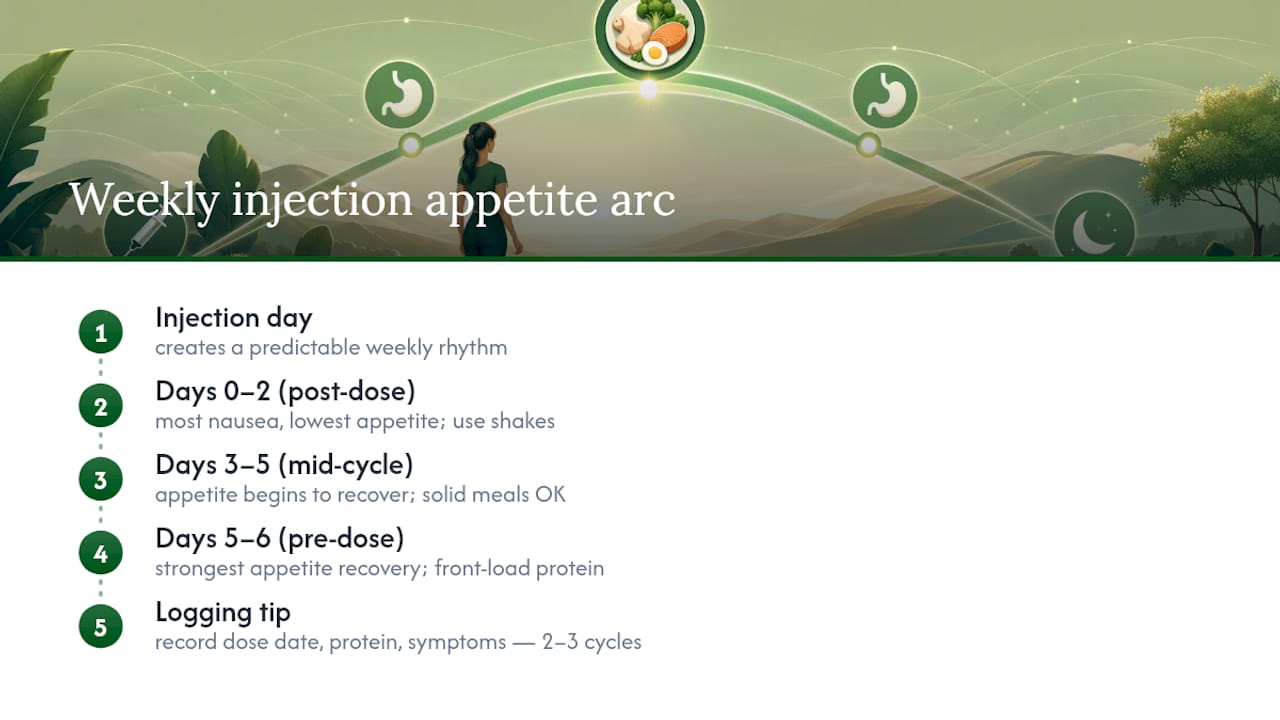
If you’re on a daily oral medication instead of a weekly injectable, the rhythm is different, appetite suppression tends to be steadier through the week rather than cyclical, so your tracking should focus more on catching a slow decline in average daily protein over a week or two rather than day-to-day swings.
Either way, the goal is the same: let your medication schedule inform when you push harder on protein and when you give yourself grace for a lighter, liquid-heavy day.
The single most common mistake is treating “I’m not hungry” as a valid reason to skip protein entirely rather than a reason to shrink the portion. A four-ounce piece of chicken you can actually finish beats an eight-ounce piece you leave half-eaten, but skipping the protein source altogether to eat a small serving of pasta instead is the pattern that erodes muscle over time.
A second frequent error is over-restricting fluids out of a mistaken belief that drinking with meals will make fullness worse. In reality, under-hydrating tends to worsen constipation, which is already one of the most common complaints on these medications according to UCHealth’s patient guidance.
Other pitfalls worth naming directly:
A day built around a GLP-1 medication like semaglutide might start with Greek yogurt mixed with whey protein and a few berries (roughly 30 grams of protein in a small volume), followed by a mid-morning protein shake if breakfast didn’t cover enough ground. Lunch could be a few ounces of canned salmon over a small serving of rice with olive oil, and dinner a soft-cooked egg dish with cheese, since heavier, greasy proteins are more likely to trigger nausea in the evening when fatigue is highest.
For someone on a dual GIP/GLP-1 medication with more pronounced appetite suppression, the plan often leans more heavily on liquids: a protein shake for breakfast, cottage cheese with fruit as a midday snack, and a small portion of tuna or eggs for dinner, with a second shake as backup if dinner goes unfinished.
For someone on a non-incretin medication like phentermine, where nausea is less of an issue but appetite suppression and dry mouth are, meals can be more solid and varied throughout the day, but hydration tracking becomes the priority alongside protein.
None of these are prescriptive menus. They’re templates. The WildFoodz guide to eating well on the go offers additional ideas for keeping protein and nutrient density high even when routines are disrupted, which is useful for travel days or busy weeks when a structured meal plan falls apart.
Structured logs only help if someone reviews them with clinical context, which is where telehealth follow-up earns its keep. A protein and symptom log means far more to a provider than “I’ve been feeling off,” because it turns a vague impression into a pattern they can act on, whether that means adjusting your dose escalation pace, ordering a lab panel, or looping in a dietitian.
FitRx’s approach to combining GLP-1 treatment with nutrition coaching is built around this idea: medication alone rarely solves the muscle-preservation problem, but medication paired with consistent nutrition tracking and provider feedback usually does. If you’re preparing for a telehealth visit, bring three things: a two-week protein log, a running symptom list, and your most recent weight. That’s often enough for a provider to make a meaningful adjustment on the spot.
— Bryan
This article is general information, not a substitute for advice from a qualified doctor. Consult a qualified healthcare professional about your own circumstances before acting on anything here.
Most clinical guidance points to roughly 1.0 to 1.6 grams of protein per kilogram of body weight per day, with 20 to 30 grams at each meal as a practical target according to JAMA Internal Medicine. Real-world data suggests many users fall well short of this without deliberate tracking, so treat the range as a goal to build toward rather than an automatic outcome of eating less.
Photo-first logging, one picture per eating occasion with a short protein note, tends to work best when full app tracking feels like too much effort. A simplified app with protein as the only tracked field or a basic paper template also works well for sustaining the habit long term.
Warning signs include noticeable strength loss, unusual fatigue, hair shedding, or a log showing consistent days under roughly 0.6 grams per kilogram, a level real-world data shows is common but well below target. Bring your log to your provider if you notice this pattern for more than a week or two.
Reach out promptly for persistent vomiting, fainting, or signs of severe dehydration, since those need same-day attention. For slower issues like ongoing low appetite, worsening constipation, or a consistent inability to hit protein targets, a routine telehealth check-in with your logged data is usually the right next step.
Not automatically, but reduced calorie intake below roughly 1,200 per day raises the risk of micronutrient gaps, particularly iron, B12, and vitamin D, according to AJCN’s review. Baseline labs and periodic reassessment with your provider are the best way to determine if a supplement is actually needed rather than guessing.


.svg)
