Diet is the single most controllable factor in sexual performance, directly influencing blood flow, hormone production, and energy levels that drive desire and function. The role of diet in sexual performance operates through three core physiological pathways: cardiovascular health, hormone synthesis, and inflammation control. Research consistently shows that what you eat shapes the same biological systems that make sex possible. The National Institute of Diabetes and Digestive and Kidney Diseases (NIDDK) confirms that dietary patterns affect erectile function and sexual health outcomes in measurable, clinically significant ways. Your plate is not separate from your sex life. It is the foundation of it.
The Mediterranean diet is the most evidence-backed eating pattern for sexual health. Studies with over 20,000 men show that higher adherence to this diet correlates with significantly lower erectile dysfunction (ED) risk. That finding matters because ED is a vascular condition at its core, and the Mediterranean diet is built around foods that protect blood vessel function.
The pattern centers on fruits, vegetables, whole grains, legumes, nuts, olive oil, and oily fish like salmon and sardines. These foods supply antioxidants, fiber, and unsaturated fats that reduce arterial inflammation and support nitric oxide production. Nitric oxide relaxes blood vessels and drives the blood flow that makes arousal physically possible for both men and women.

The typical Western diet works in the opposite direction. High intakes of processed meats, fried foods, refined grains, and sugary drinks promote systemic inflammation and impair vascular function. That combination directly raises the risk of sexual dysfunction over time.
| Foods to prioritize | Foods to limit |
|---|---|
| Leafy greens, berries, citrus fruits | Fried foods, fast food |
| Oily fish (salmon, sardines, mackerel) | Processed and cured meats |
| Nuts, seeds, legumes | Full-fat dairy in excess |
| Olive oil, avocados | Refined grains and white bread |
| Whole grains (oats, quinoa, brown rice) | Sugary drinks and packaged snacks |
Pro Tip: Swap one processed food item per week for a Mediterranean alternative. Replacing chips with a handful of walnuts or swapping white bread for whole grain takes less than a minute and compounds into real vascular benefits over months.
Specific micronutrients do the heavy lifting inside the body’s sexual health systems. Zinc acts as a cofactor for testosterone biosynthesis, meaning testosterone cannot be produced efficiently without adequate zinc intake. Oysters are the richest dietary source of zinc, with red meat, pumpkin seeds, and legumes as solid alternatives.
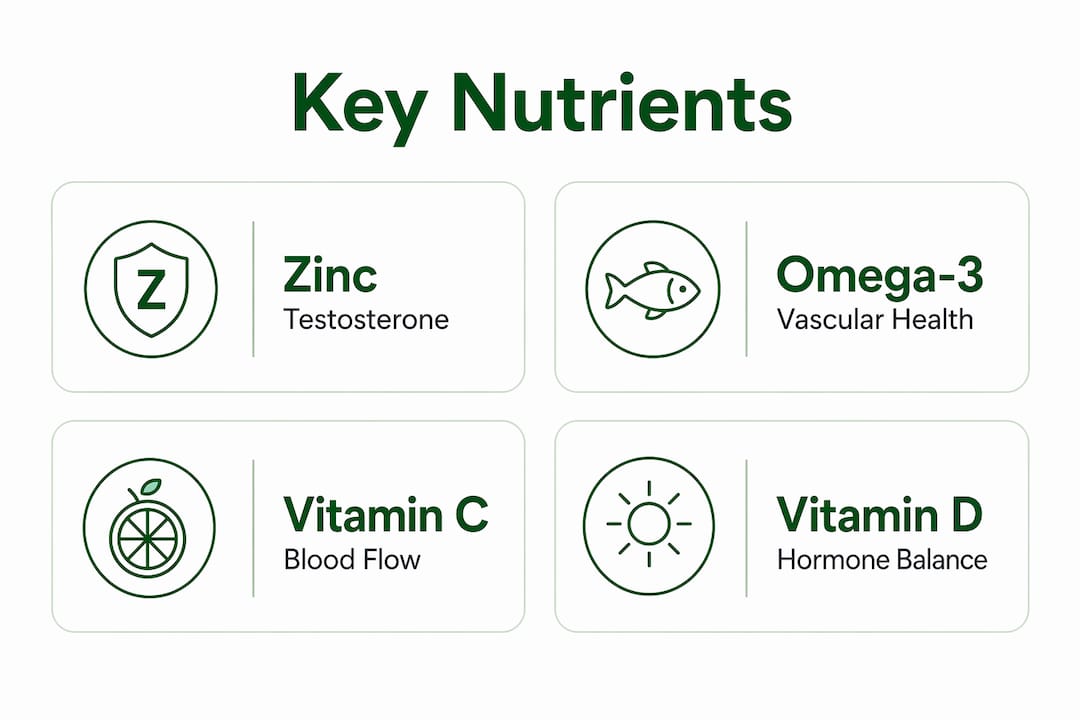
Omega-3 fatty acids support sperm membrane fluidity and vascular health. They keep cell membranes flexible, which matters for both sperm motility and the endothelial cells lining blood vessels. Salmon, mackerel, flaxseeds, and walnuts deliver meaningful omega-3 concentrations through food.
Antioxidants including vitamins C and E reduce oxidative stress, which damages reproductive cells and blood vessel walls. Vitamin D supports testosterone levels and immune function, while folate and selenium contribute to sperm DNA integrity and egg quality. Getting these nutrients from whole foods is more reliable than relying on supplements, because food delivers them alongside co-factors that improve absorption.
Key nutrient sources to include regularly:
Supplements can fill gaps in a deficient diet, but they do not replicate the full nutritional matrix that whole foods provide. Registered dietitians consistently recommend food first, supplements second.
The nutritional impact on performance is not identical across sexes. Men benefit most from foods that drive nitric oxide production and testosterone synthesis, which explains why zinc-rich foods and leafy greens high in nitrates (like arugula and spinach) show up repeatedly in research on male sexual function. Watermelon contains L-citrulline, an amino acid the body converts to nitric oxide, making it a genuinely useful food for blood flow support.
Women’s sexual wellness connects more directly to hormone balance, mood stability, lubrication, and vascular health. Foods that support estrogen balance, like flaxseeds and soy, and those that stabilize blood sugar, like fiber-rich vegetables and legumes, have the most practical impact. The vaginal microbiome also responds to diet. Fermented foods like yogurt and kimchi support beneficial bacterial populations that influence vaginal health and comfort.
Avocados deserve mention for both sexes. They supply monounsaturated fats that support hormone production, along with vitamin E and folate, making them one of the most broadly useful foods for sexual health.
Pro Tip: If you are a woman looking to support hormonal balance through food, add two tablespoons of ground flaxseed to oatmeal or a smoothie daily. If you are a man focused on blood flow, add a cup of leafy greens to one meal per day. Both changes are small, specific, and backed by nutritional science.
Pro-inflammatory diets are the clearest dietary threat to sexual function. Foods high in processed fats, refined carbs, and added sugars impair nitric oxide production and damage the blood vessel lining, raising ED risk and reducing arousal capacity in both sexes. The damage is cumulative and often silent until function noticeably declines.
Blood sugar spikes from refined carbohydrates and sugary drinks create hormonal disruption. Chronically elevated insulin levels suppress sex hormone-binding globulin, which alters the availability of testosterone and estrogen. Stable blood sugar through balanced meals supports hormonal and sexual health in ways that most people underestimate.
Restrictive dieting creates a different problem. Severe calorie restriction suppresses thyroid and sex hormones, reduces energy, and kills libido. Crash diets that eliminate entire food groups often strip out the micronutrients most critical to reproductive health. The body treats extreme calorie deficits as a survival threat and deprioritizes reproduction accordingly.
Dietary habits that harm sexual performance:
Sustainable change beats dramatic overhauls every time. Small, manageable diet changes every four months are more effective for sexual health improvements than sudden dietary shifts. Incremental food swaps over time show measurable vascular and erectile function benefits. That timeline matters because it sets realistic expectations and prevents the burnout that kills most diet attempts.
The psychological side of dietary change is underrated. People who frame eating changes as additions rather than restrictions tend to stick with them longer. Adding a serving of salmon twice a week feels different from “cutting out red meat,” even if the net effect on diet quality is similar.
A step-by-step plan for building better dietary habits:
Individual responses to dietary changes vary, and overall diet quality, stress, sleep, and emotional connection matter more than any single food. That is why the goal is a pattern, not a prescription.
A nutrient-rich diet that supports cardiovascular health and hormone balance is the most reliable foundation for improved sexual performance over time.
| Point | Details |
|---|---|
| Mediterranean diet reduces ED risk | Studies with over 20,000 men link this eating pattern to significantly lower erectile dysfunction rates. |
| Key micronutrients drive sexual function | Zinc, omega-3s, vitamins C, D, and E support hormone production, blood flow, and reproductive cell health. |
| Sex-specific nutrition matters | Men benefit most from nitric oxide-supporting foods; women benefit most from hormone-balancing and gut-friendly foods. |
| Processed foods actively harm performance | Refined carbs, fried foods, and sugary drinks impair blood vessel function and disrupt hormone availability. |
| Incremental change outperforms overhauls | Small dietary swaps every four months produce measurable, lasting improvements in vascular and sexual health. |
The biggest misconception I encounter is that people expect food to work like a pill. They eat oysters before a date and wonder why nothing changed. Dietary aphrodisiacs do not trigger instant desire. They work by removing biological barriers, like chronic inflammation and poor circulation, that have built up over months or years. That process takes time.
What I have found actually works is treating diet as infrastructure, not intervention. The people who report the most meaningful improvements in desire and function are not the ones who added one superfood. They are the ones who quietly shifted their overall eating pattern over six to twelve months and noticed that energy, mood, and libido all improved together.
The other thing worth saying plainly: no diet fixes a relationship problem, a stress disorder, or a sleep deficit. Sexual health reflects cardiovascular and metabolic well-being, and those systems respond to the full picture of how you live. Diet is the most controllable lever, but it works best when sleep, stress, and movement are also addressed. Start with food because it is concrete and immediate. Then build outward.
— Bryan
Knowing what to eat is one thing. Getting a plan that fits your specific health profile is another.

Fitrxapp connects you with licensed providers who assess your individual health markers and build personalized nutrition and wellness plans around your goals, including sexual health. The platform combines online consultations, dietary guidance, and continuous support so you are not figuring this out alone. Whether you are addressing erectile dysfunction and confidence or working on hormone balance and energy, Fitrxapp gives you a structured path backed by medical expertise. Visit Fitrxapp to see what a personalized health plan looks like for you.
The Mediterranean diet is the most evidence-backed pattern for sexual health, linked to lower erectile dysfunction risk in studies of over 20,000 men. It emphasizes fruits, vegetables, whole grains, legumes, nuts, olive oil, and oily fish.
Zinc, omega-3 fatty acids, and vitamins C, D, and E are the most critical nutrients for sexual health. They support testosterone production, blood flow, sperm quality, and reduction of oxidative stress.
Diet directly influences women’s sexual desire by affecting hormone balance, mood stability, and vascular health. Foods that stabilize blood sugar and support estrogen balance, like flaxseeds, legumes, and fermented foods, have the most practical impact.
Incremental dietary changes show measurable vascular and sexual health benefits over months, not days. Research supports making small swaps every four months rather than attempting a full diet overhaul at once.
Aphrodisiac foods work by reducing long-term biological barriers like inflammation and poor blood flow, not by triggering immediate desire. Consistent dietary habits over time produce the real benefit.

.svg)