Finasteride’s most reported side effects are sexual: decreased libido, erectile dysfunction, and reduced ejaculate volume, affecting roughly 3.7% of men on the drug versus 2.1% on placebo in long-term trial data. Less common but more serious reports include depression, suicidal thoughts, breast tissue changes, and rare cases of male breast cancer. Most sexual side effects show up in the first few months and many resolve on their own or after stopping the drug, though a subset of patients report symptoms that persist.
Finasteride is FDA-indicated for men only. Women who are or may become pregnant must not handle crushed or broken finasteride tablets, due to the risk of harm to a male fetus. It can also cause sexual side effects (reduced libido, erectile dysfunction) in a minority of men, which usually resolve after stopping treatment. Discuss these risks with a physician before starting.
If you notice any of the following, act rather than wait it out (see medical disclaimer and emergency guidance):
Serious or unexpected reactions should also be reported to FDA MedWatch, which helps regulators track patterns that individual trials might miss.
| Point | Details |
|---|---|
| Sexual side effects are the most common | Trial data puts libido and erectile changes around 2 to 4%, versus 2.1% on placebo. |
| Watch for mood changes | Depression or suicidal thoughts warrant same-day medical contact, not a wait-and-see approach. |
| Timing matters | Most side effects appear in the first 90 days and often decline with continued use. |
| Report serious reactions | Use FDA MedWatch for unexpected or severe side effects to strengthen future safety data. |
| FitRx builds in monitoring | Ongoing clinician access through the app helps catch and manage side effects early. |
This article is general information, not a substitute for advice from a qualified doctor. Consult a qualified healthcare professional about your own circumstances before acting on anything here.
The sexual side effect profile is where most of the research attention, and most patient anxiety, concentrates. It’s also where the numbers get misquoted the most, so it’s worth going straight to the source data.
DailyMed’s prescribing information, drawn from the long-term PLESS trial, reports finasteride-associated sexual adverse events at 3.7% versus 2.1% for placebo. StatPearls narrows this down further, putting erectile dysfunction specifically in the 2% to 4% range, alongside decreased libido and reduced ejaculatory volume. A systematic review published on PMC found wider swings across individual studies, with erectile issues reported anywhere from 4.9% to 15.8% and ejaculatory changes from 2.1% to 7.7%, depending largely on study design, how questions were asked, and whether patients were actively screened for sexual function versus reporting spontaneously.
| Sexual Side Effect | Trial-Reported Range | Notes |
|---|---|---|
| Decreased libido | ~2–4% (StatPearls); 3.7% overall adverse events (PLESS) | Often the earliest symptom reported |
| Erectile dysfunction | 2–4% (StatPearls); up to 15.8% in some reviews | Wide range reflects methodology differences |
| Decreased ejaculate volume | 2.1–7.7% (systematic review) | Usually less bothersome than ED or libido changes |
| Placebo comparison rate | 2.1% (PLESS long-term data) | Baseline for comparing drug-attributable risk |

Dose matters here, too. The 1 mg dose used for hair loss and the 5 mg dose used for benign prostatic hyperplasia aren’t interchangeable, and most of the sexual side effect data specific to hair-loss patients comes from studies using the lower dose. Higher-dose BPH studies sometimes report similar rates, but the populations differ (older men, different baseline health), which makes direct comparison tricky.
On fertility, MedlinePlus notes that finasteride may reduce fertility in some men, primarily through effects on semen volume and sperm parameters. The data on reversibility after stopping is reassuring for most, though not universal, which is why clinicians typically recommend discussing fertility plans before starting treatment rather than after a problem shows up.
Pro Tip: Track any sexual side effects on a simple monthly log starting the week you begin finasteride. Having concrete before-and-after notes makes it far easier for your clinician to separate a true drug effect from normal variation, stress, or an unrelated cause.
Clinicians managing these effects usually take a stepwise approach: continue monitoring if symptoms are mild, consider a dose review, or discuss stopping the drug entirely if the side effect outweighs the hair-loss benefit. If erectile function is your main concern, some patients pair finasteride with a separate treatment like daily tadalafil under clinical guidance rather than stopping finasteride outright.
Mood-related side effects get less airtime than sexual ones, but they carry more weight when they happen. StatPearls and post-marketing surveillance have flagged depression and, in rarer cases, suicidal ideation as reported adverse events. These aren’t listed at the same measured incidence rates as sexual side effects because they’re harder to isolate from other causes. A man dealing with hair loss, sexual dysfunction, and a new medication all at once has several plausible reasons to feel low, and untangling which factor is driving what takes careful clinical judgment.
That said, the signal is consistent enough across post-marketing reports that regulators and researchers treat it seriously, even without a fully proven causal mechanism. The honest answer is that a link is plausible and monitored, not definitively established as a direct drug effect for every patient who experiences it.
Watch for these warning signs, and don’t wait for a scheduled follow-up to address them:
If any of these appear, stop and talk to a clinician before continuing the medication, and consider a mental-health referral if symptoms don’t lift quickly. FitRx’s mental health support pathway exists precisely for patients navigating this overlap between physical treatment and mood changes.
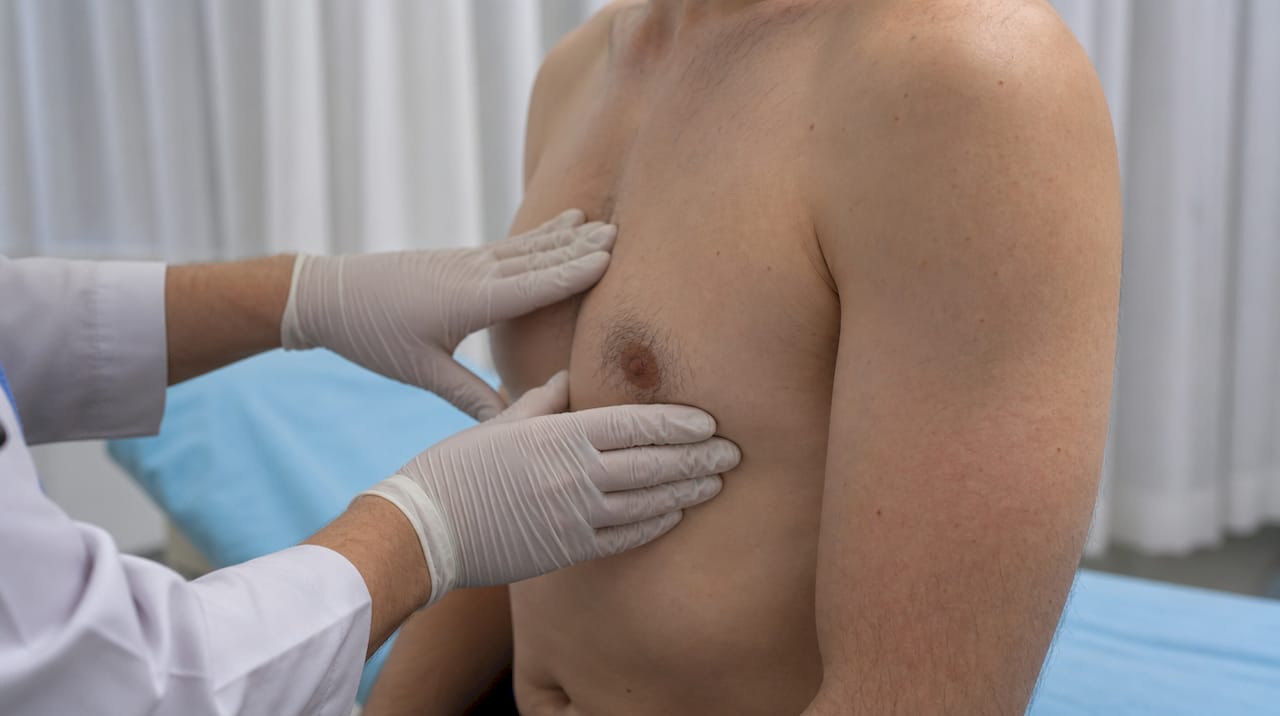
Breast tissue changes, known clinically as gynecomastia, are one of the more distinctive finasteride side effects because they’re rare enough to alarm patients but common enough to appear consistently in post-marketing reports. Finasteride works by lowering dihydrotestosterone, and shifting that hormonal balance can occasionally cause breast tenderness, swelling, or lump formation. Any new lump, persistent pain, or nipple discharge needs prompt medical evaluation, since post-marketing data has also linked finasteride use to rare cases of male breast cancer.
Allergic reactions are uncommon but not zero. Signs of a hypersensitivity reaction include facial swelling, difficulty breathing, hives, or lip and tongue swelling. Treat any of these as an emergency and seek immediate care rather than waiting to see if it passes.
Orthostatic hypotension, a drop in blood pressure when standing up that causes dizziness or fainting, shows up more often when finasteride is combined with alpha-blockers commonly prescribed for prostate symptoms. If you’re on both, rise slowly from sitting or lying positions and mention any dizziness to your prescriber right away.
A few other associations appear occasionally in patient reports and smaller studies, including dry eye symptoms and metabolic changes, but the evidence behind these is thin and shouldn’t be treated as established drug effects. They’re worth mentioning to a clinician if they arise, but they don’t carry the same weight as the gynecomastia or hypotension signals.
Most sexual side effects show up within the first few months of starting finasteride, often within the first 90 days. This lines up with how the drug works: DHT suppression happens fairly quickly, and any hormonally driven side effect tends to follow shortly after.
The encouraging part of the data is what happens next. Long-term trial data from PLESS shows that sexual adverse event rates tend to decline the longer men stay on treatment, with some measures dropping well below 1% by later years of follow-up. That pattern suggests a meaningful share of early symptoms are transient rather than permanent, either because the body adjusts or because early anxiety about a new medication resolves with time.
The harder question involves a smaller group of men who report symptoms persisting well after they stop taking finasteride entirely, a phenomenon sometimes called post-finasteride syndrome.
Current evidence on post-finasteride syndrome is genuinely mixed. Some men report sexual, cognitive, or mood symptoms lasting months or years after discontinuation, but researchers haven’t established a confirmed biological mechanism or reliable incidence rate. It remains an area of active study rather than a settled diagnosis.
Practically speaking, this means most men who experience side effects see them ease off with continued use or resolve after stopping. A minority don’t, and that uncertainty is exactly why clinicians weigh the cosmetic benefit of hair regrowth against a real, if uncommon, risk of lasting symptoms before prescribing.
Don’t just wait and hope a side effect fades on its own, especially if it’s affecting your mental health or showing up as a physical symptom like a breast lump. Here’s a practical sequence to follow:
Clinicians generally recommend documenting your baseline sexual function and mental health status before ever starting finasteride, exactly the kind of shared decision-making StatPearls points to as best practice. It gives you and your provider a clear comparison point if something changes.
FitRx’s virtual hair-loss care model builds this kind of monitoring into the process from day one rather than leaving it to chance. Every consult starts with a licensed provider reviewing your health history, including baseline sexual function and mental-health status, before finasteride ever gets prescribed.
Pro Tip: If you’re already noticing early hair thinning slowing down but also some initial shedding, that’s often a normal phase transition rather than a sign the treatment is failing. FitRx’s guidance on minoxidil shedding explains the same shedding pattern that can appear with other hair treatments.
| Point | Details |
|---|---|
| Baseline evaluation matters | Document sexual function and mood before starting so changes are easy to spot. |
| Monitoring beats guessing | Regular follow-up catches side effects early instead of after months of silence. |
| FitRx builds in check-ins | Ongoing app-based support pairs prescriptions with continuous clinician access. |
Finasteride carries specific risks for female patients that differ meaningfully from the male side effect profile. It’s not approved for use in women who are or may become pregnant, since the drug can cause abnormalities in the genital development of a male fetus if a pregnant woman is exposed to it, even through handling crushed or broken tablets.
For postmenopausal women or those using finasteride off-label for female pattern hair loss, the safety picture is less studied than in men, largely because most clinical trial data comes from male populations. Reported concerns include changes in libido and mood, though structured incidence data specific to women remains far more limited than the figures available for men.
Anyone who is pregnant, might become pregnant, or is breastfeeding should avoid contact with finasteride tablets entirely, and women in general should only use the drug under direct clinical supervision with a full understanding of the pregnancy-related risks. If you’re a woman exploring treatment options for hair thinning, female hair loss care built around your specific hormonal profile is generally a safer starting point than adapting a male-oriented protocol.
The debate around finasteride tends to split into two unhelpful camps: people who dismiss the side effects as internet exaggeration, and people who treat every anecdote of post-finasteride syndrome as proof the drug is dangerous for everyone. Neither view holds up against the actual data. Trial-measured incidence for sexual side effects sits in the single digits, and most of those cases improve with time or after stopping.
What the conventional advice underplays is how much baseline evaluation matters. A lot of finasteride prescribing still happens without a real conversation about sexual function, mental health history, or fertility timelines before the first pill gets taken. That’s backwards. The research on shared decision-making is clear that documenting where you start makes it far easier to catch a genuine drug effect versus something unrelated.
My take: the drug isn’t as universally risky as the worst forums suggest, nor as harmless as some prescribers imply during a rushed visit. The right move is prioritizing monitoring over blind optimism or blind fear, and finding a provider who treats a reported side effect as data worth acting on, not dismissing.
You could get a finasteride prescription from a five-minute online form with no follow-up, or you could get one from a provider who actually checks in. FitRx is built around the second model: licensed clinicians who evaluate your baseline health before prescribing, then stay reachable through the app if a side effect shows up three weeks or three months later.

That ongoing access matters more than most people realize until they need it. It’s the difference between guessing whether a symptom is worth worrying about and getting a real answer from someone who already knows your history. FitRx pairs your hair loss treatment plan with nutrition, sleep, and activity guidance too, since overall health affects how your body responds to any medication.
If you’re weighing finasteride and want a provider who treats side effect monitoring as part of the plan rather than an afterthought, start a consultation with FitRx and get matched with a licensed clinician who will walk through your specific risk factors before you fill a single prescription.
No side effect is proven to be universally permanent, but a subset of men report persistent sexual, cognitive, or mood symptoms after stopping, a pattern sometimes called post-finasteride syndrome that researchers are still studying.
For most men, trial data shows sexual side effect rates in the low single digits that often improve over time, so many find the hair-loss benefit worth it, though the decision should weigh your personal health history and risk tolerance with a clinician.
The main reasons men avoid or stop finasteride are concerns about sexual side effects, reports of mood changes, and uncertainty around post-finasteride syndrome, even though these outcomes affect a minority of users.
Finasteride is generally well tolerated by most men, with the main documented risks being sexual side effects, rare breast changes, and orthostatic hypotension, particularly when combined with alpha-blocker medications.
Any breast changes, thoughts of self-harm, fainting, or allergic reaction symptoms warrant reporting to FDA MedWatch and immediate medical attention, while milder sexual side effects should still be discussed at your next follow-up.


.svg)