Yes, oral ED medications commonly cause mild, temporary side effects like headache, flushing, and indigestion, and they rarely cause serious problems requiring emergency care. The main things to watch for are priapism, sudden vision or hearing loss, and severe low blood pressure from combining these drugs with nitrates. Most men tolerate sildenafil, tadalafil, vardenafil, and avanafil well once they and their prescriber sort out the right dose and rule out dangerous interactions.
TL;DR:
- Headaches, flushing, nasal congestion, and indigestion are the most common temporary side effects, with headaches reported in up to 42% of users.
- Serious emergencies like priapism, sudden vision loss, or hearing loss are extremely rare but require immediate medical attention if they occur.
- Combining PDE5 inhibitors with nitrates, alpha-blockers, or guanylate cyclase stimulators can cause dangerous drops in blood pressure and should be strictly avoided.
- Dose adjustments and timing considerations, such as taking medication on an empty stomach or at the lowest effective dose, can reduce side effects.
- Regular screening for cardiovascular health and disclosure of all medications improve safety and help tailor treatment to individual health risks.
Headache tops the list by a wide margin. It shows up because PDE5 inhibitors dilate blood vessels throughout the body, not just where you want them to.
Facial flushing and nasal congestion follow the same logic. Blood vessels near the skin’s surface widen, and the lining of your nasal passages swells slightly. Neither is dangerous, though a stuffy nose after taking a pill catches a lot of first time users off guard.
Digestive symptoms are next. Dyspepsia and mild nausea affect roughly 10% to 13% of users, with the rate shifting based on which drug and what dose you’re on.
Common ED medication side effects include:
Statistic to know: Headache alone has been reported in up to 42% of users of certain PDE5 inhibitors in clinical studies, making it by far the most common complaint tied to this drug class.
Most of these symptoms are dose-dependent. Cut the dose, and the side effect usually softens or disappears. They also tend to be transient, meaning your body often adjusts within the first few doses.
Three events separate a routine annoyance from a medical emergency, and every man taking an ED medication should know them cold.
Chest pain, fainting, or severe lightheadedness after taking an ED medication is different from the above. That combination can point to a cardiovascular event, and it means calling emergency services, not your prescriber’s after-hours line.
MedlinePlus specifically flags sudden severe vision loss, sudden hearing loss, and chest pain as reasons to seek immediate medical attention after taking sildenafil or similar drugs.
Pro Tip: Keep the drug packaging or a photo of the label on your phone. If you end up in an emergency room describing symptoms, naming the exact medication and dose speeds up treatment considerably.
These events are genuinely rare. But rare doesn’t mean ignorable, and every one of them gets treated as a medical emergency, not a wait and see situation.
The single most important rule in this entire category: never combine a PDE5 inhibitor with nitrates. That combination is an absolute contraindication because both drugs drop blood pressure through the same pathway, and stacking them can trigger dangerously severe hypotension. This includes prescription nitroglycerin for chest pain and recreational amyl nitrite, commonly known as “poppers.”
Interactions and contraindications worth knowing:
Statistic to know: Clinical monographs list alpha-blocker and CYP3A4 interactions as requiring monitoring or dose adjustment in prescribing guidance, rather than an outright ban, which is why disclosing every medication you take matters more than guessing which ones are risky.
PDE5 inhibitors work by boosting nitric oxide’s effect on blood vessels, which is exactly what produces an erection. The catch is that this vasodilation isn’t localized. It happens throughout your circulatory system, which is why a drug aimed at one part of the body causes headaches, flushing, and blood pressure changes elsewhere.
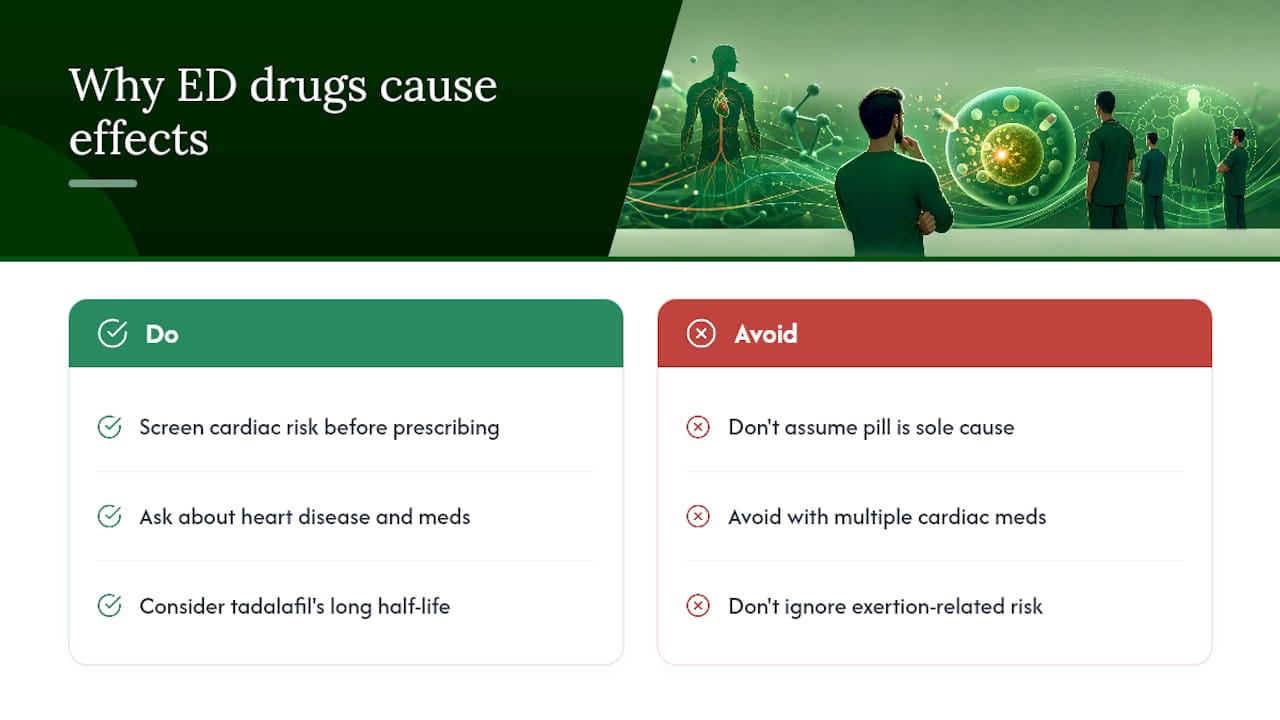
Tadalafil, for instance, produces measurable drops in blood pressure, roughly 7 mm Hg systolic and 5 mm Hg diastolic in some patients, and that effect can linger for hours given the drug’s long half-life.
Certain men carry more risk than others. Pre-existing heart disease, use of multiple cardiac medications, severe liver or kidney impairment, and advanced age all raise the odds that a side effect becomes something more serious.
Cardiovascular events reported around ED medication use are frequently tied to underlying heart disease or to the physical exertion of sexual activity itself, rather than being directly caused by the drug. That’s why screening for cardiac risk before prescribing matters as much as the prescription itself.
This is the clinical nuance that gets lost in casual conversation: the pill often isn’t the sole cause of a bad outcome. It’s frequently one factor layered on top of a heart that was already under strain.
Pro Tip: If a specific side effect bothers you consistently, mention it by name at your next follow-up rather than toughing it out. Switching from one PDE5 inhibitor to another often resolves an issue that dose adjustment alone couldn’t fix.
A few minutes of preparation before a prescribing visit, virtual or in person, makes the entire process faster and safer.
A consultation checklist built around these points turns a rushed visit into a genuinely useful one.
It does, more than most men expect. Alcohol is the biggest variable. A drink or two rarely causes problems, but heavy drinking on top of a PDE5 inhibitor compounds the blood pressure drop these drugs already produce, which can turn a mild dizzy spell into something closer to fainting.
Diet plays a role too, particularly with sildenafil, which absorbs more slowly after a heavy, fatty meal. That delay can push the drug’s peak effect later than expected, sometimes catching men off guard when the medication seems to “not work” right away and then hits harder later than planned.
Smoking and poor cardiovascular fitness matter for a different reason. These medications rely on healthy blood vessels responding well to nitric oxide signaling. A body already dealing with vascular damage from smoking or unmanaged blood pressure tends to see both a weaker treatment response and a higher chance of side effects like flushing and headache.
Sleep and stress round out the picture. Poor sleep and chronic stress interfere with the same hormonal and vascular systems these drugs are trying to support, which is part of why treatment plans that address nutrition, activity, and sleep alongside medication tend to produce steadier results than medication alone.
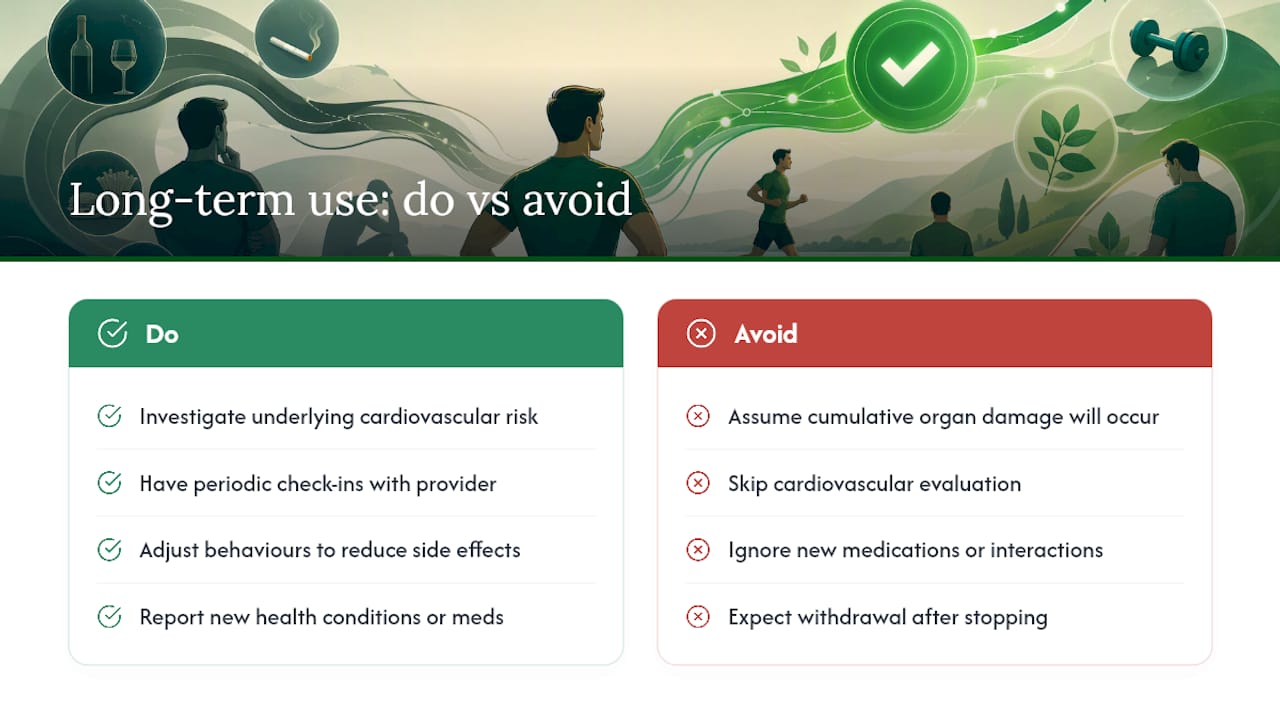
The evidence on long-term use doesn’t point to cumulative organ damage or dependency the way some men worry it might. PDE5 inhibitors don’t build up in your system indefinitely, and stopping the drug doesn’t cause withdrawal.
The more relevant long-term question isn’t about the drug wearing out your body. It’s about whether the underlying reason you needed the medication in the first place is being addressed. Erectile dysfunction is often an early warning sign of cardiovascular disease, since the small blood vessels involved in erections tend to show damage before larger arteries do. Taking a PDE5 inhibitor without ever investigating that root cause means treating the symptom while a bigger issue goes unmonitored.
Long-term users generally report the same side-effect profile they experienced early on, without new symptoms emerging after months or years of use. What does change is tolerance in the practical sense, meaning many men learn their personal triggers, like avoiding a heavy meal before dosing or watching alcohol intake, and side effects become less disruptive over time. Periodic checkins with a provider still matter, particularly for men who develop new health conditions or start additional medications, since the interaction risks discussed earlier don’t disappear with familiarity.
These four drugs share a mechanism but differ enough in timing and side-effect texture that the right choice often comes down to lifestyle fit rather than pure effectiveness.
Tadalafil’s extended window, sometimes called the “weekend pill,” comes with a tradeoff: its side effects, including that modest blood pressure drop, can persist for hours longer than the shorter-acting options. Men who want spontaneity often gravitate toward it, while those who prefer to dose only when needed sometimes choose sildenafil or avanafil instead.
None of the four is definitively “safer.” The right pick usually comes down to how your body responds, what your daily schedule requires, and what your provider knows about your cardiovascular history.
Safe prescribing isn’t about picking a drug and mailing it out. FitRx’s clinicians screen for cardiac history, current medications, and nitrate use before any prescription goes out, then stay involved for dose adjustments if side effects show up. That ongoing oversight matters more than which specific pill a man ends up on.
What often gets skipped elsewhere is the context around the pill. Treatment often includes guidance on nutrition, activity, and sleep, since those factors can influence how well these medications work and the severity of side effects.
— Bryan
Getting a prescription shouldn’t feel like guesswork, and it shouldn’t require sitting in a waiting room to get basic questions answered. The process starts with an online screening that covers medical history, current medications, and cardiovascular risk factors, the same information any responsible prescriber needs before writing an ED prescription.

From there, a licensed provider reviews your screening and consults with you directly, checking for interactions and contraindications, particularly nitrate use and heart conditions. If a prescription makes sense, it ships to your door, and follow-up support continues through the app rather than ending the moment the medication arrives. That ongoing access matters if a side effect shows up two weeks in and you have questions about whether it’s normal.
If you’re ready to find out which options fit your health profile, start your consultation and get a clinician’s assessment before your next dose, not after a side effect surprises you.
This article is general information, not a substitute for advice from a qualified doctor. Consult a qualified healthcare professional about your own circumstances before acting on anything here.
A same-day telehealth screening followed by a prescribed oral PDE5 inhibitor is typically the fastest medically supervised route, but “fast” should never skip the cardiac and medication screening that keeps it safe.
It can, particularly when the underlying cause is vascular disease, diabetes, or unmanaged blood pressure that continues untreated, which is why addressing the root cause alongside medication matters.
Yes, PDE5 inhibitors work at any adult age, though older men are more likely to have cardiovascular conditions or take medications that require closer screening before starting treatment.
For most healthy men, no. The real risk comes from skipping the screening step, particularly around nitrate use and heart disease, rather than from the medication class itself.
Tadalafil’s side effects, including its modest blood pressure drop, can persist for several hours given the drug’s long duration, sometimes overlapping with its up to 36 hour window of effectiveness.

.svg)