To ship refrigerated medications safely, you need a qualified pack-out, a validated lane, continuous temperature monitoring with audit-ready records, and a documented excursion response ready before the first box ships. Skip any one of those four and you’re gambling with product potency and inspection findings. Most refrigerated pharmaceuticals must stay within 2°C to 8°C (36°F to 46°F), though the manufacturer’s stability data always governs, not the general range. Before any shipment leaves the dock, confirm:
Reliable cold chain medication shipping depends on matching validated pack-outs to real lane conditions and backing every shipment with continuous monitoring and complete chain-of-custody records.
| Point | Details |
|---|---|
| Follow product-specific stability data | The 2°C to 8°C range is common, but the manufacturer’s own data always takes priority. |
| Use only qualified pack-outs | Match packaging exactly to what passed ISTA or equivalent chamber testing; no substitutions. |
| Monitor continuously, not just on arrival | Real-time trackers catch excursions in transit, giving time to intervene before delivery. |
| Validate your actual lane | Vendor chamber data often misses your specific route; field-map it yourself for critical shipments. |
| Consider FitRx for patient delivery | FitRx manages temperature-sensitive prescription fulfillment for patients treated through its telehealth platform. |
Cold chain medication shipping is the regulated process of packaging, monitoring, and transporting temperature-sensitive pharmaceuticals so they arrive within their required range, with a paper trail proving it the whole way. The industry sometimes calls this pharmaceutical cold chain logistics, and the terms are interchangeable. What separates it from ordinary refrigerated freight is the compliance layer: Good Distribution Practice (GDP) obligations, chain-of-custody documentation, and qualified lanes that have been tested against real-world conditions, not just theoretical ones.
Most professionals entering this space assume the challenge is refrigeration technology. It isn’t. Coolers and gel packs are commodity items. The hard part is proving, after the fact, that the product never left its required temperature range, and doing that consistently across seasons, carriers, and destinations you don’t fully control once the box leaves your dock.
Passive systems (insulated shippers with gel packs, phase-change material, or dry ice) dominate parcel-level pharma shipping because they need no power source and tolerate handoffs between carriers. Active systems, powered coolers or thermoelectric units, earn their cost on longer routes, bulk shipments, or lanes with unpredictable dwell time at hubs. Neither choice matters much if the pack-out itself hasn’t been tested.
A qualified pack-out means the exact configuration, box, insulation, coolant type and quantity, product load, and logger placement, has been run through ISTA 3A or equivalent chamber testing across summer and winter profiles, with a certificate to show for it. Vendors selling pre-qualified shippers should hand over that certificate without you asking twice.
Pro Tip: Keep a laminated pack-out diagram at the packing station. Verbal training fades; a picture of exactly where the logger and coolant go doesn’t.
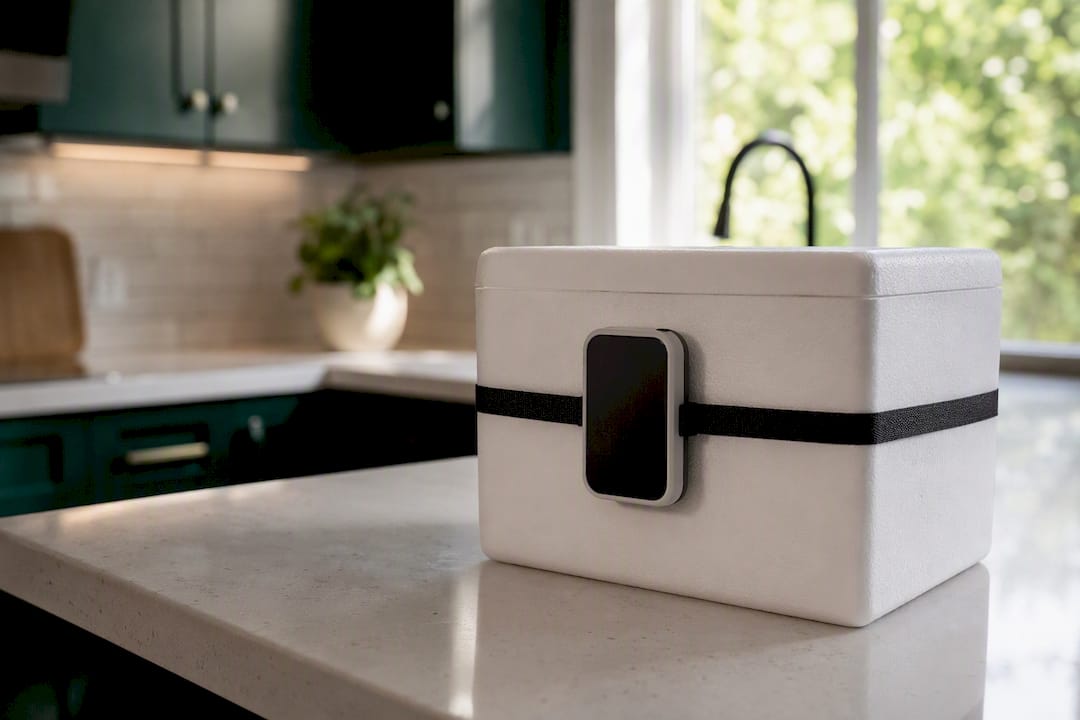
Single-use dataloggers cover most parcel shipments at low cost, but reusable loggers pay for themselves on repeat lanes, and real-time cellular trackers earn their premium on high-value biologics or routes with a history of carrier delays. Real-time devices matter most because they flag an excursion while the shipment is still in transit, giving you a window to intervene before the product ever reaches the patient.
Whatever device you choose, it needs a current calibration certificate traceable to a recognized standard. If your records live in an electronic system, that system needs to meet 21 CFR Part 11 expectations for audit trails and electronic signatures, not just a spreadsheet someone updates manually.
Credible validation starts with worst-case testing, not average-case testing. Run pack-out qualification in a chamber against both summer and winter ambient profiles, then correlate that data against actual field temperature mapping on the lane you’ll use.
Vendor-supplied qualification data is a starting point, not a finish line. It frequently covers a narrower set of lanes than you actually ship, so treat gaps in geographic coverage as a signal to run your own field validation rather than assuming the vendor’s chamber data transfers cleanly to your route.
Pro Tip: Ask any packaging vendor for the raw chamber data, not just the pass/fail summary. A qualification that barely clears the limit tells you something a certificate alone won’t.
Good Distribution Practice (GDP) is the baseline standard for pharmaceutical cold chain, and it’s a stricter bar than generic cold chain logistics used for food or industrial goods. GDP requires documented chain-of-custody, qualified lanes, and formal deviation management, not just “it stayed cold.”
Beyond GDP, several reference points come up repeatedly in audits and internal SOPs:
Treat cold chain shipping as lifecycle work integrated with manufacturing and storage controls, rather than a logistics task bolted on at the end.
Skipping step 7 is more common than it should be. A shipment that sits on a loading dock for four hours because nobody expected it can undo everything the pack-out qualification was designed to prevent.
The moment a shipment arrives, read the logger before opening the box further, inspect for physical damage, and note the total time out of the qualified range, sometimes called time out of environment (TOE). Don’t guess whether an excursion is acceptable; the manufacturer’s excursion tolerance data, not intuition, determines that.
Patients managing their own diabetes supply storage at home face a smaller-scale version of this same problem, which is worth remembering when you write patient-facing handling instructions.
Most audit findings in this space trace back to training gaps and inconsistent validation interpretation, not equipment failure. Required SOPs should cover pack-out assembly, logger deployment, excursion response, and receiving procedures, each with a defined retraining cadence, typically annual at minimum.
Pro Tip: Re-certify staff any time a pack-out configuration changes, even slightly. A logger placement change that seems minor is still a deviation from what was trained.
FitRx coordinates fulfillment for prescriptions issued through its telehealth platform, including medications that require temperature-controlled shipping to a patient’s home, paired with monitoring and direct patient communication about handling on arrival.
Patients don’t need to understand pack-out qualification or MKT calculations. They need their medication to arrive intact, on time, with clear instructions for what to do the moment it’s at their door.
FitRx isn’t a commercial cold-chain design vendor. It’s a patient-facing fulfillment option built for its own prescription programs.
Most cold chain guidance treats temperature monitoring as the whole solution. It isn’t. A logger tells you a shipment failed after the fact; it doesn’t prevent the failure. The real leverage sits earlier, in pack-out qualification and lane validation, where a five-minute shortcut during packing (skipping refrigerant conditioning, guessing at headspace) sets up a failure the logger will faithfully document three days later.
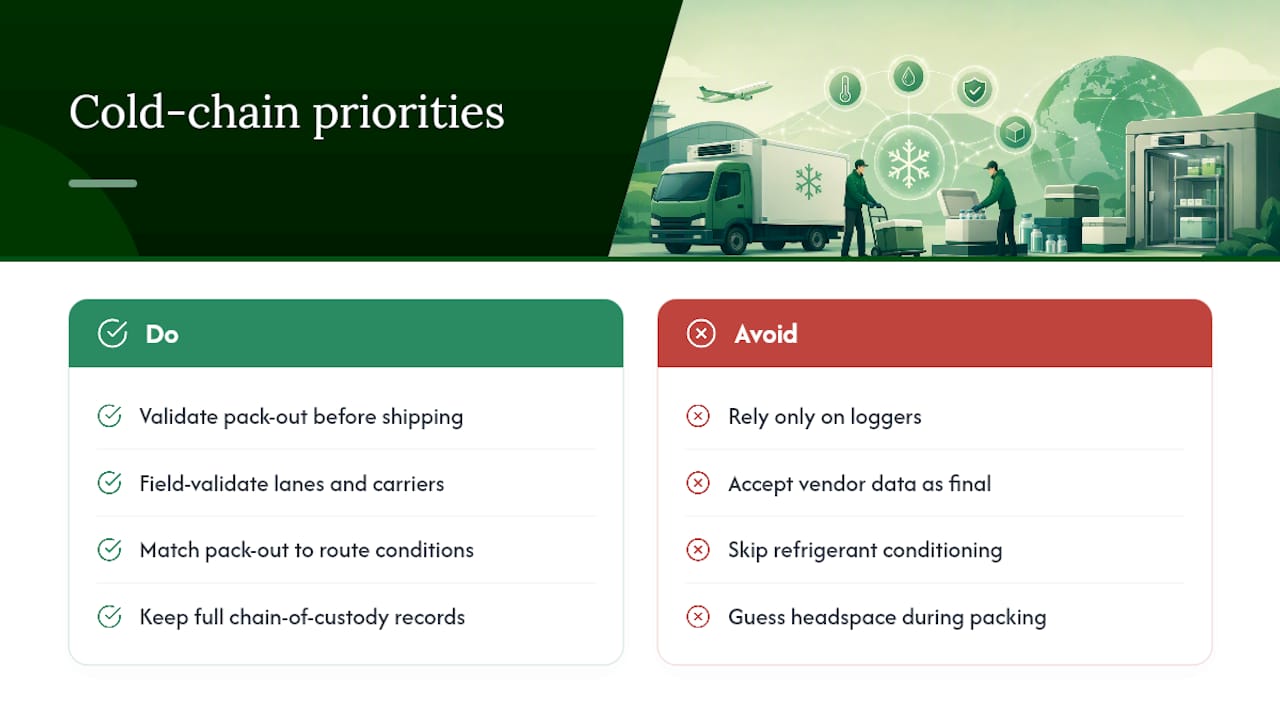
The second gap: teams treat vendor-supplied qualification data as a finished answer instead of a starting hypothesis. A pack-out tested in a lab chamber against generic summer and winter profiles hasn’t been tested against your actual lane, your actual carrier’s dwell times, or your actual regional weather patterns. If you haven’t field-mapped the route yourself, you’re trusting someone else’s worst case to match yours.
Prioritize documentation discipline over technology spend. A team with a modest passive shipper, disciplined pack-out matching, and complete chain-of-custody records will out-audit a team with expensive real-time trackers and sloppy paperwork every time. The device records what happened. It doesn’t fix what wasn’t validated in the first place.
— Bryan
Building a compliant cold chain program from scratch, chamber testing, lane mapping, logger fleets, SOP libraries, is a serious undertaking, and it should be. But most patients reading about cold chain shipping are not building that program. They’re trying to figure out how their own prescription gets to their door intact.
That’s the gap FitRx fills. Instead of managing your own packaging validation and courier relationships, FitRx handles prescription fulfillment, including temperature-sensitive medications for weight loss treatment, as part of its telehealth service, so patients get doctor-prescribed medication shipped with the handling it needs, no logistics expertise required on their end. Enterprise cold-chain design remains a specialty discipline for manufacturers and distributors, but if you’re a patient wondering how a prescribed medication actually gets to your home safely, start with a consultation on FitRx to see how fulfillment works for your specific treatment.
This article is general information, not a substitute for advice from a qualified doctor. Consult a qualified healthcare professional about your own circumstances before acting on anything here.
Use a pack-out configuration that has passed chamber qualification testing for your route’s worst-case seasonal conditions, place a calibrated logger inside before sealing, and confirm the receiver is ready to accept and unpack the shipment immediately on arrival.
Major carriers, including FedEx, offer temperature-controlled and priority services suitable for pharmaceutical shipments, but the shipper, not the carrier, is responsible for pack-out qualification, monitoring, and chain-of-custody documentation.
Cold chain shipping is the process of transporting temperature-sensitive products, including pharmaceuticals, within a validated temperature range using qualified packaging and continuous monitoring, with documentation proving the range was maintained throughout transit.
Use a pre-qualified insulated shipper with properly conditioned refrigerants, include a calibrated temperature logger, and confirm the recipient’s availability so the package doesn’t sit unattended once delivered.
Quarantine the product immediately, document the excursion’s duration and magnitude from the logger data, and escalate to your quality team or the manufacturer to check the finding against published excursion tolerance data before releasing or discarding the product.


.svg)